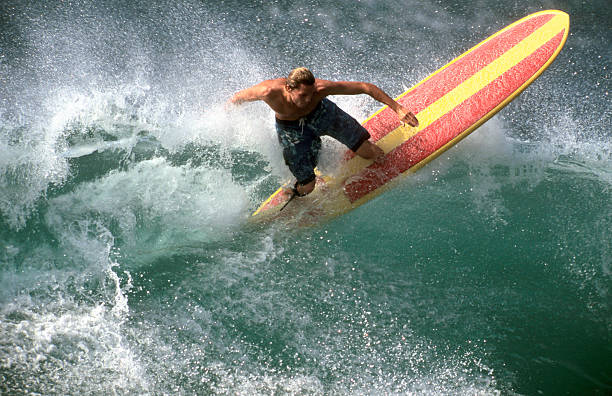
There’s a moment every surfer knows too well. You paddle out, the dawn patrol glass is off the hook, and you drop into a chest-high screamer. Halfway through the bottom turn, your back foot slips clean off the deck. You flail, the board goes kite-flying, and the leash snaps tight like a rubber band of destiny. That little cord just saved your board from a one-way trip to the rocks, and the traction pad under your feet kept your ankles from twisting into a pretzel. We never think about these bits of rubber and nylon until they fail, but the brands that make them have quietly shaped the entire sport. Without leashes and traction pads, modern surfing would be a chaotic mess of lost boards, bloody fins, and blown-out knees. These are the unsung heroes of surf gear, and the companies behind them—Dakine, Creatures of Leisure, FCS, and a crew of smaller innovators—deserve a hunk of respect.
Go back to the sixties, and there was no leash at all. Losing your board meant a long swim, or worse, a skull fracture from your own equipment. The first leashes were homemade, rigged up from surgical tubing and bits of parachute cord, and the surf industry thought it was the most uncool thing ever. Old school guys said it was a crutch, a way for kooks to avoid the penalty of a paddle. But a Hawaiian surfer named Pat Curren and others kept fiddling, and eventually Jack O’Neill and the crew at the Santa Cruz harbor started selling a proper leash. That brand, Surf Research, gave birth to what we now know as the modern ankle strap. Dakine came along in 1979, started making a leash with a detachable cuff and a triple-swivel setup that killed the dreaded leash wrap. They were riding the wave of a new era where safety wasn’t lame—it was common sense. Dakine’s leashes became the gold standard, with thicker urethane cores and velcro cuffs that held through the gnarliest of closeouts.
Nowadays, you’ve got a whole lineup of leash brands playing in the break. Creatures of Leisure took the game further by fusing lamination and liquid-molded technology. Their leashes are tapered, meaning they’re thick at the rail saver and thin at the cuff, which reduces drag and makes it feel like you’re towing a whisper instead of an anchor. FCS waded in with their own dual-layered leashes, and even smaller brands like Pro-Lite and Rip Curl threw their hats in the ring. What started as a simple piece of string has become a high-performance piece of engineering, with swivels that spin like a top and urethane that flexes just enough to absorb the snap of a wipeout without snapping itself.
Traction pads, on the other hand, have a shorter but just as radical history. Before traction, surfers relied on wax and pure fear to keep their back foot planted. The first traction pads came out of the shortboard revolution of the early seventies, when guys like Glenn Kennedy and Mike Tabeling experimented with foam and cork. The trend caught fire, and brands like Astrodeck, Creations, and later FCS and Ocean & Earth turned a simple strip of adhesive foam into an art form. Modern traction pads are a far cry from that first rectangle. They’ve got arch bumps, tail kick, and channels that redirect water and give you a free little bump of lift. You can pick a pad with a steeper kick for heavy barrels or a flatter profile for carving power. Some brands even make custom pads with three-piece or arched designs that let you dial in your exact foot position.
But it’s not just about performance. Leash and traction brands are cultural markers too. That Dakine leash wrapped around your board’s rail tells the lineup something about your taste. The bright neon pad with the skull graphic or the faint pastel grooves under your back foot—it’s all part of the stoke. Surfer style flows through every piece of gear, and these accessories are the easiest way to express yourself without buying a whole new board. I’ve seen dudes spend forty minutes picking out a traction pad like it’s a tattoo, and honestly, I get it. That pad is the connection between you and the wave. It’s the only thing standing between a clean bottom turn and a sketchy slide into the fins.
And let’s not forget the environmental wave that’s hitting the industry. Dakine and Creatures are switching to recycled urethane and plant-based adhesives, reducing plastic in their packaging, and trying to keep the ocean as clean as the waves we ride. That matters. When you’re paddling out through a patch of floating microplastics, it’s good to know the gear you’re supporting isn’t adding to the mess. Surf gear has come full circle from the homemade surgical tubing days to a future where sustainability and performance ride the same wave. So next time you tape an ankle strap or press a fresh pad into your deck, give a little thanks to the brands that keep you connected. They’re not just selling rubber and foam. They’re selling the freedom to go for it, full commitment, knowing your board will stick around for the next wave. That’s the real stoke, and it’s been a long time coming. Keep your leash coiled sunset tight, and your traction dialed. The ocean will do the rest.