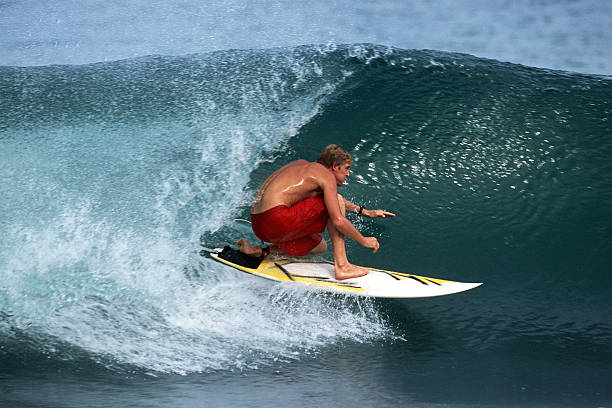
When you paddle out at dawn and the ocean’s glassing up, you gotta tip your hat to the man who started it all. Duke Kahanamoku wasn’t just the father of modern surfing—he was the original ambassador of stoke. Born in Honolulu on August 24, 1890, Duke grew up with the ocean as his backyard. He rode the long, rolling waves of Waikiki on a solid koa board that must have weighed a hundred pounds, but he made it look easy. His grace in the water was something else. But what really set Duke apart wasn’t just his ability to shred—it was his need to share. That’s where the global wave comes in.
Back in the early 1900s, surfing was on the brink of extinction. Missionaries had nearly snuffed it out, calling it a heathen pastime. But Duke, along with a few other watermen, kept the flame alive. He competed in swimming, winning gold medals at the 1912 and 1920 Olympics. That fame gave him a ticket to travel. And travel he did. He didn’t just show up for swim exhibitions—he brought his surfboard along. Every beach he hit, he’d paddle out, catch a wave, and blow minds. People on the mainland had never seen anything like it.
One of the most legendary stops was Corona del Mar in California, back in 1914. Duke and his crew surfed at a break that would later become a hotbed for the sport. He gave demos, taught locals how to pop up, and left a trail of stoke from Santa Monica to San Diego. But it was Australia that really caught the bug. In 1914, Duke swung by Freshwater Beach in Sydney. He shaped a board out of local sugar pine because he didn’t want to risk damaging his own. Then he paddled out and made history. That single session sparked an entire surfing culture down under. Today, there’s a statue of Duke at Freshwater Beach, right where he rode that wave. And if you talk to old-school Aussie surfers, they’ll tell you—that’s sacred ground.
The Duke didn’t just spread the sport; he spread a vibe. He was all about aloha, which is way more than a greeting. It’s a way of life. He respected the ocean, respected his fellow surfers, and never let ego get in the way. When he traveled, he didn’t act like some hotshot champion. He’d loan out his board, give lessons, and share his lunch. That’s the soul of surfing, right there. In a world where surfers argue over waves and drop-ins, Duke’s example is a solid reminder that we’re all just guests in the ocean.
His influence on board design can’t be ignored either. When Duke started, boards were massive planks of solid wood. He learned to ride them with pure balance and brute strength. But as he traveled, he started experimenting with hollow boards, making them lighter and easier to handle. Those early prototypes led to the balsa and foam boards we ride today. So every time you grab your shortboard or even a longboard, you’re standing on the legacy of a guy who just wanted to make surfing accessible to everyone. That’s a heavy thought when you’re paddling out at your local break.
Duke also pioneered the art of the rescue. He might be known for surfing, but he saved dozens of lives as a lifeguard. In 1925, when a fishing boat capsized off the coast of Newport Beach, Duke made multiple rescues on his surfboard, hauling in nearly a dozen men. That’s not just heroism; that’s using surfing as a tool for good. He didn’t brag about it either. Just did what had to be done. That’s the kind of waterman he was—humble, brave, and always in sync with the sea.
As Duke grew older, he kept surfing. He never let age or fame slow him down. He’d still drop into Waikiki waves, flashing a smile that could light up the whole beach. He served as sheriff of Honolulu, and he kept promoting surfing until the day he died in 1968. But his legacy? That lives in every lineup. From tiny breaks in Bali to the concrete waves of a dream park, the Duke’s spirit rides along.
So next time you catch a clean set and glide across the face, give a nod to the big Hawaiian with the silver hair and the heart of gold. He didn’t just invent the stoke—he took it around the planet and handed it to all of us. That’s why he’s the father, the pioneer, the original soul surfer. And there’s not a wave on Earth that doesn’t feel his aloha.