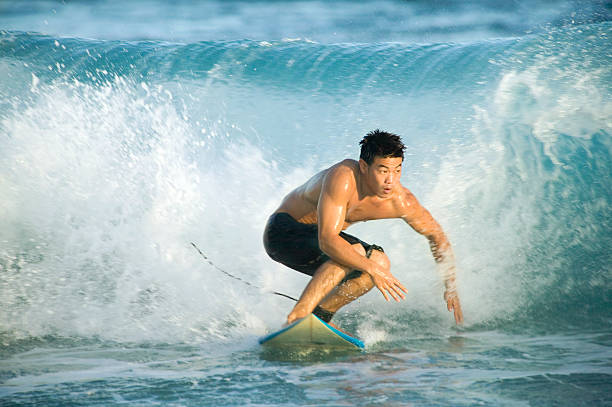
When the southeast swells roll up the coast of New South Wales and start stacking against the sandbanks of southern Queensland, something magical happens at Snapper Rocks. The Superbank, a stretch of point break that runs from Snapper all the way through Rainbow Bay and Greenmount to Coolangatta, turns into a kilometer-long conveyor belt of peeling perfection. It’s not just a wave; it’s a natural phenomenon that has reshaped the way we think about point breaks, and for the lucky crew who paddle out on the right day, it’s a religion.
The story of the Superbank is one of sand, swell, and sheer serendipity. Back in the day, Snapper Rocks was a punchy little reef break that threw a decent barrel but had a frustrating habit of closing out. Then came the dredging projects for the Tweed River entrance, and all that displaced sand started piling up along the seabed just off the points. The result? A continuous sandbank that linked the breaks into one long, winding wave that can run for up to a kilometer on the best days. Locals were skeptical at first, but when the first solid southeast swell lit up the entire bank, everyone knew the Gold Coast had stumbled onto something next level.
Riding the Superbank is a different beast from your average beach break. It demands respect from the moment you paddle out. The crowd factor alone is enough to humble even the most seasoned surfer. On a pumping day, the takeoff zone at Snapper is a chaotic mix of local rippers, traveling pros, and hopeful kooks all jockeying for position. You’ve got to earn your waves here, and if you don’t know the pecking order, you’ll find yourself on the wrong end of a stare-down or worse, a dropped-in wave that turns into a shouting match. But once you’re in, once you get that first hook at Snapper and feel the wall stretch out ahead of you, every drop-in, every close call with the sandbar, every paddling battle is worth it.
What makes the Superbank so special is its versatility. For the goofy-footers, it’s a dream come true, a right-hander that just keeps giving. Backside surfers find themselves in a playground of carving opportunities, while regular-footers get to practice their forehand snaps into the lip from start to finish. The wave walls up with sections that throw out little barrels, then open up into long racetrack walls where you can unleash cutback after cutback. The last section, known as “The Alley,“ often gets a bit fickle, but when it lines up, you can ride all the way to the rocks at Coolangatta, exhausted but absolutely stoked.
But the Superbank is more than just a physical wave. It’s a symbolic heart of the Gold Coast surf culture, a place where the past and present collide. The legendary surfers who grew up here, guys like Mick Fanning and Joel Parkinson, learned their craft on these very banks. The World Surf League event at Snapper Rocks, the Gold Coast Pro, draws the best on the planet, and watching them dissect the Superbank on a river of swell is a masterclass in style and aggression. For those of us who just paddle out on a Saturday morning, riding the Superbank connects us to that lineage, to the endless summer vibe that pulses through every surfer who’s ever chased a wave.
Of course, the Superbank isn’t always cooperating. It needs a solid east-southeast swell with intervals over twelve seconds, a sandbank that’s doing its thing, and preferably clean light offshore winds. When the stars align, the world’s longest right-hand point break in Australia reveals itself in all its glory. But even on average days, the Superbank offers a better ride than most spots on the planet. That’s why surfers from all over the world flock to the Gold Coast, chasing that perfect wave, that one ride that makes everything else fade away.
In the end, the Superbank is a testament to the power of nature and the spirit of surfing. It reminds us that the ocean is always changing, always building something new, and that the best waves often come from the most unexpected places. So grab your board, pick your moment, and paddle out to Snapper Rocks. The Superbank is waiting, and it doesn’t care who you are—it just wants to show you what a real wave looks like.