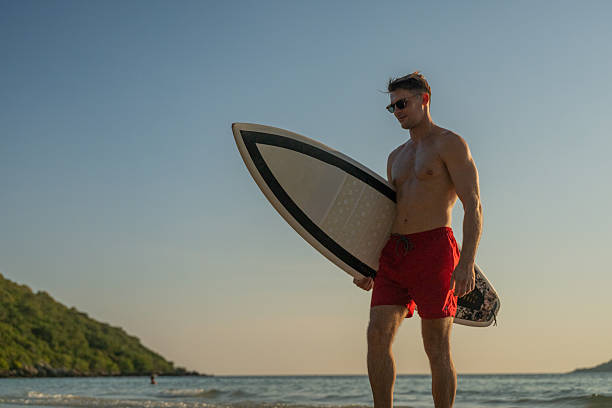
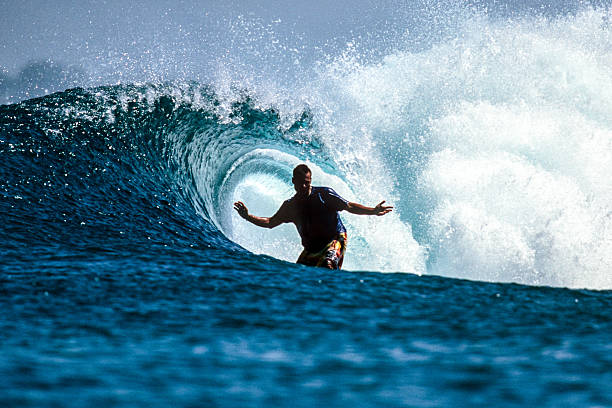
There’s a moment every surfer knows. You’re dropping into a steep, pitching face, the board humming beneath your feet, and you feel that split second of slippage—the back foot sliding just a millimeter toward the rail. In that instant, the whole wave changes. Your weight shifts wrong, the edge catches, and you’re eating foam before you even knew you were in trouble. That’s where the traction pad steps in, not as a fancy accessory, but as a fundamental piece of the puzzle that keeps you connected to the wave when things get critical.
A lot of dawn patrol legends still swear by the old school wax-only deck, and sure, there’s a certain zen to feeling the raw fiberglass through a layer of Sex Wax. But after you’ve had a few too many slip-outs on a steep bottom turn, you start to understand why the traction pad became such a staple in modern surfing. It’s not about looking like you’re sponsored by every board company in the quiver. It’s about that extra layer of security when you’re pushing through a heavy section, driving off the top, or trying to get that extra bit of leverage for a foam climb.
The genius of a good traction pad lies in the tail kick. That raised section at the back isn’t just for show. It’s a subtle but crucial tool that locks your back foot into a consistent pocket, giving you a repeatable reference point every time you drop into the wave. When you’re scrambling for positioning after a late takeoff, knowing exactly where your foot needs to sit without looking down is the difference between carving a clean arc and bogging a turn. The kick provides that physical cue, a positive stop that tells your body, right here, this is the spot. From there, you can pivot, slash, and drive with confidence, because that back foot isn’t going anywhere.
Then you’ve got the arch bar. That little spine running up the middle of the pad is often overlooked, but it’s the unsung hero of the whole setup. When you’re driving hard through a cutback, your back foot naturally wants to roll toward the inside rail. The arch bar catches that roll, offering a firm brace for the sensitive instep of your foot. It gives you a platform to push against, transferring energy more efficiently from your core through the board and into the water. Without it, you’re relying purely on muscle tension and your own balance, which gets tired fast on a long session.
Pattern matters too. The nubby texture that feels like a cheese grater to the touch is actually your best friend when the wax has washed off and the sun is baking the deck. The best pads use a mix of dense raised dots and grooved channels, creating both grip points and water drainage. When you’re paddling back out after a wave, that water sheds instantly, so you’re not sliding around on a slick surface. It’s the kind of detail you don’t think about until you’ve had one of those sessions where the waves are pumping and you realize you haven’t adjusted your foot position once all day.
Placement is where the real art comes in. Too far forward and you’ll find yourself stepping on the arch bar during your bottom turn, throwing off your whole stance. Too far back and you’re hanging your heel over the tail, asking for a nosedive on the drop. Most experienced surfers spend a good twenty minutes in the parking lot, holding their board, feeling the placement, shifting it millimeter by millimeter until it lines up with the exact spot where their foot naturally lands during a turn. It’s almost a ritual, that moment of getting the pad just right, because once it’s stuck down, it’s stuck for good.
And here’s the thing nobody tells you about traction pads: they change the personality of your board. A thick, aggressive pad with a tall kick makes a board feel more responsive and skatey, great for vertical surfing and tight arcs. A thin, low-profile pad with minimal arch keeps the board feeling loose and flowy, letting it drift and slide through big open-face carves. You can tune your equipment just by swapping out the deck traction. That’s a lot of power for a piece of foam and rubber.
In the end, the traction pad is about trust. Trust that when you plant your back foot and throw all your weight into a turn, the board is coming with you. Trust that you can focus on the wave, on the line, on the rhythm of the ocean, without worrying about your feet. It’s a silent partner in every session, catching you when you’re off balance and rewarding you with precision when you’re in the groove. Next time you’re trimming down the line and you feel that solid lock under your heel, you’ll know why it matters.