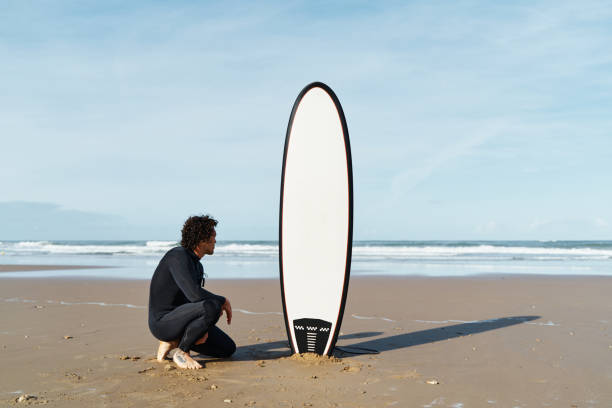
There’s a moment every traveling surfer knows too well. You’ve driven hours, maybe flown across an ocean, your board bag slung over one shoulder and a racing heart under your rash guard. You crest a dune or round a headland, and there it is—the ocean. And it’s flat. Glassy, sure, but flat as a parking lot. The stoke deflates like a leaky wetsuit. That’s the feeling you’re trying to avoid when you plan a surf trip, and the only way to dodge it is to treat the ocean like a conversation, not a coin flip. You don’t just show up and hope. You listen to the swell, the wind, and the tide. You learn to read the language of a coastline before your toes even touch the sand.
First, you gotta understand that waves are born in storms thousands of miles away. That pulse of energy travels across the deep blue, and when it hits your chosen break, it’s been shaped by the bottom contour, the reef, the sandbar. The first rule of planning any surf trip is to chase the swell period. Forget just looking at wave height—that number alone will fool you. A long-period swell from a distant low-pressure system can wrap around an island and light up a point break that hasn’t seen a clean wave in weeks. Short-period wind swell? It’s usually choppy and wonky, better left to the groms on foam boards. So you get yourself a solid swell forecast app, you study the buoys, and you look for that magic combination of fifteen seconds between swells and a direction that lines up with your spot.
But swell is only half the puzzle. Wind is the other half, and it can make or break your entire session. Offshore winds comb the wave’s face into a clean, hollow wall, the kind that makes you drop in with a hoot and a prayer. Onshore winds tear it apart, turning a promising peak into a washing machine of whitewater. When you’re planning a trip, you’ve gotta know the prevailing wind patterns for that region. Does the coast get a morning offshore that dies by noon? Is there a thermal breeze that kicks up every afternoon like clockwork? Most seasoned surf travelers live by dawn patrol for that reason—the wind is usually glassiest right after sunrise, before the land heats up and the sea breeze arrives. That’s the window you want to build your day around.
Tide is the third piece of the puzzle, and it’s the one that makes you feel like a local even when you’re a visitor. Every break has a tide range that works best. Some reef passes only come alive on a low tide, exposing the shallow ledge that makes the wave pitch into a barrel. Others need a high tide to cover the rocks and create a mellow, rolling face. You can’t just rock up at any hour and expect magic. So you check the tide chart for the week of your trip, align it with the swell direction and wind forecast, and find that sweet spot where all three converge. That’s your window. Maybe it’s only an hour or two a day, but in that hour you can score waves that feel like they were made just for you.
Then there’s the local knowledge you can’t get from an app. The internet is a good start, but it’s no substitute for talking to the guys at the local surf shop or the old salt nursing a coffee at the beachfront café. They know which sandbars shift after a storm. They know that the tide runs sideways at a certain hour, creating a rip that pulls you into the lineup without a paddle. They know that the offshore wind forecast says East, but the local terrain funnels it into a side-shore that only works on the second sandbar. You gotta be humble enough to ask, and grateful enough to listen. That’s how you earn the aloha. That’s how you avoid the embarrassment of paddling straight into a local’s peak during a “locals only” moment.
Flexibility is the real secret weapon. The best surf trips are the ones where you leave your schedule loose. Maybe you booked a house near a famous point break, but the forecast shows a storm swinging in from the north and pulsing the neighboring beach break. Pack the car, drive twenty minutes. Missing a day of “the spot” for a day of better waves somewhere else is never a loss. It’s the chase. That’s the spirit of The Endless Summer—you’re not locked into one lineup. You’re following the energy of the ocean, moving when it moves, resting when it rests.
And don’t forget to respect the rhythm of the place. If the swell is down, don’t force it. Go explore the tide pools, paddle a kayak upriver, or just sit on the cliff and watch the horizon. The ocean will turn on again. It always does. Planning a surf trip isn’t about controlling the elements—it’s about aligning yourself with them. You learn the swell windows, you check the wind and tide, you stay loose, and you trust the process. Then when that first set rolls in, with the sun low and the wind off the land, you paddle out with a grin that says you knew all along.