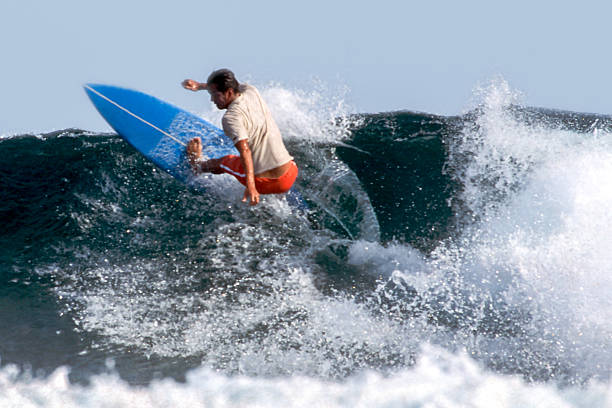
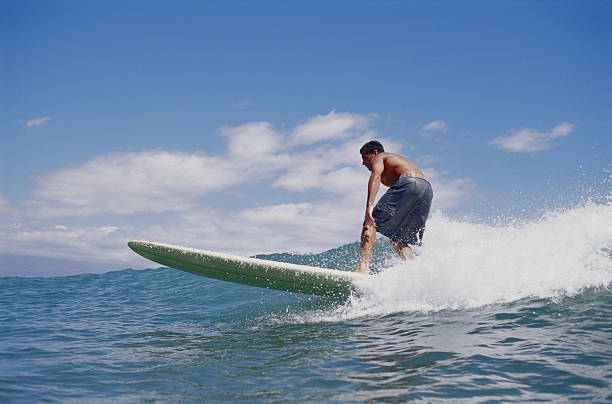
When you watch the best free-surfers throw airs, your first thought is the flips and grabs, the rotations and the stomps. But the real magic happens long before the board leaves the lip. It’s all in the setup—that sweet little carve down the line that sets your trajectory, your speed, and your entire connection to the wave face. Without a proper approach, an aerial is just a wild heave that ends with a fin to the skull or a rag-doll tumble in the foam. With it, you unlock a whole new dimension of riding.
Think of the setup as the wind-up for a pitch. Load the spring before you pop. Find that exact point where the section is bowling, a few feet ahead of the foam ball’s spit. You want a lip thick enough to support your board, but not so heavy it crunches your fins. The ideal is that little nodule of water jacking up just enough for you to hit at full lift. Get there with your rail engaged and body coiled.
Most groms mess up by dropping straight down the face and swinging wildly at the lip like a piñata. No finesse. Instead, take a high line above the trough, then drive off your back foot as you come into the section. This is where the speed generation whispers come into play. You pump, but not frantically. Look for that smooth rhythm from pushing your board through the flat while keeping your torso quiet and your eyes locked on the lip. The resistance under your rails becomes your friend. You’re building tension like a coiled snake, then transferring that energy upward as you hit the base.
Here’s the key move that separates the airhead from the airman: the pivot. Right as you make contact with the lip, you don’t just bash straight into it. You carve a subtle fade, a little cheated angle that lets the lip receive your board like a friendly ramp. Think about pointing your lead shoulder toward the beach, not along the line. That little bit of backside rotation gives your board the purchase it needs to actually stick to the lip for that split second before release. It’s like hitting a curb on a skateboard—if you approach it dead-on, you’ll stop dead; if you hit it at an angle, you’ll launch. The same physics work on your home break.
Your bottom turn is where the aerial is truly won or lost. You don’t want a lazy, long bottom turn that just rolls you back to the lip like an old man on a log. You want a tight, radical bottom turn that’s compressed right at the moment when the wave’s pocket is at its peak. Load up on your rail, sink your weight low, and then as you come through the bottom, explode upward with everything you’ve got. Your arms should be doing more than flailing; they should be leading the rotation, with your rear hand reaching back toward the wave face and your front arm pointing where you want the board to go. That cross-body action creates the spin that lets you break the surface of the lip and sail free into the air.
The mental side of the setup is just as critical as the physical. You can’t be thinking about the rotation or the grab or the landing. You have to be entirely focused on the bottom turn and the angle of attack. Once you commit, you commit. No hesitation. That’s why it’s called taking flight—you’re leaving the water’s grip, but only if your flight path is set from a solid runway. Surfing is flow, and the aerial is that flow into the sky.
When you finally nail that setup, the feeling is truly beyond stoked. The wave offers up a very perfect ramp, you hit it with speed and precision, and for a moment you’re weightless. The board tracks under your feet as if on a rail in space. Then you spot the water below, bring it back down, and take off again into the next section. That’s always the endless joy of chasing aerial dreams, and it all starts with the setup and flow. Pure stoke, man.