Some sessions you just know are special before the first paddle out. The air hangs thick with salt and anticipation, the swell lines roll through the reef like they own the place, and the world’s best are all scratching for position. But nobody saw this coming. Not the commentators, not the betting crews, not even the local boat skippers who’d watched a thousand heats peel across that infamous left-hander. When the final horn sounded at the Cloudbreak Pro, the name on everyone’s lips wasn’t a world champ or a tour veteran. It was Makoa Lani, a twenty-two-year-old wildcard from a tiny surf town on Oahu’s North Shore who’d never made it past the Round of 32 on the Championship Tour.
The conditions were firing from dawn patrol, with solid ten-foot sets grinding down the reef in perfect corduroy lines. The kind of day where the ocean tells you exactly who’s ready and who’s just pretending. Early rounds saw the heavy hitters flex their muscle. Three-time world champ Rodrigo Alves was threading tubes like he’d built the reef himself, pulling into cavernous pits that echoed like thunderclaps. Jade Mercer was stacking massive carves on the open face, her rail work so clean it looked like a geometry lesson. The script was written for a showdown between the usual suspects. But the ocean, as always, had other plans.
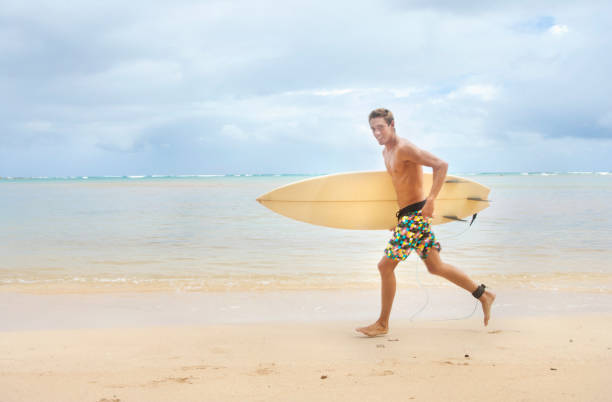
Makoa surfed his first heat like a man with nothing to lose, which was true. He’d gotten the wildcard through a last-minute sponsor shakeout, and his entire strategy was simple: don’t think, just feel. He sat deep in the lineup, letting the set waves sweep past the pack, reading the reef like an old friend. His backhand was a weapon he’d sharpened in shorebreak barrels back home, and Cloudbreak’s hollow lefts suited him like a glove. He’d snap off the top with a controlled fury, then disappear into the tube with a calm that bordered on disrespectful. By the quarterfinals, people were starting to murmur. By the semifinal, he had eliminated Alves in a heat that saw the champ caught inside on a cleanup set and Makoa tucking into a ten-point barrel that the judges still haven’t made sense of.
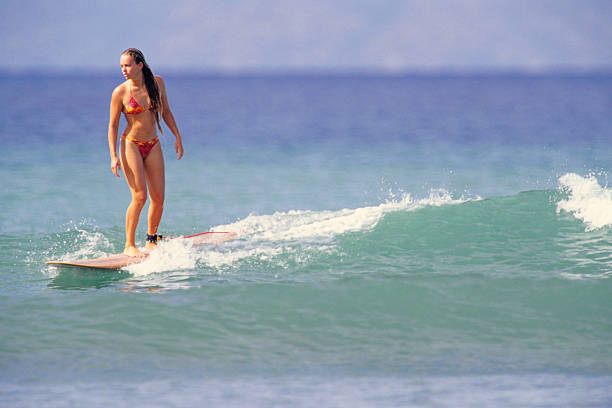
The final was against Mercer, a relentless competitor known for her aerial game and tactical aggression. She pushed early, throwing huge fins-free airs that had the crowd gasping. But Makoa stayed patient, picking off the second wave of each set, using the ocean’s rhythm against her. With three minutes on the clock, he was down by a score that seemed unsurmountable. Then came the wave. A pulse of deep-water energy that swung wide and lined up perfectly. He took off, bottom-turned with his chest nearly touching the crest, and slid into a tube that lasted an eternity. The whole wave was a single, unbroken barrel, and he emerged with a casual flick of his back foot, as if he’d just stepped off a bus. The judges gave it a near-perfect 9.87, and the lead changed hands for the first time in the heat. The horn sounded. Makoa raised his board to the sky, and the beach exploded.
What made this upset so special wasn’t just the victory. It was the way he altered the conversation around competitive surfing. For years, the CT has been a club of polished athletes who train with sports psychologists and nutritionists, who fly to events on private jets and deconstruct every heat on video review. Makoa showed up with a patched wetsuit, a board he’d shaped himself in a garage, and an intuition that couldn’t be coached. He surfed like a kid who still does it for the pure, unbridled joy of feeling a wave bend under his feet. In his post-heat interview he just smiled, saltwater dripping off his chin, and said, “The ocean doesn’t know your ranking. It just gives you what you need.”
Already, the whispers are starting about a new era. Tour veterans are rethinking their approach, and the wildcard pipeline is suddenly the hottest ticket in the sport. Sponsors are fighting to sign him, but Makoa has made it clear he’s not in a hurry. He’s back on that North Shore beach, sleeping in his van, doing dawn patrols with his buddies. He won a prestigious event, but he still acts like the ocean owes him nothing. That’s the thing about churning up the rankings – it never changes the surf. The lineup at Cloudbreak will hold the same magic tomorrow, and maybe that’s the real lesson. Titles fade, trophies tarnish, but a perfect tube at a world-class reef is forever. And for one shining day, a nobody showed everybody what forever looks like.