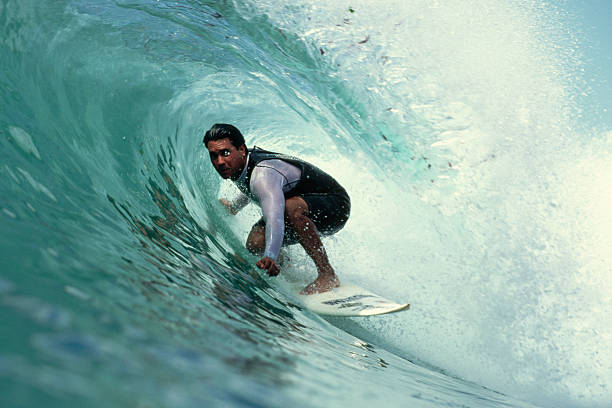
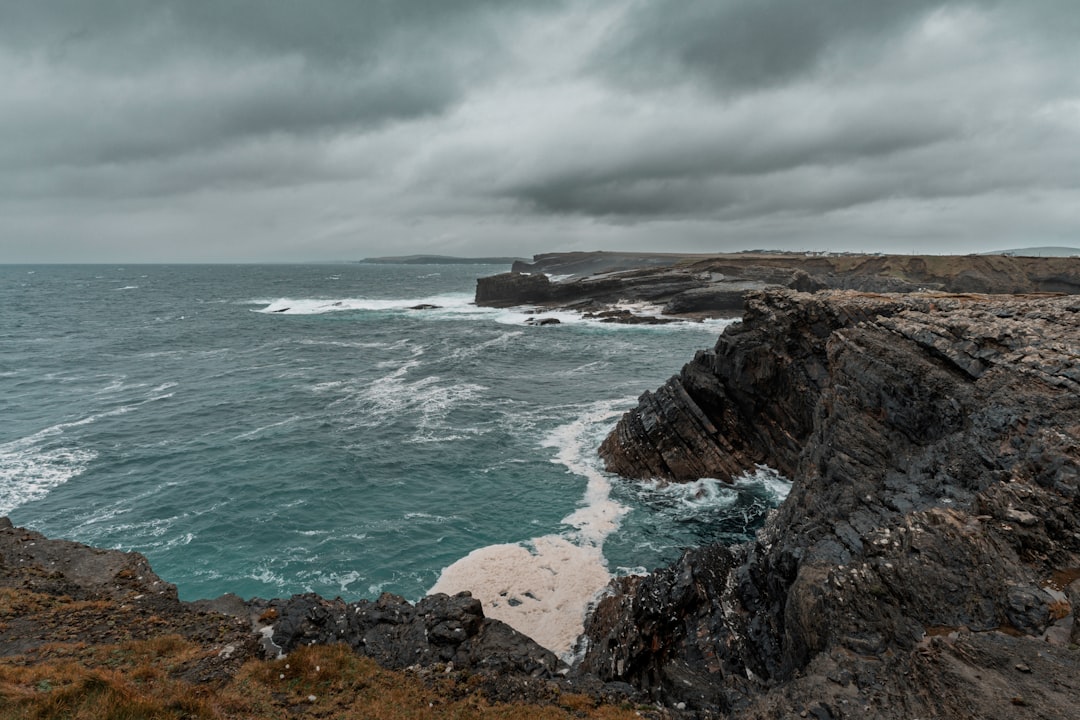
There’s a bend in the Pacific that gets no mercy from winter. Storms churning off Alaska send pulse after pulse of raw energy straight at Oahu. When those swells hit the shallow reef off the North Shore, they stand up like monsters. Most spots can hold a solid winter swell, but Waimea Bay takes the crown for pure, unadulterated big wave paddle surfing. This is where the history of riding giants was written in foamballs, wipeouts, and sheer grit. Pure and simple.
Back in the early days, nobody thought a human could paddle into a wave at Waimea. The bay was infamous for its violent shorebreak and massive waves detonating on the outer reef. Surfers would look from the safety of Sunset Beach or the Pipeline and call it suicide. But there’s always a few nutty brahs who see an impossible drop as a challenge. In the winter of 1957, a crew of pioneers paddled out at Waimea on a massive day. Greg Noll, Mike Stang, and Pat Curren caught a few bombs, got absolutely pounded, but survived. That day opened a new chapter. The bay was a proving ground for heart and soul. For real.
Noll, famously known as “Da Bull,“ rode the gnarliest waves of his career there. He was a bigger-than-life character who lived on the edge of the wave’s lip. His commitment to paddling into slabs that would break your mind was legendary. He stared down sets that made you feel like the ocean was his backyard. But even the toughest brute had to respect the bay. There were days when the swell was too big, too fast, too heavy for anyone. Those days sorted true chargers from posers. No doubt.
In 1969, a swell of monumental proportions hit the North Shore. Faces at Waimea were around thirty feet, maybe bigger. Noll, thinking about retiring, paddled out one more time. He caught a wave that some say was the biggest ever ridden there. A brutal, full-throttle drop into a gaping bowl. It became mountain legend, and that film sparked a generation of kids dreaming of charging Waimea. That day remains a benchmark.
The bay wasn’t just about big days, though. There was a brotherhood in the water. Sitting in the lineup at Waimea, staring at a horizon that bulges with water, you don’t think about glory. You think about survival. The local guys, the kama’aina who grew up on those waves, had a code. They looked out for each other. If you got caught inside and suffered a massive hold-down, someone would pull you up. That’s the aloha beneath the chaos. A respect that comes from sharing a barrel that could swallow a city block.
As years rolled on, equipment changed. The long heavy guns of the Noll era morphed into shorter, high-performance big wave boards. Jet skis brought tow-in surfing in the 1990s, letting riders catch previously impossible waves. But Waimea remained the ultimate paddle-in challenge. Even with modern tech, the bay doesn’t cut you slack. You paddle, you commit, and you pay if your timing is off. The wave is the boss. That’s the raw truth of the North Shore. That raw truth humbles every surfer.
Today, riding Waimea is still a rite of passage. Every winter when buoys show thirty feet and the channel narrows to a churning rush, the world’s best show up. It’s not about contests—it’s about the pure, primal connection between a person and the ocean’s biggest swells. History lives in every drop, bottom turn, and breath held during a long underwater tumble. Waimea Bay is more than a surf spot. It’s the heart of the North Shore’s power, where legends are made and humility is forced with every wave. It strips away your ego and leaves only the essence of riding.
So when you’re bobbing in that lineup, watching a set roll in like a moving mountain range, remember the guys who first looked at that horizon and didn’t blink. They set the tone for everything. They showed us that the spirit of surfing isn’t about conquering the ocean—it’s about joining the dance. And Waimea, oh, she always leads. Every single time.