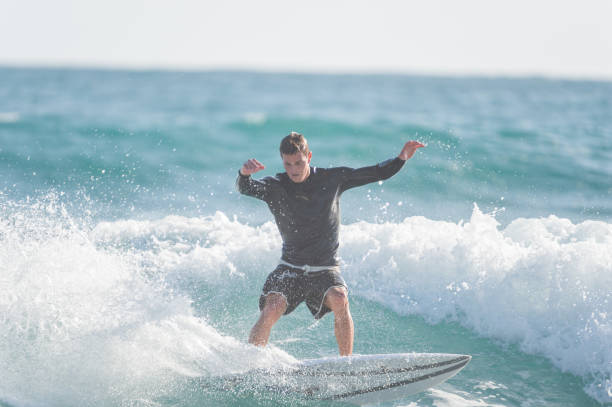
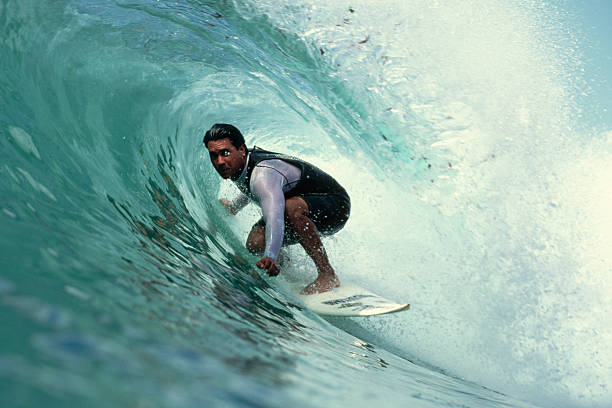
It ain’t news that we surfers are saltwater junkies with a heavy dose of Mother Nature love. We paddle out at dawn, watch the horizon burn orange, and feel the ocean breathe under our boards. We pick trash off the beach when nobody’s looking and curse the plastic straw that floats past our leash. But here’s the dirty little secret buried under the wax: our boards themselves have been toxic as hell for decades. The traditional polyurethane blank, the polyester resin, the glassing fumes that make your brain go sideways after a long afternoon in the shaping bay—it’s a legacy of petrochemical sludge. The same industry that gets us stoked a few times a week has been giving the ocean a serious case of bad karma. Lately, though, something’s shifting. Not the sandbars, but the minds behind the glass. The surf industry is finally waking up to the fact that you can’t call yourself a caretaker of the sea while puffing out styrene clouds and chopping down rainforest trees for stringers. So a bunch of salty dogs and garage tinkerers are doing what surfers do best: they’re improvising, fixing the old ways, and making waves in the name of sustainability.
The heart of the change is the blank itself. For decades, PU foam ruled the roost—lighter, maybe, but a real polluter to produce and damn near impossible to recycle. Then came EPS, which is essentially expanded polystyrene, the same stuff as your leftover coffee cup. EPS has its own downsides, but it’s got a surprising advantage: it can be made from recycled material and, more importantly, it can be melted down and turned back into new blanks. That’s a closed loop, bro. Several boutique foam manufacturers are now cranking out blanks that are 100 percent recycled EPS, with nary a virgin pellet in sight. They call it “regrind” or “repurposed foam,“ and it’s popping up in shapers’ racks from San Clemente to the Gold Coast. The best part? It shapes almost exactly like the virgin stuff. You’d be hard pressed to tell the difference when you’re locking into a hollow left. The flex patterns are there, the pop is there, and the ocean doesn’t have to swallow another load of petroleum goop just so you can punt an air reverse.
But foam’s only half the story. The resin that holds a board together and glass it up to take a beating has been even gnarlier. Polyester resin is nasty, smelling like a chemical war crime and off-gassing for months after the board leaves the factory. Epoxy is better for your lungs but still derived from fossil fuels. The new kids on the block are plant-based resins made from soybean oil, pine sap, and other renewable biomass. They cure in the same bagging process, they sand up clean, and they ding less than you’d think. Some shapers swear they’ve got a touch more flex than the old school stuff, giving you that lively, bouncy feel that makes a twin fin feel like a springboard. It’s not just a niche experiment either—a few major glassing shops have switched entire production lines to bio-resin, and the price tag is finally coming down to within hailing distance of the regular stuff. For the weekend warrior who wants a board that goes as hard as it respects the lineup, that’s a legit game changer.
Of course, there’s the stringer, the thin strip of wood running down the center that gives the board its backbone. The old school way was solid balsa or spruce, fine enough, but commercial suppliers were burning through old-growth timber likes it’s going out of style. The eco answer? Bamboo. It grows like a weed, regenerates without replanting, and has a strength-to-weight ratio that puts most hardwoods to shame. Bamboo stringers are showing up in everything from thrusters to longboards, and some shapers are even using full bamboo veneers in place of fiberglass on the deck. That gives the board a killer natural look, a smooth feel under your feet, and a much smaller ecological footprint. Plus, when your board finally snaps after three years of heavy juice, it’ll break down a lot faster in a landfill than a slab of plastic ever will.
None of this is perfect yet. The surf industry is still a stubborn beast, more driven by fashion and superstition than by hard science. A lot of the “green” boards on the market are pure greenwash—a recycled sticker on the stringer but a virgin foam core made in China with toxic resins. You gotta sniff out the real deal, ask your shaper what’s actually in the blank, check if the glassing shop uses bio-catalyst. But the momentum is real. Small brands with names like Vertra and Firewire and Earth Technologies are pushing the envelope, and the big boys like Channel Islands and Lost are starting to offer eco-spec boards alongside their pro models. The contest scene is catching on too—more than a few WSL events have featured heats where the surfers are riding plant-based resin over recycled foam, and nobody’s performance has tanked because of it.
At the end of the day, surfing isn’t about the board—it’s about the connection. The stoke of a clean barrel, the salt in your hair, the quiet respect for something way bigger than any of us. If the gear we ride to chase that feeling can be made without choking the source, then we’re doing it right. The industry’s eco wave is still peeling, still gathering size, but it’s not a fad. It’s a recognition that we’ve been borrowing from the ocean with no intention of paying back. Now we’ve got a chance to paddle back out and offer a token of thanks—one recycled blank, one bamboo stringer, one bio-resin seal at a time. That’s a trade we should all be stoked to make.