You ever watch the tour guys do an air reverse and think, man, I just don’t see that ramp? They make it look like the wave simply offered them a stairway to heaven, a perfect wedge of water that launched them sky-high with zero effort. But if you paddle out and try to huck yourself off the first lumpy section you see, you end up eating foam, spinning out on your fins, or landing flat with a back-crunching thud. The truth is, the best airs don’t come from raw power or massive hucks; they come from a quiet, almost Zen-like ability to read the micro-angles of the wave face. It’s not about seeing a big ramp, but about feeling the subtle compression of the water and understanding exactly where that energy will transform from lateral speed into vertical lift.
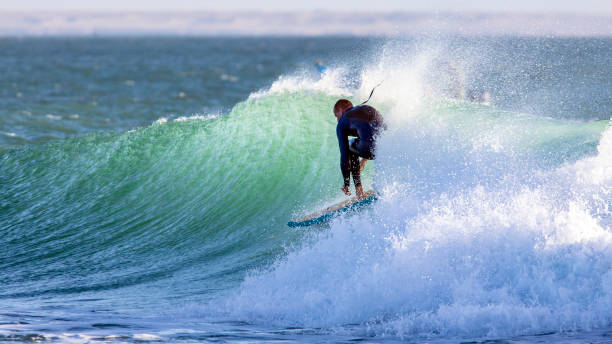
When you first start thinking about aerials, your eyes naturally scan for the obvious. You look for that steep, pitching lip at the critical section. That’s the theatrical version. But a seasoned aerialist sees something different. They see the shoulder. They understand that the ramp isn’t always at the peak of the wave; often, it’s twenty feet to the side, way out on the fat part of the face. The trick is to watch the water as it stacks up. As the wave’s energy pushes toward the shallows, the water column compresses. You can see it as a slight bulge, a shimmering lens of water that looks a shade darker and feels firmer under your feet. That subtle lump, that micro-ramp, is your ticket. You don’t want to hit the lip at its most vertical point. You want to hit it just before, where the water is still pushing up but hasn’t yet thrown out. That’s the sweet spot where your board will grip and then release.
Think of it like a skateboarder looking at a curb. They don’t ride straight at the vertical edge; they approach at a sweeping angle, using the transition to convert forward momentum into upward momentum. On a wave, that angle is everything. You need to approach the ramp on a high line, already carrying speed, but you can’t go straight at it. You have to carve a winding bottom turn that leaves your shoulders open to the beach, your eyes locked on that bulge. As you draw that turn up the face, you are essentially loading your back leg like a spring. The moment you feel your fins start to stall slightly—that familiar sensation of the board starting to lose its grip—that is the exact instant to unweight. You don’t jump. You simply release the tension. If you’ve read the ramp correctly, the wave will do the rest, popping you off the water like a breaching dolphin.
The most common mistake is forcing it. A heavy man’s huck where you stomp the tail and try to muscle the board into the air. That usually ends with your fins catching the lip and sending you into a spectacular, and painful, tombstone. The real art is in the patience. You have to trust that the wave’s energy will provide the lift if you just set the proper angle. It’s about finesse, not force. The best aerialists, from guys like John Florence to the groms at the local beachie, all share a common trait: they look almost lazy as they set up for the launch. There is no frantic pumping, no jerky movements. Just a smooth, flowing carve that escalates in curvature until the board naturally detaches from the water’s surface.
Once you start recognizing these subtle ramp formations, the entire ocean changes for you. You stop seeing a closeout section as a wall of death and start seeing it as a potential launch pad. You begin to feel the wave’s pulse through your rails, sensing where the compression will be strongest. This is the essence of reading water. It is an ancient skill, the same one that lets a longboarder find the glidey part of a mushy wave or a shortboarder find the barrel section. In the air game, you are simply looking for a different type of pocket. You are looking for the pocket of vertical lift. When you find it, and you commit, the world tilts sideways and you experience that fleeting, silent moment of pure flight that keeps you coming back for more. So next session, don’t just look at the lip. Look at the shoulder. Look at the bulge. Find your ramp, and you will find your wings.