Let’s cut straight to the chase. In the entire surfing experience, from the first pop-up to your last fading step off the board, there is no single moment more pure, more powerful, or more sought-after than getting barreled. It’s the holy grail, the ultimate tube, the reason we paddle out on days that make landlubbers shake their heads. It’s not just a maneuver; it’s a baptism, a fleeting second of perfect harmony between surfer, board, and a moving mountain of water. Everything else is just prelude.
The setup is everything. You’re not just catching a wave; you’re hunting a specific kind. You need a wave with a steep, pitching lip and a clean, open face. Reef breaks and point breaks are the usual suspects, offering that organized, hollow energy. You see the lump on the horizon, you paddle with purpose, and you take off late and steep, aiming to get deep, right under the curling lip. The goal is to get yourself ahead of the pitching section, to be traveling at the same speed as the wave’s curl. This is the moment of commitment. There’s no half-stepping here. You either go, or you get eaten.
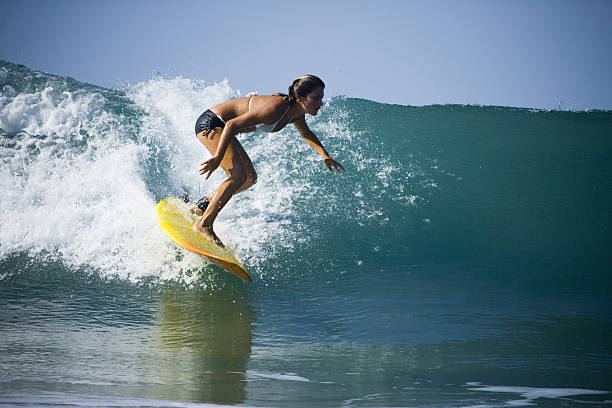
As you make that bottom turn, it’s a hard, committed carve up the face, not a casual flick. You’re not turning to go along the wave; you’re turning to get into it. You drive off your back foot, project your weight forward, and aim your board’s nose for that sweet spot just as the lip begins to throw out. This is the entry. Time does that weird surfer thing—it both slows down and speeds up. You see the curtain of water begin to form over your head, and you make micro-adjustments. Too far forward and you’ll pearl, too far back and you’ll get left behind, the wave spitting out an empty tube.
Then, you’re in. The sound changes. The roar of the outside world mutes, replaced by a deep, echoing rumble. The light turns a cool, ethereal green. You’re in the room. Your stance is critical now: low center of gravity, knees bent, arms out for balance. You’re not just standing there; you’re compressing, absorbing the energy of the wave, and using subtle weight shifts on your rails to keep yourself in that pocket of forward drive, right in the sweet spot between the falling lip and the rising face. You’re looking down the line, through the tube, your eyes on the exit, but your whole body is feeling the wave. This is the ultimate tube ride—a high-speed meditation in a collapsing liquid cavern.
The exit is its own art form. You see the daylight at the end of the tunnel widening. You might need a slight stall, letting the wave get a little ahead of you before you drive forward again to shoot out. Or, you might just keep your speed and get spat out like a bullet from a gun, that glorious explosion of spray marking your triumph. The spit-out is the wave’s signature on a perfect ride.
Of course, for every make, there are a dozen wipeouts. Getting pitched over the falls, held down, and rag-dolled in the washing machine is part of the tuition. It’s called getting worked for a reason. But that one make, that one perfect tube where everything aligns, erases every hold-down, every missed wave, every freezing paddle-out. It’s the addictive hit. It’s the image that plays in your mind on flat days. It’s the story you’ll tell forever. Because riding the barrel isn’t just a surfing technique; it’s the whole point. It’s the ultimate tube, and once you’ve tasted that green room, you’ll spend the rest of your life chasing that feeling, forever chasing the sun for another endless summer of perfect pits.