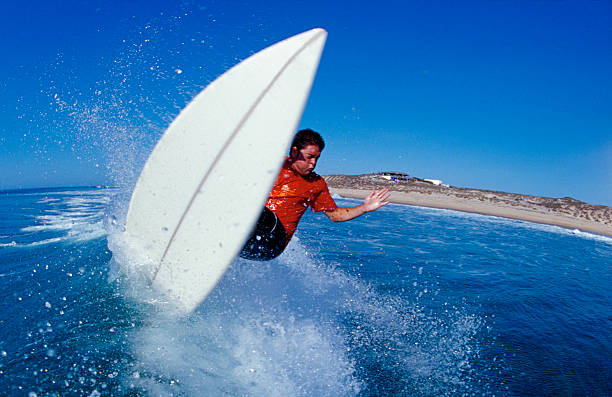
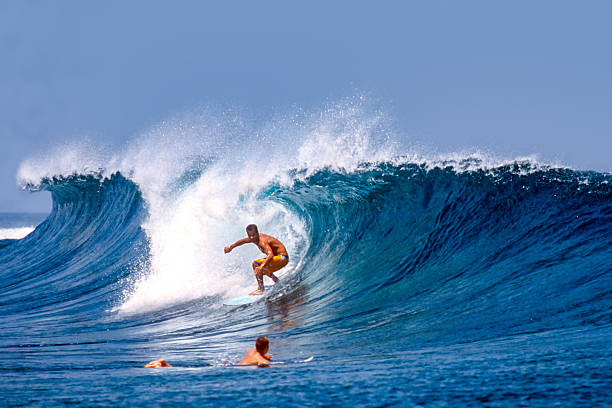
Let’s cut straight to the chase. In the evolution of surfing, the aerial stands as the definitive modern benchmark, the moment where a surfer breaks the ocean’s gravitational pull and takes flight. It’s no longer just about riding the wave; it’s about using it as a launch ramp to defy it. For the everyday surfer chasing that endless summer stoke, understanding the aerial is like peeking under the hood of high-performance surfing. It’s the blend of raw power, precise technique, and pure commitment that separates a good session from a legendary one.
At its core, an aerial is exactly what it sounds like: getting airborne off the lip of a wave. But calling it a “jump” is a kook move. This is a calculated launch. You’re not just hopping; you’re projecting. The wave becomes your takeoff ramp, and your board becomes an extension of your feet, a pair of wings you have to control in three dimensions. The goal isn’t just to get air—it’s to get air, maneuver, and stick the landing back in the pocket of the wave, all while maintaining enough speed to keep going. It’s the surfing equivalent of a slam dunk.
So, how do you trade water for air? It starts with the setup. You need the right wave—a section with a steep, pitching lip, preferably a shoulder that’s about to throw out. Think of it as nature’s half-pipe. You’ll approach this section with serious speed, a few strong pumps down the line to build momentum. Timing is everything. Too early, and you hit flat water. Too late, and the lip throws over you. You want to hit that lip as it’s throwing out, using its upward energy as your springboard.
This is where the magic happens. As you hit the lip, you don’t just go with it. You project. A strong bottom turn sets your line upward, and then you use your legs like pistons, exploding off the top third of the wave. Your back foot is the accelerator, driving the tail into the lip for pop. Your front foot guides the direction. You’re not standing straight up; you’re coiled, then released. In that split second of takeoff, you’re an athlete, not just a rider.
And then you’re up. This is the “in-between” where style and control are tested. The board is weightless. This is when you tweak a grab—a stalefish, an Indy, a slob—to stabilize your flight and add some flair. Your head and shoulders lead your rotation if you’re going for a spin. But your eyes are already locked on your landing zone. You’re not looking at your feet; you’re spotting where you need to re-enter. The pocket, that sweet spot just behind the breaking curl, is your target.
The landing is the make-or-break. It’s all about absorption. You don’t just land; you let your legs collapse to suck up the impact, board angled slightly downward to pierce back into the wave face, not slap on top of it. It’s a controlled crash back into the water. If you’ve done it right, you’ll feel that reconnect, that sudden grab of your fins as you stick it and keep racing down the line. The sound of the spray, the feeling of having defied physics for a second—that’s the payoff.
Mastering the aerial isn’t something that happens in a week. It’s a progression. It starts with little airs, just getting the fins off the lip, then progresses to bigger launches and more complex maneuvers. It requires the right equipment, too—a shorter, lighter, more responsive board with plenty of rocker is your trusty steed here. But more than gear, it demands a mindset. It’s about commitment, repetition, and embracing the inevitable wipeouts as part of the journey. Because when you finally stick that first clean air, you’re not just surfing anymore. You’re flying. And that, friends, is a feeling that fuels the endless chase.