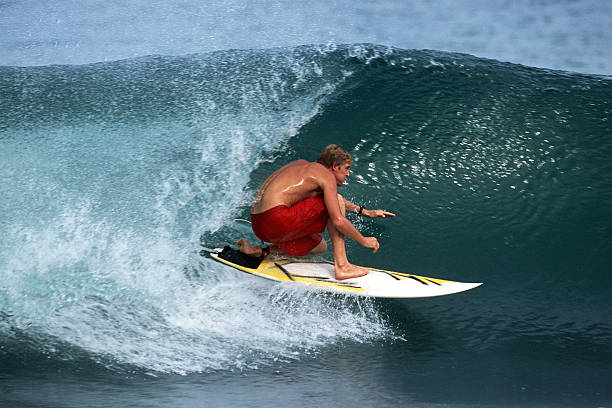
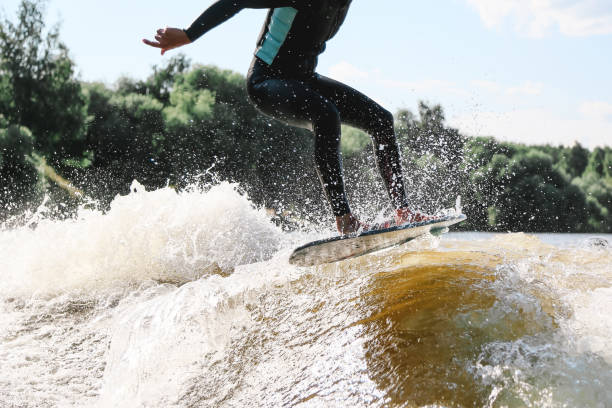
There comes a moment in every surfer’s journey when you realize that simply getting to the bottom of the wave and aiming back toward the shoulder isn’t enough. You want to leave a mark, a line that tells the story of your session. That’s where the cutback steps in. It’s not just a turn; it’s the heart of surfing’s dance, the move that lets you change direction with style, grace, and a whole lot of soul. When you’ve got a nice open face, you’ve built up some speed, and then you feel the urge to come back and hit the whitewater where it’s fat and juicy—that’s your moment. The cutback is your tool for staying in the power source, for keeping the ride alive when the wave starts to close out or when you need to lose a little speed to set up for the next section. It’s the move that separates the weekend warriors from the ones who truly feel the wave.
A proper cutback is all about flow. You can’t muscle it. You can’t just yank the board around. That’s a recipe for a slide-out or a pearler. You need to look back at where you want to go, not at your fins. Your head drives the turn. As you come off the top or off the bottom, you shift your weight to your back foot, and you start to carve. But here’s the secret: it’s not just about the board turning. It’s about your whole body. Open your inside shoulder toward the whitewater. Let your back hand trail. This gives you that perfect, smooth carve that feels like you’re tracing a perfect half-circle on the wave’s canvas. The board is a tool, but your intention is the real driver. You need to be patient. The wave will tell you when to start the turn. You feel that slight hesitation, that moment when the wave pushes back? That’s your cue. That’s the wave asking you to commit.
Now, the mechanics of a good cutback depend on your equipment, but the feeling is universal. On a longboard, you’ve got time. You can cross-step, plant your weight, and use that big rail to push water with power. The turn is smooth and drawn out, more like a sweeping arc. You can even stall a little, let the foam wash past you, then pivot on your tail. That’s pure noseriding territory, but the essence is the same: you’re redirecting your momentum. On a shortboard, the cutback gets tighter, quicker, more vertical. You drive off your fins, you snap that rail into the water, and you feel the board almost spin around your hips. The modern shortboard cutback is a show of power. You’re not just turning; you’re wrenching the board through a tight arc, trying to match or exceed the wave’s own down-the-line speed. The best surfers make it look effortless. Their upper body is relaxed, their eyes are locked on the section, and their board does the work because they’ve set up the rail properly. They don’t force it. They guide it.
One of the most beautiful aspects of the cutback is how it connects the different parts of the wave. It’s the thread that ties your bottom turn to your top turn, your off-the-lip to your next re-entry. A wave is never a straight line. It’s a living, breathing animal that pulses and changes. The cutback allows you to respond. You see a section coming, you know you need to hit it with speed, but you’re too far out on the shoulder. So you carve back, you pump, you gather your momentum, and then you release back down the line. That is the true function of the cutback. It’s not an end in itself; it’s a means to stay in the wave’s engine room. And when you do it with style, it becomes a statement. It says you’re not just being ridden by the wave; you’re riding it with intention.
There’s a deeper philosophy here that ties right into the endless summer spirit. The cutback teaches you patience. It teaches you to slow down in a world that’s always rushing. You have to wait for that exact moment of compression before you release the energy. You have to trust the rail and the water’s grip. When you get it right, it feels like a perfect note in a song. The wave hums. Your board hums. And for a split second, you and the ocean are in complete harmony. That’s what we’re all chasing. That feeling of sweet drift, of power under control, of changing direction not because you have to, but because it feels so damn good. Whether you’re carving on a thruster at a reef break or cross-stepping on a log at a mellow point, the cutback is your voice. Use it well. Respect the wave. And always, always, look back.