There’s a moment right before you drop into a fast, shallow reef barrel when everything goes quiet. The roar of the ocean fades, your heartbeat thumps in your ears, and all that exists is the dark, curving lip above you and the exposed coral below. This is the arena where technique separates the story from the stretcher. Mastering these waves isn’t about brute force; it’s about reading the reef like a surfer reads a tide chart—with patience, instinct, and a heavy dose of respect for what the ocean’s gonna dish out.
The first thing any surfer needs to wrap their head around when tackling a hollow reef break is the approach. You can’t paddle into a fast, shallow slab the same way you’d slide into a mellow beach break. The timing has to be earlier, the stroke count has to be longer, and your positioning has to be a few feet deeper than your brain wants to go. Most wipeouts happen because a surfer hesitates, pulls back, or drifts too far inside. On a reef, hesitation is the enemy. When you see that lump of water start to jack up in the lineup, you commit. You paddle hard, keep your eyes on the peak, and feel for that moment when the wave lifts your tail and you know the drop is on.
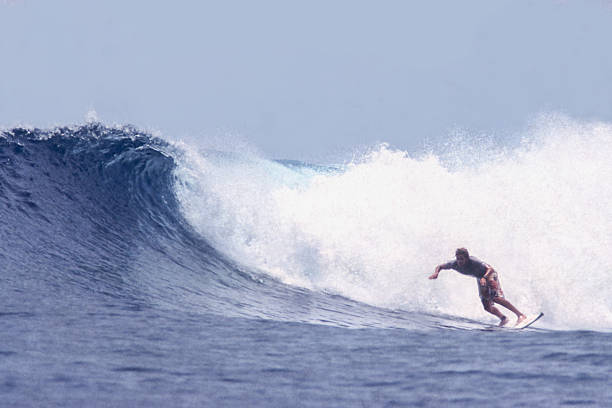
Once you’re on your feet, the drop is a controlled fall. A lot of beginners make the mistake of looking straight down at the reef. Bad idea. That reef is a magnet for fear. Instead, you want to lock your gaze on the exit, or at least on the section of the wave that’s about to throw. Your weight needs to be centered—not too far forward or you’ll pearl, not too far back or you’ll lose the rail and slide out. On a steep reef break, the rail is your anchor. Engage it early. A heavy bottom turn, almost a carving sweep off the bottom, sets your trajectory. You’re not just turning; you’re loading the board like a spring so you can shoot back up into the pocket.
The pocket is where the magic lives. In a hollow reef wave, the pocket is that curve of green water that’s pitching out in front of the whitewater. You want to stay tucked right in the curl, not too deep, not too far out. If you’re too deep, the lip will land on your head and you’ll get ragdolled across the reef. Too far out, and the wave will close out or you’ll lose the barrel altogether. The sweet spot is right under the falling lip, where the water is still moving fast but there’s enough space to breathe. This is where you learn to read the wave’s behavior. Every reef has a personality. Some waves throw a thick, heavy lip that demands a quick crouch and a prayer. Others are more spitting, like a tube that opens up just enough for you to stand tall and grab your rail.
Body positioning inside the barrel is a whole other game. You want to keep your head down, almost like you’re trying to duck under a low doorway. Hips forward, back foot heavy on the tail to stall if you’re getting too close to the exit, or shift weight forward to boost speed if the wave is sucking you into a close-out. Your arms should be slightly out for balance, but not flailing—think of a cobra ready to strike. The most experienced reef riders use their front hand to feel the wall, sometimes brushing a finger along the face as a way to gauge how much water is still pushing. That tactile feedback is priceless when the wave is moving too fast for your eyes to process.
One of the biggest lessons reef breaks teach you is how to handle sections. A section is a part of the wave that closes out prematurely or goes flat. On a beach break, you might bounce from section to section with a cutback. On a reef, that luxury doesn’t always exist. You might have to pull into a deep barrel and then, when the wave reforms, try to pump out and set up for a second barrel. This is where wave selection and reading the ocean floor matters most. Spend time watching the tide. A low tide on a shallow reef can turn a fun wave into a death trap. A high tide might soften the drop but open up longer barrels. Know that reef like you know the back of your board.
And then there’s the exit. The moment of truth. Some barrels let you out gentle, like sliding through a curtain. Others hurl you out sideways in a spray of foam. The key is to stay calm and keep your speed. If you try to turn too early, you’ll blow the exit and get caught inside by the next wave. If you’re too late, you’re riding the foam ball into the rocks. Trust the momentum. Let the wave push you out, then stomp the tail, throw your shoulders into a snap or a cutback, and you’re free. Clean exit, heart still pounding.
Surfing a hollow reef break isn’t just technique. It’s a conversation with the ocean. The wave tells you what it wants, and you respond. Sometimes you get swallowed. Sometimes you come out clean. Either way, you paddled back out, you tried again, and you learned a little more about reading that green wall. That’s the endless part.