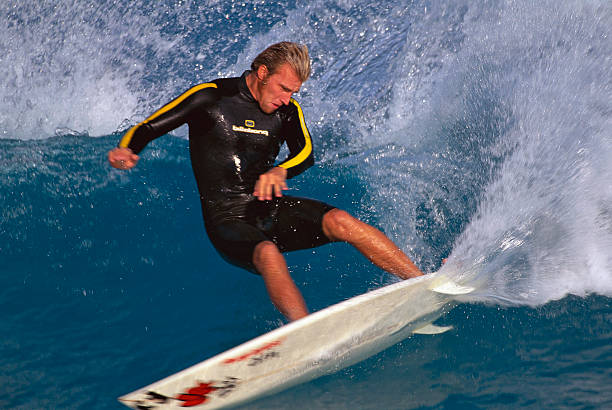
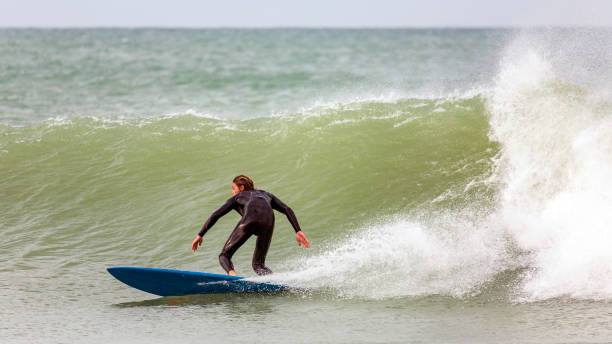
Forget the posters. Ditch the clichés. Living the surfing life isn’t about a permanent vacation or some Instagram-filtered fantasy. It’s a rhythm, a low-simmering priority that rewires your entire clock. It’s not a hobby; it’s a gravitational pull. When you’re truly living it, the ocean isn’t just where you play. It’s your barometer, your therapist, and the boss of your daily schedule.
It starts in the dark. The alarm goes off not for a treadmill, but for a dawn patrol. You’re checking the swell report before the news, reading wind charts like tea leaves. Your heart sinks at the sight of a flat spell and does a little dance when a new groundswell lines up on the buoys. Your vehicle isn’t just transportation; it’s a quiver on wheels, smelling of salt, wax, and neoprene. The passenger seat is for your wetsuit, the floorboards are sandy, and the soundtrack is the hum of the road heading coastward.
This life is built on simplicity, but it’s a purposeful simplicity. Your possessions are fewer, but they matter more: a reliable board for the local breaks, a go-to gun for when it gets heavy, a well-traveled fish for those playful days. You know your gear because your life, quite literally, depends on it. You’re tuning dings not as a chore, but as a ritual of respect for the tool that gets you across the face. You’re not just buying a wetsuit; you’re investing in more sessions in colder water. Everything serves the stoke.
The language shifts. Your greetings are “See anything?“ or “How was it?“ Time is measured in tides—“low tide drainer” or “high tide mush burger.“ You describe waves not as big or small, but as overhead, logo-high, or ankle-biters. A good day is “epic,“ “firing,“ or “all-time.“ A bad one is “victory at sea” or “closed out.“ You have a deeper, non-verbal connection with the dawn patrol crew—a nod of respect after a good drop, a shared laugh after a brutal wipeout. It’s a tribe bound by saltwater.
And yeah, it’s about chasing that endless summer feeling. But it’s not always palm trees and perfect barrels. It’s the mission. It’s the 10-hour drive for a chance at a new break, sleeping in a dented van, eating gas station food, all for a window of possibility. It’s the patience to sit through a three-hour lull, just you and the horizon, for that one perfect set wave that makes the entire journey worth it. It’s about logging miles not for a stamp in a passport, but for a memory etched in your mind: that left in Indonesia that seemed to go on forever, that cold, empty peak in Ireland, the surprise swell that hit your home break on a Tuesday.
But the core of it, the real heart of the surfing life, happens right at home. It’s the everyday commitment. It’s paddling out when it’s rainy and 3-foot and onshore, because you need it. It’s that post-surf clarity that makes the day-job hassles seem smaller. It’s the permanent grommet-like stoke of just being in the water, even on the “nothing special” days. Your body is tired in a good way, your mind is rinsed clean, and you’ve had your daily dose of humble pie or pure joy, served up by the ocean.
Living the surfing life means your happiness is tied to the natural world. You become an expert in weather, ecology, and tide cycles. You develop a respect for the ocean that borders on reverence, because you’ve felt its power lift you up and slam you down. It’s a life of early mornings, sandy floors, salt-bleached hair, and a constant, quiet anticipation for the next session. It’s not always glamorous, but it’s always real. And once you’re tuned into that rhythm, there’s no going back. You’re in, for life.