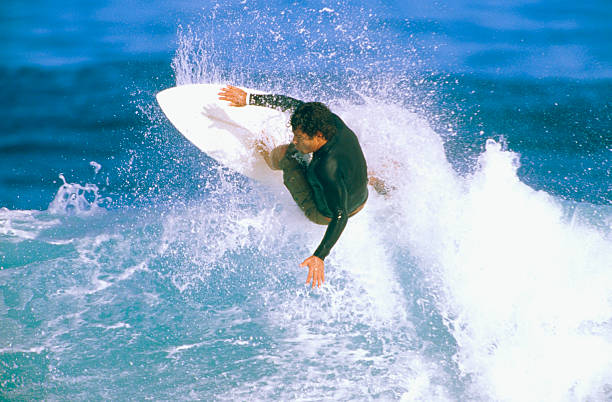
There’s a classic moment every surfer knows all too well. You’re standing in your living room, boards scattered across the floor like fallen soldiers, watching the weather forecast for a destination that’s about to fire. The swell is building, the wind is lined up, and you’ve got six boards you absolutely love. Your airline baggage allowance is screaming for mercy. This is the eternal struggle of the traveling surfer: the pursuit of the perfect quiver that fits inside the limits of modern air travel. It’s a balancing act between bringing enough firepower to handle any wave and traveling light enough to keep your shoulders from aching for a week.
First, let’s talk about the board situation. The golden rule for any surf trip is to travel with no more than two boards if you’re flying solo, and that’s pushing it. One of those boards needs to be your daily driver, the horse you ride into the lineup every morning. For most conditions you’ll find on a standard surf trip, that’s a well-loved performance thruster or a step-up board, depending on the swell window. The second board should be your wild card. Maybe it’s a fish for those mushy, low-tide days when the offshore wind hasn’t filled in yet. Or maybe it’s a proper gun if you’ve got your eyes on a outer reef that only breaks on a big south swell. The key here is versatility, not sentimentality. Leave the single-fin log that you surfed at Malibu in the seventies at home. It’s a museum piece, not a travel companion.
Now, let’s get into the real nitty-gritty: the travel bag itself. A quality, padded board bag is not a luxury. It is an insurance policy. You want a bag with thick foam rails that actually protects the rails, because that’s where your board takes the most damage during transit. And please, for the love of all that is glassy, pad your boards properly. Use wetsuits, towels, and soft clothing as buffer zones between the nose and tail of your boards. Taping a note inside the bag with your contact info and destination is a pro move. It won’t stop the airline from losing your bag, but it makes it a lot easier for some kind-hearted baggage handler to get it back to you.
Speaking of wetsuits, don’t over-pack them. The temptation is to bring a 3/2, a 4/3, a spring suit, and a rashguard for every possible temperature. That’s a rookie mistake. Check the water temps for your destination a week before you leave and commit to one primary suit. If you’re heading somewhere tropical, you don’t need a winter suit. If you’re going to temperate waters, a good 3/2 with a hooded vest as a backup is all you need. Pack the suit inside-out to help the rubber dry faster when you hang it up at the Airbnb. And bring a wax comb with a leash string on it. Trust me, there’s nothing worse than trying to scrape tropical wax off your board with a seashell because you forgot the comb.
The real unsung hero of any surf trip is the fin system. Nothing kills a session faster than arriving to find your favorite set of fins left on your kitchen counter. Always pack your fins in your carry-on luggage. They’re small, they’re expensive, and losing them turns your board into a useless plank of fiberglass. While you’re at it, throw a mini repair kit in your carry-on, too. A small tube of Solarez, a roll of duct tape, a spare leash string, and a multi-tool. This kit weighs nothing and can save an entire trip. A dinged rail on day one doesn’t have to mean a week of watching perfect waves from the beach if you’ve got the tools to patch it up at sunset.
Beyond the hardware, there’s the subtle art of surfing foreign crowds. Pack patience. Pack a smile. Learn how to say “thanks” and “sorry” in the local language. A little humility goes a long way when you’re dropping into a peak that the locals have been surfing since they were groms. Read the room before you paddle out. Watch a few sets. Figure out the rotation. And if you get snaked or burned, just take a deep breath. You’re on vacation. It’s a wave. There’s always another one coming.
The best surf travelers are the ones who pack light, travel smart, and keep their stoke high. They know that the magic of a trip isn’t about having the perfect board for every single condition. It’s about making do with what you brought and finding joy in the unexpected. A little under-gunned on a big day? That’s a challenge, not a tragedy. A mushy wave that doesn’t suit your thruster? Grab the fish and have a ball. The endless summer isn’t about having the perfect quiver. It’s about having the right attitude and the bare essentials to keep you in the water from sunrise to sunset.