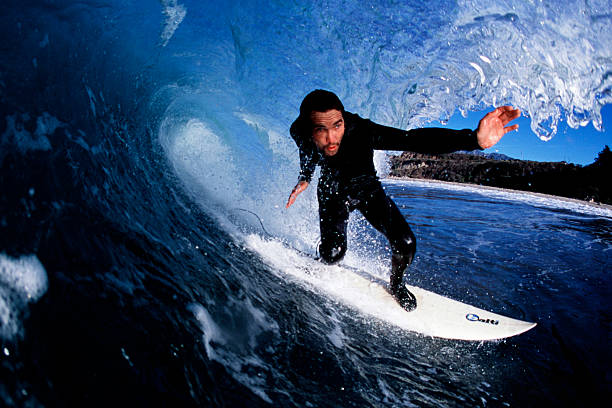
There’s a special kind of stoke that comes with paddling out in the dead of winter. The air has that sharp bite, the beach is empty, and the sets roll in clean and heavy, stacking like freight trains on the horizon. You feel alive before you even hit the water. But if you’ve ever made the mistake of skipping the hood, you already know the flip side of that magic. That first duck dive sends a trickle of ice straight down your neck, and suddenly the whole session turns into a survival mission instead of a soul cleanse. The hood, my friend, is the unsung hero of cold-water surfing.
When the mercury drops, most surfers obsess over the thickness of their wetsuit. They’ll wax poetic about 5/4/3s and 6/5/4s, zip up their chest-high rubber armor, and paddle out feeling invincible. Then twenty minutes in, the headache starts. That dull, thumping ache behind the eyes. That’s your brain saying it’s cold, and your brain is the boss of your whole operation. A good hood doesn’t just keep your ears from screaming; it seals off the biggest heat-loss zone on your body. Your head is like a chimney, and if you leave it open, all the warmth your core worked so hard to build just floats away.
The trick is finding a hood that fits like it was made for you. Not too tight—otherwise you’ll feel like you’re being waterboarded every time a wave slaps your face. Not too loose—because then it just becomes a bucket for ice water. You want one that hugs your noggin, sits flush against your forehead, and extends down over your chin with a little bib that tucks neatly under your rashguard or wetsuit. The newer smooth-skin seals are game changers. They cut down on the flush, that dreaded surge of cold water that sneaks in and steals your heat during a duck dive. If you’ve ever had a winter flush run down your back all the way to your wetsuit booties, you know the exact feeling I’m talking about. It’s a full-body chill that makes you question every life choice that led to you floating in the ocean in January.
But here’s the thing: the hood alone isn’t the whole story. The real art of staying toasty in the cold is all about layering your rubber like a second skin. Wetsuit thickness matters, sure. A 5/4 with booties and gloves will keep you warm longer than a 3/2, no debate. But you also need to think about your core. A good back zip or chest zip wetsuit with neoprene seals around the neck and wrists creates a little sauna for your torso. If that sauna stays intact, your arms and legs can feed off the warmth. If it breaks open, even the thickest rubber becomes a cold, soggy straitjacket.
And let’s talk about booties, because cold feet are the silent session-killers. You don’t realize how much you rely on nimble footwork until your toes go numb and you can’t feel your board under your feet. Suddenly you’re doing the robot on your foamie, and the wave is moving on without you. Good booties with a solid sole and roomy toe box keep blood flowing and your balance dialed. Same goes for gloves. Some surfers swear by mittens because they keep your fingers together, preserving heat. Others want full five-finger gloves for easier gripping and paddle feel. There’s no wrong answer, as long as your hands aren’t turning into white, claw-like appendages after twenty minutes.
Now, here’s the real hidden gem of winter surfing wisdom: warm up before you ever touch the water. The line between a great cold session and a miserable one is drawn in the parking lot. Do some jumping jacks. Swing your arms. Get that heart rate up. The ocean is going to steal your heat fast, so show up with a furnace already running. A little yoga or a short jog on the sand before you suit up works wonders. Also, don’t sleep on the power of a hot drink afterward. There’s nothing like that first sip of coffee in the parking lot while your wetsuit hangs over the car door, steam rising off the rubber, sun low over the water. That ritual, the whole shiver-till-you-thaw dance, is part of the charm.
But the real secret, the one that keeps winter surfers coming back for more, is that the cold makes you brave. It filters the lineup. The fair-weather crew stays home, and you get waves with the people who truly love it. That hood, those booties, that thick rubber suit—they’re not just armor against the chill. They’re your ticket to a quiet, spacious ocean where the waves have more power and the stoke feels earned. So next time the forecast reads cold and crunchy, don’t skip the hood. Suit up, seal up, and paddle out. The winterlineup is waiting for you, warm at heart under all that neoprene.