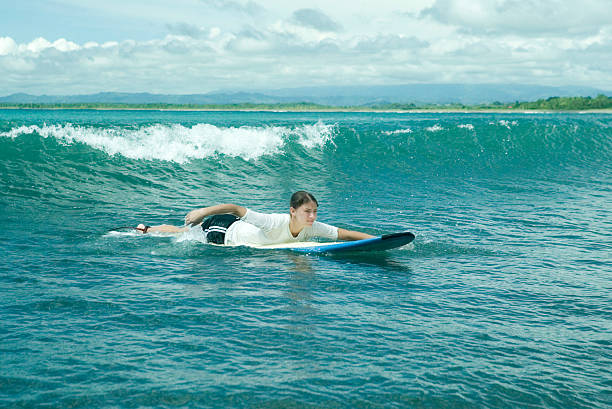
Back in the day, before the dawn of the foam era, surfers were riding slabs of solid balsa wood. You’d paddle out on a ten-foot, hundred-pound log that took a small army to carry down the beach. Balsa was light compared to redwood, sure, but it was fragile, drank up water like a sponge, and required more patience than a lineup full of kooks on a peaky dawn patrol. Then came the game-changer: polyurethane foam. That shift didn’t just lighten the load under your arm—it rewrote the entire script of what a surfboard could be.
The story really starts in the late 1950s when Bob Simmons and other forward-thinking shapers began experimenting with foam blanks. Polyurethane foam, or PU, became the standard because it was easy to shape, relatively cheap, and when you glassed it with fiberglass and polyester resin, it produced a board that was light, lively, and responsive. Suddenly, you didn’t need a small winch to get your stick down to the water. The weight dropped, maneuverability jumped, and the sport opened up to a whole new generation of rippers. PU foam could be carved into thin, high-performance templates—twin fins, swallowtails, thrusters—without sacrificing float. It was the backbone of the shortboard revolution in the late sixties and seventies, and it’s still the go-to material for many of the world’s top shapers today.
But PU ain’t perfect. It’s porous, so it needs a solid glass job to keep water out. If you ding it deep, that foam soaks up saltwater like a man dying of thirst, leading to delamination and soggy rides. Plus, polyester resin smells like a chemical spill and ain’t exactly best buddies with Mother Earth. Still, PU boards have a certain flex pattern and feel that many surfers swear by—that lively, springy rebound off the bottom turn, the way it hums down the line. It’s a classic, no doubt.
Enter the alternative: expanded polystyrene foam, or EPS, paired with epoxy resin. This combo started gaining traction in the late 1990s and early 2000s, pushed by shapers like Clark Foam’s demise (remember that whole mess in 2005?) and a demand for lighter, stronger, more sustainable options. EPS foam is less dense than PU, so you can shape a board that floats like a log but weighs like a shortboard. Epoxy resin is tougher and more impact-resistant than polyester, meaning your rails don’t crumble after one closeout wave. And because epoxy cures with less volatility, it’s a cleaner process for the shaper and the planet.
The differences run deep. EPS blanks are made from tiny beads fused together by heat and steam, giving them a closed-cell structure that resists water absorption like a dry suit. If you crack an epoxy board, it doesn’t instantly turn into a sponge. But there’s a trade-off: EPS feels stiffer underfoot, with a different vibration than PU. Some surfers say epoxy boards have a “dead” feel, while others argue they’re more consistent and pop better in hollow waves. The flex comes more from the glass layup than the core, so shapers can dial in specific performance characteristics by varying cloth weight and resin ratios.
Then there’s the environmental angle. PU blanks are made from petroleum-based products, and the polyester resin off-gasses nasty fumes. EPS foam is also petroleum-derived, but epoxy resin has lower volatile organic compounds. Some companies are now experimenting with recycled EPS and bio-based epoxies, pushing toward a greener future. Not to mention that epoxy boards tend to last longer, which means fewer boards in the landfill. It ain’t a perfect solution, but it’s a step in the right direction.
Choosing between PU and EPS is like picking your favorite wave: both have their magic moments. A PU shortboard gives that supple, flexy feel that makes cutbacks feel like butter. An epoxy fish or step-up will float like a dream and bounce back from travel abuse. Many shapers now offer both options, letting the surfer decide based on style, weight, and wave conditions. Some even blend materials—like using a PU core with a glassing schedule that mimics epoxy strength.
The evolution of foam cores is still unfolding. Nanofoams, 3D-printed blanks, and hybrid composites are on the horizon. But the roots run deep from balsa to PU to EPS. Each material changed the way we ride, the way we think about design, and the way we chase that endless summer feeling. Next time you wax up your stick, give a little nod to the foam beneath your feet—it’s been a wild ride.