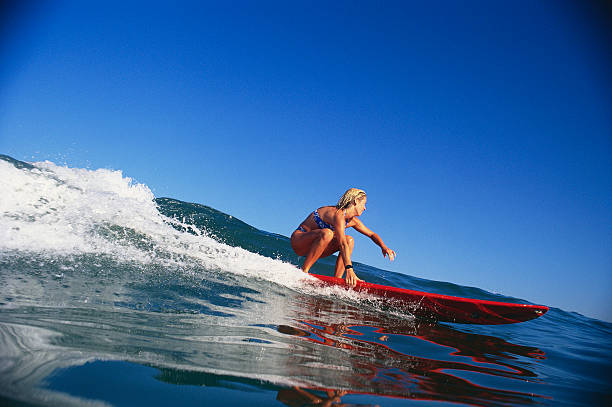
There is a moment in surfing that separates the stylist from the charger, the poet from the power surfer. It happens when you feel that shift in gravity, that silent click as the nose of your log dips into the water, and suddenly you are walking the plank to the tip of the board. The world narrows to a single point of balance between the wave face and the sky. This is noseriding, and it is the purest expression of the Longboard Era, a time when surfing wasn’t about how hard you could smash the lip but how long you could hang your toes over the curl and stay perfectly, effortlessly suspended.
Back in the day, before the shortboard revolution tore through the lineup, surfing was a dance of grace. The boards were heavy slabs of redwood and balsa, often pushing twelve feet in length. They didn’t turn on a dime; they turned on patience. The ride was long, slow, and deliberate, and it demanded respect for the wave’s rhythm rather than a fight against it. The ultimate prize on these early logs was the stall, the trim, and eventually, the walk to the nose. It was the ultimate act of commitment. You had to trust the wave, trust your fin, and trust that little piece of wood under your front foot to hold you in the critical part of the wave.
The godfathers of this art were the Waikiki Beach Boys and the legendary surfers of the 1950s and early 60s. Guys like Phil Edwards and Mickey Muñoz, but most famously, the man who gave the move its name, the great Duke Kahanamoku, had already laid the foundation for the walk. But it was the development of the longboard itself that made noseriding possible. The pintails of the 30s gave way to the wide, rounded noses of the 50s, and the full-on logs of the 60s. The key was the 50/50 rail and the single fin, which acted like a rudder. When you got up to the nose, the fin would stall the board, the tail would sink, and the nose would lift, creating that iconic, almost impossible, straight-line slide along the shoulder. It is a physics trick that looks like magic.
Living the longboard era lifestyle meant chasing perfection of form. It wasn’t about aerial maneuvers or tube time. It was about the hanging ten, or hanging five if you were feeling shy. The ultimate move was the “cheater five,“ a less dramatic but equally stylish step forward, but the full ten toes over the nose was the holy grail. It required a wave with a gentle, peeling shoulder, a board with good flex and enough foam under the chest, and a zen-like calm. A surfer in the longboard era would spend an entire session on one wave, walking the nose, stepping back to the tail to stall, then walking forward again. It was a constant dialogue with the wave.
The equipment of the time was as much a part of the culture as the move itself. A noserider board is a specific tool. It needs a wide, full nose, often with a pulled-in tip, but with enough width to offer stability. The rails are soft, the rocker is minimal, and the fin is set deep and far back. This setup makes the board slow and forgiving, perfect for the controlled speed of a noseride. The decks were often glassed with a heavy gloss, sometimes with a rub rail, because these boards took a beating from being stepped on and lugged across the sand. The sound of a longboard nose sliding across the face of a wave is a distinct hiss, a sound of pure stoke.
But the spiritual heart of the noseride is the feeling of being alone with the wave. In those few seconds, you are not a human on a slab of foam. You are a part of the wave itself. The wave is breaking with you, not against you. That feeling of suspension, of hanging over the whitewater while the wave throws its energy past your toes, is an experience that shortboard riders rarely taste. It is slow-motion surfing, a moment of total, blissful control.
Even as the sport evolved and turned toward the radical maneuvers of the shortboard revolution, the noseride never died. It became the hallmark of the soul surfer, the longboarder who valued glide over aggression. In the 70s and 80s, as the new school went vertical, a dedicated tribe kept the longboard alive in places like Malibu and San Onofre. The renaissance of the late 80s and 90s, led by shapers like Takayama and shapers in the Hawaiian tradition, brought the log back to full glory. Today, the noseride is a staple of any surf contest, from the World Longboard Tour to a local club meet.
Whether you are a grom trying your first cheater five or an old salt hanging ten on a glassy morning, the longboard era teaches us that power isn’t always about speed. Sometimes, the most radical thing you can do on a wave is to walk to the very edge of the board, look down at the water rushing past your toes, and smile. That, right there, is the endless summer dream.