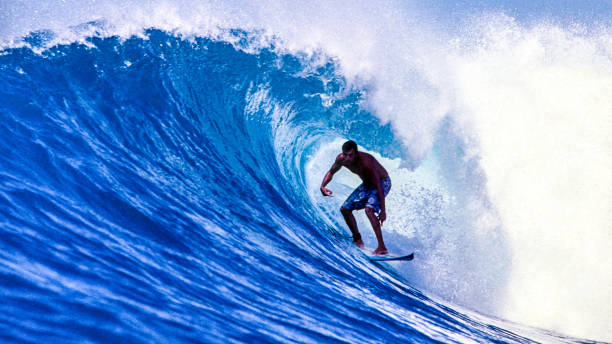
There’s a quiet revolution happening in the lineup, and it’s not about bigger waves or the latest foam sandwich. It’s about letting go of one fin and rediscovering what made surfing feel alive in the first place. While the thruster has been the undisputed king of fin setups since the early ’80s, a growing number of surfers are ditching that third fin for the twinny—the original speed machine. And it’s not just a nostalgia trip; it’s a whole new way to feel the ocean slip beneath your board.
The thruster, invented by Simon Anderson in 1980, brought control and pivot to a sport that was crying out for it. Before that, twin fins were the hot ticket, pioneered by guys like Mark Richards and his famous MR Twin. Those boards flew down the line, but they could also get a little squirrelly when you pushed them hard in the pocket. The thruster solved that by adding a third fin that acted like a rudder, giving surfers the ability to crank turns on a dime and hold the rail through critical sections. For decades, that was the standard. If you weren’t riding a thruster, you were basically riding a dinosaur.
But here’s the thing: surfing evolves in cycles, and the wheel always turns back to what feels good. Lately, more shapers and free surfers are bringing the twin fin back into the conversation, not as a retro novelty but as a legitimate tool for a specific kind of wave riding. The twin fin’s magic lies in its loose, skatey feel. Without that third fin dragging in the water, the board releases easier off the top, slides through flat sections, and generates raw speed that a thruster often has to earn through pumping. It’s a looser, more flowing ride—less about tight arcs and more about long, sweeping lines and carving like you’re on a snowboard.
And the irony is that modern twin fins are nothing like the old ones. Blending the best of both worlds, today’s twinny designs often feature deeper concaves, wider tails, and softer rails that help compensate for the lack of a center fin. They still hold when you drive the rail, but they let you break the fins loose with a subtle weight shift. It’s the difference between a sports car on rails and a dirt bike sliding through a berm. Both are fun, but one makes you feel like you’re flying sideways.
The anti-thruster movement isn’t about dismissing the classic setup. It’s about recognizing that surfing isn’t one-size-fits-all. On a fast, open-faced wave like a point break or a long peeling reef, a twin fin can make you feel like you’re on a magic carpet. You get into sections earlier, you can stall and wait for the wave to bowl up, and you can draw out turns that feel like they last forever. On steep, hollow waves, though, the thruster still rules—it gives you the bite you need to punch through a closeout and the control to set a rail in the barrel.
But maybe the biggest reason for the twin fin’s comeback is the sheer stoke factor. Surfing can get too technical, too gear-obsessed. The twin fin reminds us that sometimes less is more. It forces you to surf with your body, not just your equipment. You have to be more active with your feet and your weight distribution, and when you get it right, there’s no feeling like it. It’s the difference between playing a symphony and jamming in a garage band. Both are valid, but the garage band leaves more room for happy accidents.
So whether you’re a lifelong shortboarder looking to shake up your quiver or a retro enthusiast who never let go of the twinny, know that the fin system you ride shapes your relationship with the wave. The thruster gives you power and precision; the twin fin gives you soul and speed. And in a world where everyone’s chasing the same foam clone, maybe what you really need is a little less control and a little more flow.
Go get yourself a twinny. Your turns might get looser, your smile might get wider, and you might just remember why you started surfing in the first place.