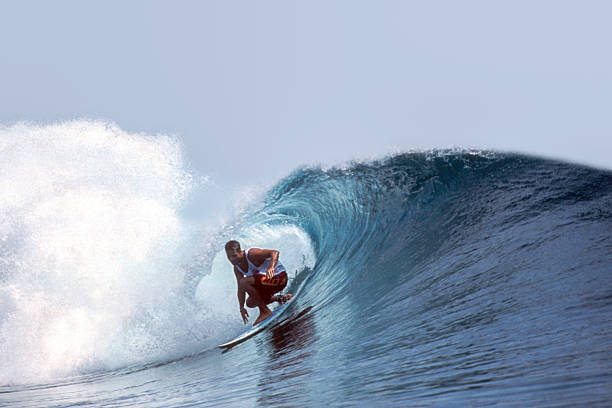
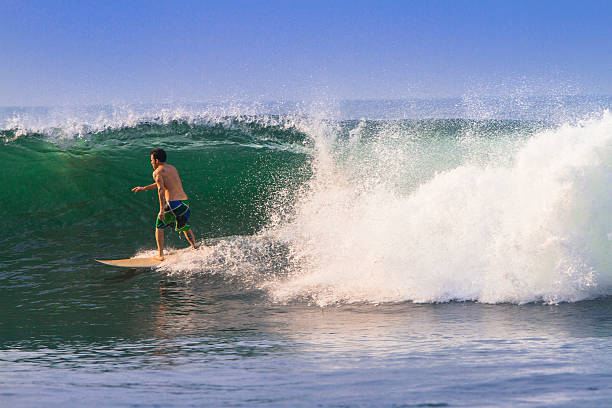
There’s no feeling quite like that moment when the wave pitches over your head and the world turns to a roaring shade of blue. You’re in the barrel, and for those few seconds, nothing else matters. But getting to that sweet spot isn’t just about luck or a heavy dose of courage. It’s a combination of reading the wave, positioning your body, and trusting your instincts before you even start the drop. The art of the tube starts way back on the shoulder, sometimes even before you paddle in.
When you’re scratching for a wave that’s got barrel potential, you need to have your eyes on the horizon and your weight shifted forward. Unlike a standard wall, a wave that’s about to pitch has a certain look—the lip thickens, the face steepens, and you can feel the energy pulling upward. This is where many surfers make the mistake of paddling too late or too deep. You want to be sitting just inside the peak, not directly under it. The takeoff zone for a tube is narrower than you think, and if you pop up too late, you’ll get hung up on the lip or pitched straight over the falls. If you pop up too early, you’ll be already sliding down the face before the tube forms, leaving you rushing to recover.
Once you’re on your feet, the first move is everything. You don’t want to stall or straighten out. You want to drop in with a controlled, slightly angled trajectory that lets you slide down the face while keeping the board under your chest. As you hit the bottom, the key is to not yank a hard bottom turn. Instead, you ease into a smooth, drawn-out turn that sets your rail right at the point where the wave is about to throw. That’s the slot. If you turn too deep, you’ll bury yourself inside the wave and get swallowed. Too shallow, and you’ll slide out the back and miss the whole show.
The speed inside the barrel is deceptive. The wave is accelerating, the lip is curling out in front of you, and your brain wants to slow down. But the reality is that you need to maintain momentum and sometimes even give a little extra pump when the wave is trying to spit you out. Don’t fight the current—use it. Keep your eyes fixed on the exit, not on the foam ball behind you. Many surfers, myself included, have blown perfect barrels just because they looked at the lip closing in front of them instead of seeing the light at the end. Your body follows your eyes, so keep your chin up and your gaze searching for that patch of sky.
There’s also the question of where to place your hands. Some guys like to drag their inside hand in the water for balance, others keep both hands clenched to the rails. The truth is you have to adapt to the specific wave. If the barrel is big and spitty, hugging the rail with one hand and reaching forward with the other can help you stay low and stable. If it’s a smaller, slower tube, you might want to keep both arms out for a wider base. And never underestimate the power of a good tuck. Getting low—almost sitting on your back heel—lowers your center of gravity and makes you a smaller target for that violent lip.
Breathing is the hidden technique. When you’re deep inside a sucking barrel, the ocean is doing everything it can to rip you off your board. The turbulence can spin you around, shake your lungs, and fill your sinuses with saltwater. But if you control your exhale, let out little puffs of air through your nose, and stay loose, you can survive the hold-downs that come after a wipeout. A rigid body gets rag-dolled. A relaxed surfer flows with the chaos.
Ultimately, riding the barrel is a conversation between you and the wave. You learn to read its moods, its speed, its secret lines. Each wave is different, but the fundamentals of dropping in, setting your rail, and trusting the light remain the same. So next time you paddle out and see that thick lip starting to feather, take a breath, commit to the slot, and let the wave show you what it’s got. That’s where the stoke lives.