You know the feeling. You’re out the back, the set rolls in, and you start paddling like your life depends on it. Your arms are burning, your board feels like a log, and somehow that wave just slides right under you, leaving you floating in its whitewater wake with nothing but a mouthful of salt and frustration. Every surfer has been there. But here’s the thing most people miss: catching more waves isn’t always about paddling harder. It’s about paddling smarter, and it starts with understanding that the pop-up doesn’t begin when you feel the wave lift your tail. It begins three strokes before that moment, in the split second when your body transitions from a machine built for propulsion into a platform built for flight.
Here’s the secret that separates the frothers from the frustrated. When you paddle for a wave, you’re not just chasing the bump. You’re setting up the angle, the trim, and the timing of your pop-up before your hands even leave the water. The best paddlers aren’t necessarily the strongest. They’re the ones who read the wave’s energy, match their stroke rate to the wave’s speed, and land their pop-up in exactly the right place so that no precious momentum is wasted. That’s the real deep dive. Let’s break it down.
First, think about your arm stroke. A lot of people paddle with their arms straight and their elbows locked, like they’re trying to do a windmill impression. That’s a recipe for early fatigue and weak propulsion. Instead, you want to keep your elbows slightly bent, your hands cupped like you’re holding a softball, and pull the water all the way past your hips. The stroke should be a continuous, fluid arc, like a windshield wiper that never stops moving. But here’s the twist: the last two or three strokes before the wave catches you are the most critical. Those strokes aren’t about generating more speed. They’re about maintaining the speed you’ve already built while you reposition your body for the pop-up.
Think of it like this. As that wave approaches, you want to be already moving at the wave’s speed, or just a hair slower. If you paddle like a maniac, you’ll outrun the wave and pearl your nose into the trough. If you paddle too late, you’ll get hung up on the shoulder and watch it pass. The sweet spot is a zen-like state where your paddle cadence syncs with the wave’s shoulder, and you feel that unmistakable tail lift. When you feel that lift, don’t panic. Don’t rip your hands out of the water like you’ve been shocked. Finish the stroke you’re on, then let the wave do the rest of the work.
Now here’s where the soul arch comes in. Your pop-up doesn’t start with your feet. It starts with your chest. As you feel the wave take your tail, you want to press your chest down into the board, flattening your body against the deck. This lowers your center of gravity and helps the board plane across the water’s surface instead of plowing through it. A lot of surfers instinctively arch their back and look at the wave, which lifts their chest off the board and actually creates drag. Instead, keep your eyes locked on the horizon, not on your board, not on the wave face. Trust your peripheral vision to read the bump. Your eyes drive your shoulders, and your shoulders drive your pop-up.
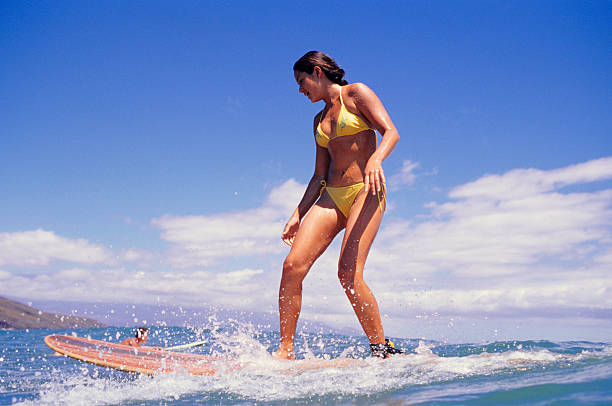
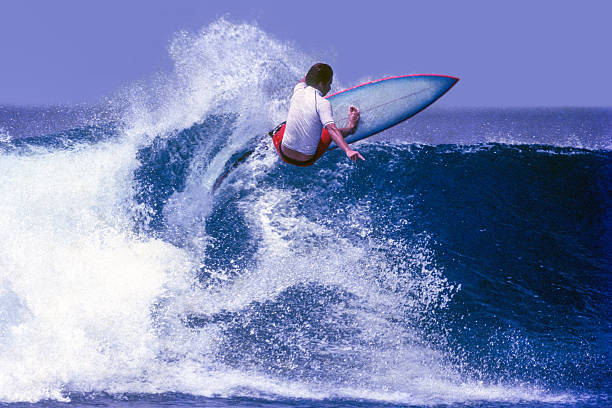
When you finally pop, you want to explode upward, but not straight up. Think of it like a slow-motion ninja jump. Your hands go flat on the deck under your chest, your feet slide into position in one fluid motion, and your hips rotate toward the wave face. The trick is to land with your weight already shifted slightly forward, so that the first thing your board does is trim down the line instead of skidding sideways. That’s the difference between a pop-up that stalls you out and a pop-up that sets you up for a smooth, arcing bottom turn.
Also, don’t underestimate the power of your paddle-on. Some of the most experienced surfers in the lineup will tell you that the final stroke before the pop-up isn’t just a pull. It’s a throw of the water toward the shore, which generates a tiny but critical burst of forward momentum that helps you slide into the wave’s pocket. It’s called the snap stroke, and it’s the kind of nuance that takes a lifetime to master but pays off immediately.
Catching more waves is about economy of motion. Every wasted stroke, every late pop-up, every frantic scramble to your feet costs you energy and opportunity. When you learn to flow through the paddle-to-pop-up sequence like a single, seamless movement, you stop fighting the ocean and start riding it. The wave becomes your partner, not your obstacle. And that’s the feeling that keeps us coming back for one more session, chasing that endless summer light.