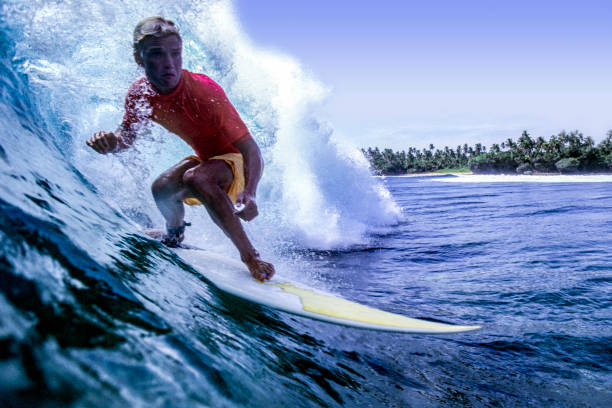
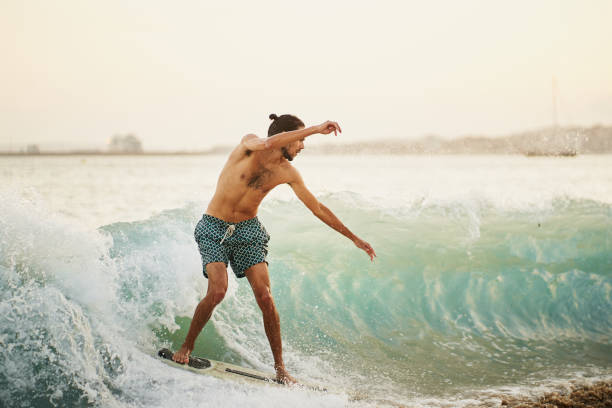
The cutback is the soul of surfing, the turn that connects you to the wave’s power and lets you express your own style. It is not simply a change of direction, from the shoulder back to the pocket, it is a dance with the foam, a moment where you wrap your body around the wave’s energy and come out the other side with more speed than you had going in. When you see a surfer draw a perfect arc across the face, fins humming, spray feathering off the rail, you know they are feeling that deep connection to the ocean. The carving cutback is the purest form of this move, a long, sweeping line that prioritizes flow over aggression, making it the go-to for surfers who want to keep the wave alive without blowing all their speed in a snap. It is the kind of maneuver that feels like you are gliding on a curve of pure stoke, and when you nail it, the wave seems to slow down just for you.
Before you can carve, you have to set it up right. The bottom turn is your launchpad, the place where you gather all the momentum you will need to wrap around. As you drop down the face, load the board by sinking your weight into your back foot, driving the rail deep into the water. This is where you store kinetic energy like a spring, ready to release it upward. Your eyes must be locked on the point where you want to finish the turn, not on the whitewater or the next section rushing at you. The magic happens when you look back up the face toward the foam line and start to pivot your shoulders. Your hips follow, and the board responds by digging into the water and beginning its climb. This is the moment of truth, where many surfers rush the turn and lose all their drive. Patience is key. Let the wave push you up, do not force the carve before you have the platform beneath your feet.
As you begin the carve, keep your weight centered but slightly biased toward the back foot so the fins hold their grip without sliding out on you. Your front hand should reach toward the wave, pointing in the direction of the turn like you are trying to touch the face, while your back hand stays loose and ready to adjust the angle. The board will start to arc, and you want to feel the water pushing back through the fins. That resistance is your friend, it is what allows you to redirect your momentum without stalling out. Do not fight it. Instead, lean into the turn, extending your legs slightly to increase pressure on the rail. The goal is a round, smooth shape, like drawing a huge C on the wave’s face from the middle of the pocket all the way up to the foam. The longer you can hold that carve, the more speed you will generate when you finally release. Think of it as a slow, deliberate stroke rather than a quick hack.
Releasing the cutback is where the real magic happens, the payoff for all that patience. As you reach the apex near the foam line, you need to unweight the board by straightening your legs and transferring your weight forward. This lets the board surf up and over the foam instead of bogging down. If you time it right, the fins will release and you will shoot out of the turn with newfound speed, perfectly positioned to head back into the pocket and set up your next move. This rebound is what separates a good cutback from a great one. Many surfers stall out here because they keep their weight too far back, causing the tail to slide and the board to lose drive. The trick is to think of the cutback as a continuous loop of energy, not a stop-and-start maneuver. You are not finishing a turn, you are taking a deep, stylish breath before the next section.
Common mistakes happen when you try to rush the carve or rely too much on upper body rotation without engaging your legs. If you find your board sliding sideways instead of carving, you are probably leaning back too much and not using enough rail. A surefire fix is to think about driving your front knee toward the wave, which will naturally dig the rail in. Another mistake is cutting back too early, before you have enough speed from the bottom turn. The cutback is a speed-generating move, but only if you have something to work with. If you come off the bottom too slow, you will bog down in the fat part of the wave and the whole thing will feel like you are dragging through molasses. The best carves are born from a solid bottom turn, a patient look over your shoulder, and a smooth transfer of weight from back foot to front foot at the right moment.
The carving cutback is a timeless move, a nod to the classic longboarders and single-fin shortboarders who rode with pure style before the aerial revolution turned everything upside down. It is the essence of the endless summer, where every wave is a canvas and every turn a brushstroke. Whether you are riding a log, a hybrid, or a high-performance thruster, the principles remain the same: set it up low, carve high, and finish with grace. Next time you paddle out, forget about trying to go vertical or throwing buckets of spray for a while. Instead, aim for a long, smooth arc that takes you all the way to the foam and back. Feel the water hum against your rail, listen to the wave, and let the cutback become your signature move. That is how you change direction with style, with steeze, with the kind of flow that makes the whole lineup take notice.