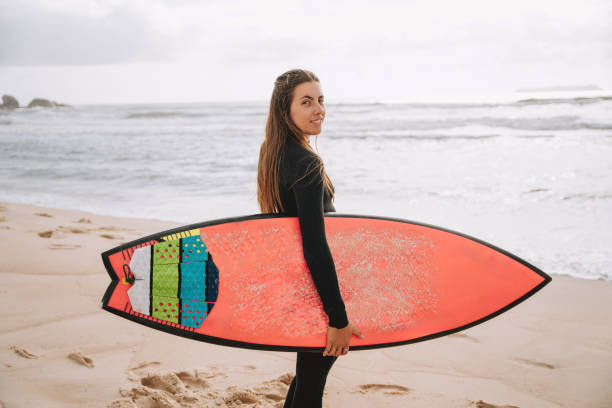
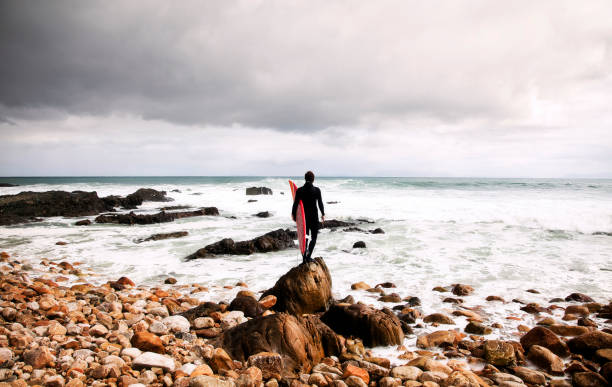
There’s a quiet stretch of beach on Sydney’s Northern Beaches where the morning light hits the water just right, and if you sit there long enough you can almost feel the ghost of a seven-time world champion paddling out. Layne Beachley didn’t just dominate women’s surfing—she reinvented what it meant to be a competitor. But here’s the thing most people don’t talk about: before she became the queen of the waves, she had to paddle through the heaviest swell of all, the one inside her own head.
You see, raw talent alone doesn’t get you seven world titles. Plenty of surfers have the power, the timing, the flow. What separates the legends from the weekend warriors is the mental game. And Layne’s mental game was gnarlier than any Hawaiian fenceline.
She started surfing as a kid in Manly, tagging along with her older brother. By her early twenties she’d already claimed her first world title in 1993, a year after turning pro. But it wasn’t long before the self-doubt crept in like an incoming tide. After that first crown, she went four years without another. The waves kept coming, but the confidence didn’t. She’d sit in the lineup, second-guessing her takeoff, hesitating on sections she’d normally carve with her eyes closed. Every surfer knows that feeling—when the ocean feels like it’s daring you to be weak.
Then came 1996. She lost the world title by a razor-thin margin. Crushing. But instead of letting that set her back, she started digging into the part of surfing nobody films: the mental prep. She worked with sports psychologists, read everything she could about resilience, and learned to treat her own brain like a wave that needed to be read and ridden, not fought.
Her breakthrough was realizing that doubt isn’t the enemy—it’s the signal. When the little voice whispered you’re not good enough, she learned to answer with action. She’d visualize every wave of a heat before it happened. She’d practice breathing through the panic that hits when the set of the day rolls in and you’re out of position. She made the mind a muscle, and she trained it hard as any squat or paddle session.
The result was a six-year run from 1998 to 2003 where she took every world title. Six straight. That’s unheard of in any sport, let alone one where the playing field is a liquid beast that doesn’t care about your résumé. During that stretch, she also dealt with chronic back pain, Epstein-Barr virus, and the constant pressure of being the face of women’s surfing. Yet she kept showing up, kept charging.
Her seventh title came in 2006, and by then she’d already become more than a surfer. She became a symbol of sheer will. She surfed through injuries that would have sidelined anyone else. She surfed through the criticism that she was too aggressive, too intense, too unladylike for the sport. She surfed through the moment when a back injury nearly ended her career, then came back to win the world title at age 33, an age when many pros are already thinking about retirement.
But the real story isn’t just the trophies. It’s the way she used the ocean as a mirror. In her memoir Beneath the Waves, she writes about how surfing taught her to embrace vulnerability. The wave doesn’t care if you’re scared. It just is. You either commit or you get pitched over the falls. Layne chose commitment every time, even when her mind was screaming to pull back.
For the groms watching today, she left a stoke that’s bigger than any single victory. She proved that the queens of the waves aren’t born—they’re made in the quiet moments before dawn, when the wind is off, the sets are clean, and the only thing between you and glory is the voice in your head that says maybe not today. She taught us to answer that voice by putting a foot on the wax and dropping in anyway.
Now she’s retired, running the Layne Beachley Foundation, mentoring young women, and still paddling out whenever the swell hits. She looks at the ocean the way a surfer looks at an old friend—with respect, with memory, with the knowledge that every wave teaches something new. And every surfer who’s ever doubted themselves and still made the drop owes a quiet nod to the woman who surfed through the inner barrel and came out the other side with seven world titles, a smile, and the kind of calm that only comes from conquering your own mind.
So next time you’re sitting in the lineup, heart hammering, watching a set approach, think about Layne. She didn’t just ride waves. She rode the fear, rode the doubt, rode the pain. And if she could do that, maybe you can too. Just paddle, breathe, and drop in. The wave will take care of the rest.