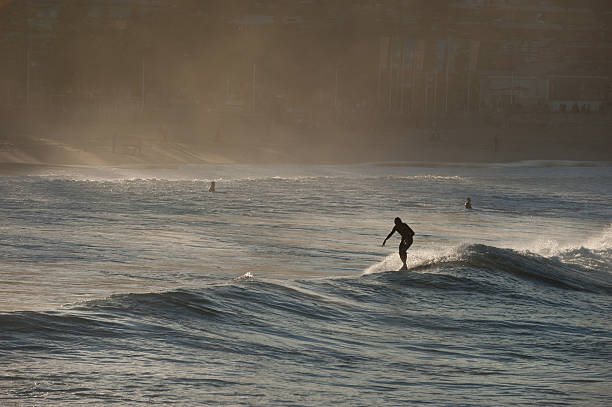
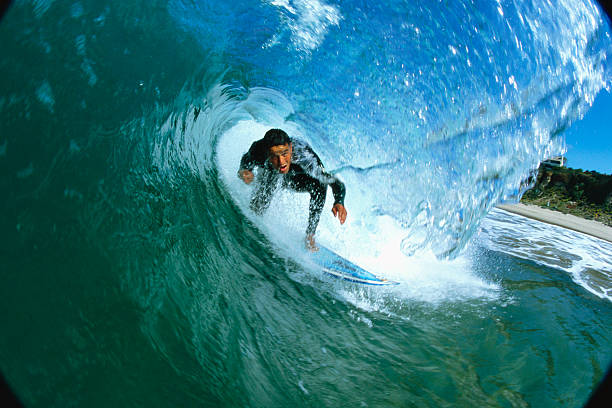
There is no feeling quite like it. The lip is pitching, the ocean is heaving, and you have got about a half-second to decide if you are going to pull in and hang on or if you are going to absolutely send it. That moment of weightlessness, when the fins let go of the face and the board becomes a piece of plywood with a mind of its own, is the holy grail of modern surfing. But chasing that flight is not just about being a maniac with too much foam under your feet. The aerials that make you look like a bird—or a crash test dummy—come down to one fundamental rhythm that most surfers get backwards. It is all about compression and extension, the inhale and exhale of the wave.
You see it in the lineup every day. The grom who hucks himself off the lip with no base, flailing his arms like he is swatting bees, and then lands flat on his back with a sound that makes you wince. Then you watch a pro like John John Florence or Molly Picklum. They do not look like they are jumping. They look like they are being launched. That is the secret. You do not throw yourself into the air. You use the wave to do the work.
Start with the compression. This is the setup that ninety percent of intermediate surfers neglect because they are too busy staring at the lip. As you pick your rail out of the bottom turn and start climbing the face, you need to dip your center of gravity. Think of your legs as shock absorbers in a lowrider. You squat down low, almost like you are sitting on a barstool that is too short. Your back hand reaches up the face, your front hand points where you want to go, and you load every muscle from your quads to your lower back. This is where you collect the energy. The wave is throwing that hydraulic force at you, and if you are standing tall and stiff, that energy just bounces off you and you stall out. But if you are coiled up, you trap that power in your legs.
Now comes the extension. This is the pop. And here is the thing that separates the flyers from the flounders: you do not jump off the top of the lip. You drive off the previous section. As you reach the apex of the wave—right where the face starts to feather and the lip is about to throw—you explode upward. Your hips drive forward, your back leg extends like you are pushing off a trampoline, and you torque your upper body in the direction of the rotation. The board does not go up first. Your body goes up first, and the board follows. That is the counter-intuitive trick. If you try to pop the board into the air, you end up with your feet ahead of your center of mass, and you will be eating foam before you can blink. Lead with your head and your hips. Let the board come along for the ride.
Once you are airborne, the game changes entirely. You are no longer surfing. You are flying. And that is where the subtle tweaks come in. For a straight air, you keep the board flat and look at the landing zone. For a rotation—a grab or a shifty—you suck your knees up toward your chest. This shortens the radius of your spin and speeds up the rotation. If you keep your legs straight and long, you rotate like a refrigerator falls off a truck. Slow and painful. But if you pull your knees up, you can snap that rotation around in a blink. This is called the tuck, and it is the difference between a clean shuv-it and a splat.
The landing is the part nobody talks about because it is not as cool as the flight. But it is the hardest part. You have to reverse the whole equation. As you come back down to the face, you need to re-compress. You absorb the impact by dropping your hips back down again, like you are sitting into that low barstool one more time. If you land with straight legs, the board bounces off the water and you go flying forward into a rag-doll tumble. But if you soften the knees and let the water catch you, you can ride out of it and start pumping for the next section.
There is a reason Kelly Slater still pulls big airs at fifty. He knows that flight is not about muscle. It is about timing, about compression and extension, about breathing with the wave. The lip is not an obstacle. It is a launch ramp. Every time you paddle out, you are not just surfing. You are learning a language of physics and flow. The next time you see a section ramping up in front of you, stop thinking about the risk. Think about the coil. Feel the squat. Trust the pop. Pull your knees. And just like that, you are flying.