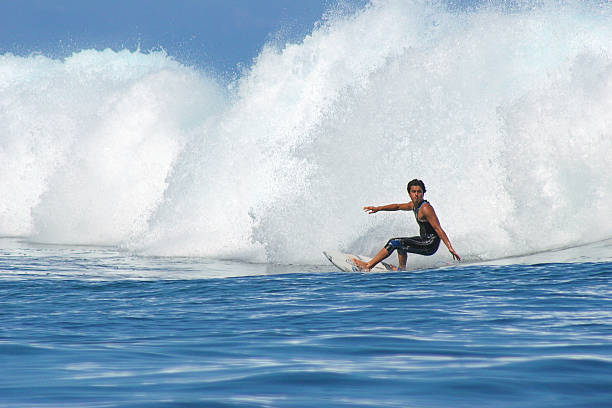
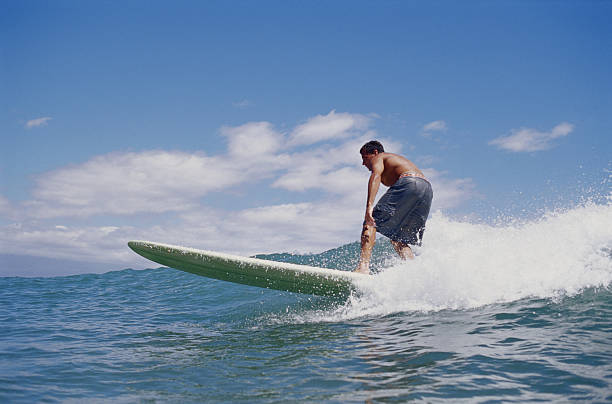
You paddle out through the foam, arms burning, heart thumping against your ribs. You clear the shorebreak, take a breath, and sit up on your board. The ocean is flat. Flat as a lake. The water looks like polished glass, and you start to wonder if you made a mistake. This is the lull. Most beginners see a lull and think the ocean is dead. But a true surfer knows that the lull is not the ocean resting. It is the ocean reloading. The space between sets is a sacred window, a moment of calm that holds the key to reading the entire session. If you want to catch the best waves of your life, you need to stop thinking of the lull as dead time and start treating it as the most important part of the wave set cycle.
Wave sets are the pulse of the ocean. Swell energy travels thousands of miles across open water, and it does not arrive in a steady stream. It comes in pulses, in groups. You might get five solid waves in a row, then nothing for ten long minutes. Then another set rolls in. This rhythm is not random. It is a pattern, and your job as a surfer is to feel that pattern in your bones before you ever see a bump on the horizon. The best way to do this is to stop staring at the water right in front of you and start looking way, way out. The horizon is your crystal ball. You are scanning for dark lines, for subtle changes in color, for a patch of ocean that looks a little lumpier than the rest. Those are the ghosts of future waves. A set wave is born out there, and if you can spot it before it reaches the outer reef, you have already won the paddle battle.
But reading the set is not just a visual game. It is a sensory one. You feel the lull in your gut. The water goes slack. The wind drops. The other surfers around you stop paddling and start bobbing. That is your cue. The calm before the storm. When the ocean goes glassy and quiet, a set is coming. It is almost like the ocean takes a deep breath before it exhales a wave. If you are sitting inside, too close to shore, you will miss that breath. You will see the set jack up in front of you and have no time to paddle. That is why positioning is everything. During the lull, you should not be relaxing. You should be paddling deeper, pushing out past the impact zone, getting yourself into the takeoff slot before the waves even arrive. The best surfers in the world are not the strongest paddlers. They are the best readers. They know when to rest and when to move. They paddle during the lull, not during the set.
Your backside, your tail, and your instincts all play a role here. Sit on your board and feel the wobble of the water beneath you. The ocean does not lie. A subtle surge, a slight lift, a change in the direction of the current—these are the whispers that warn you a set is brewing. It takes a few thousand sessions to trust these signals, but once you do, you will never paddle for a closeout again. You will know the difference between a rogue wave and a set wave. A rogue wave is a one-off, a sloppy leftover that will shut down on the inside. A set wave is a train with three, four, or five cars. The first wave of the set is often the smallest. It is the scout. The second and third waves are the money makers. The fourth and fifth are the cleanup set, the ones that push in as you are paddling back out after your ride. Beginners drop in on the first wave of the set. They get a short, frantic ride, then they get eaten alive by the rest of the set on the way back out. The wise surfer often lets the first wave pass. They sacrifice a small shoulder to get the wave of the day. Patience is the currency you trade for good waves.
When you see a set approaching from the horizon, do not panic. Paddle with purpose, not with desperation. Take three deep strokes, then look over your shoulder. If the wave is still a shadow in the distance, keep paddling. If it is already feathering and about to pitch, you are too late. Let it go and save your energy for the next one. The worst thing you can do is paddle like a maniac for every bump that comes through. You will burn out before the good one arrives. The lull is your rest period. Use it to breathe, to align your board with the shore, to find your rhythm. The ocean will always give you another set. The question is whether you will be in the right spot when it shows up. There is no more important skill in surfing than knowing when to wait and when to move. The wave set awareness is the heartbeat of your session. Feel the pulse. Ride the rhythm. Chasing the endless summer is not just about a tropical location. It is about being in tune with the ocean’s timing, every single time you drop in.