Back in the day, when I first started watching guys like Kelly Slater and Andy Irons throw down on the North Shore, I figured aerials were all about luck and a whole lot of balls. Just huck it and pray, right? Wrong. That’s the fastest way to eat rail and get rag-dolled. The real secret to flying isn’t up in the air at all—it’s buried deep in the wave, right at the bottom of the pocket. That bottom turn is your launchpad. If you can’t compress, carves, and unload that energy with precision, your air is just a flailing, unbalanced hop. Let’s talk about how to set that rail and earn your flight.
Your bottom turn for an aerial isn’t the same smooth, drawn-out carve you’d use to set a line down the face for a power carve. No, this one has to be more aggressive, more explosive. You’re not just turning; you’re loading a spring. As you drop down the face, keep your eyes locked on the lip where you want to launch. Don’t look at your feet or the board—look up and out. Plant your back foot hard over the fins, and sink your weight low, like you’re sitting in a chair. That compression is key. The deeper you sink, the more stored energy you’ve got ready to pop. You want your hips down, your knees bent, and your shoulders square to the open face.
As you reach the apex of that bottom turn, you start to unwind. This is where the magic happens. Drive your front shoulder up toward the lip, and let your back hand lead the way. Your front foot should be active, too—lift that toe slightly to unweight the nose just as you hit the section. The slingshot effect comes from releasing all that compression at once. If you’ve timed it right, the wave’s ramp does half the work. The lip is your friend. It’s not an obstacle; it’s a springboard.
Now, here’s the part most newbies get wrong—speed. You can’t launch if you’re crawling. Speed comes from two places: your takeoff and your line. If you stall on the drop, your bottom turn will be sluggish, and you’ll pop too late into a weak, flat spin. You need to be cranked, moving fast enough that your board feels like it’s humming. That means picking a wave with a little push, maybe a bit of a steep face, and committing hard. No hesitation. The split second you feel the wave start to jack, you drop in and go straight for that bottom turn.
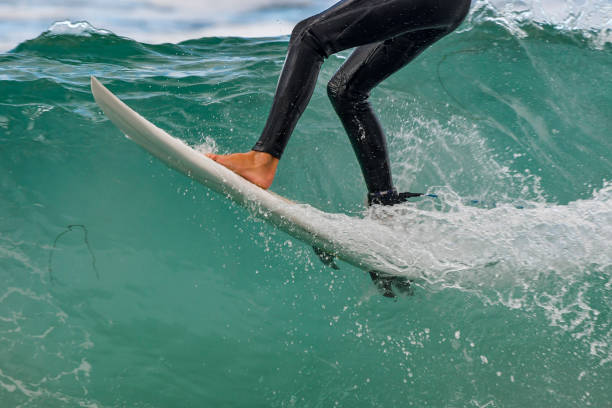
Another critical piece—rail control. Your inside rail (the one toward the wave) has to bite hard as you carve around. Don’t slide. If you skid out, you lose all that built-up energy. Keep your weight centered over the board, but lean slightly into the turn like you’re hugging the line. The more you can get the board on a vertical plane—almost pointing straight up when you hit the lip—the better your pop. Think of it as a jump shot in basketball. You don’t jump sideways; you jump up and out. Same thing here.
Once you’ve popped off the lip, your body has to stay compact. Flailing arms and legs kill rotation and balance. Tuck your knees, grab the rail if you want—style points—but keep that core tight. You’re not a rag doll; you’re a spring-loaded missile. And landing? That’s another bottom turn in reverse. Absorb the impact with your legs, sink back down, and immediately drive your back foot to re-engage the fins. You want to land with the board already angling down the face, not flat. That’s how you stick it and ride away like you meant to do it all along.
Remember, every aerial is a conversation between you, the board, and the wave. The wave gives you the ramp. You give it the timing and power. The best aerialists make it look effortless because they’ve mastered the bottom turn so well that the pop feels like a natural extension of the carve. So next time you paddle out, don’t just think about flying. Think about the bottom. Sink deep, wait for the energy, then explode. That’s how you truly take flight on a wave.