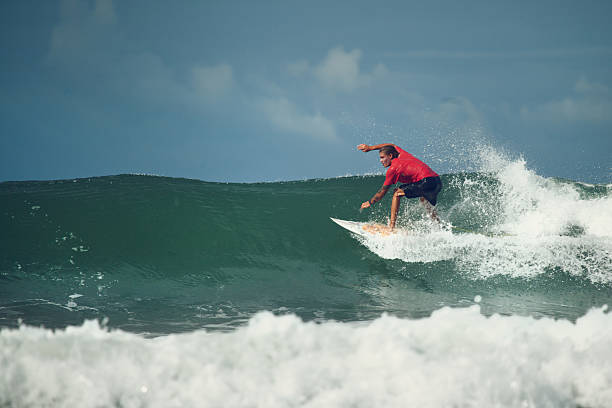
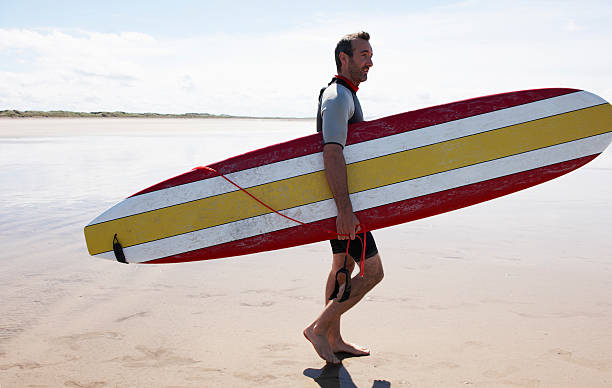
You can paddle for ten years and still feel like a kook every time a solid swell hits your local break. You know how to pop up, you can trim down the line, maybe you’ve even snagged a few halfway decent cutbacks. But when the sets roll in, you’re still fighting for position, still missing the peak, still getting dropped in on by a grom half your age. That’s where the real magic of a proper surf camp kicks in. Not the kind that hands you a foamie and a wetsuit and calls it a day, but the kind that takes your surfing from reactive to proactive, from scrambling to reading the ocean like a book. The single most important skill you can develop at a dedicated surf camp is wave reading, and it’s the one thing that will transform your time in the water faster than any new board or fin setup.
Most of us learned to surf by osmosis. We watched the guys on the inside, we paddled out when they paddled out, and we hoped for the best. That works until you hit a new break or a different swell direction, and suddenly you’re sitting in the wrong spot, wondering why everyone else is scoring while you’re bobbing in the whitewash. A good surf camp breaks that cycle. The guides spend the first part of every session on the beach, not just explaining the lineup but drawing it in the sand. They point out the rip currents, the deeper channels, the shallow boils where the wave will stand up first. They teach you to look for the dark water that means a deeper channel, the light streaks of water that mean a sandbar. They show you how to watch the horizon for the telltale ripple of a set approaching, a subtle dark line that tells you exactly where the peak will feather. It sounds simple, but until someone forces you to sit and truly look, instead of just charging in blind, you’re missing half the equation.
Once you’re in the water, a camp environment gives you real-time feedback that you’d never get surfing solo or with your buddies. A good surf coach will be on the water with you, or watching from the shore with a pair of binoculars, calling out adjustments. You learn that the wave isn’t just a wall of water coming at you. You learn to identify the takeoff zone, the place where the wave will jack up and pitch the fastest, versus the shoulder that will give you a long, mellow ride. You learn to read the speed of a wave by its shape. A steep, hollow face means a fast, barreling wave that demands a deep bottom turn and a quick draw. A fat, rolling wave means you need to angle your takeoff earlier, stay higher on the face, and pump for speed. You start to see the wind’s impact not as a nuisance but as a tool. Offshore wind holds the wave open, creates a glassy wall. Onshore wind chops it up, but it can also make a slow wave steeper and more rideable. Camp instructors live and breathe that nuance, and they drill it into you until it becomes second nature.
The other massive payoff from a surf camp focused on skill improvement is the chance to surf the same break over several days with changing conditions. Most traveling surfers get one or two sessions at a spot, then move on. At camp, you wake up every morning to the same lineup, but the swell might be building, the tide shifting, the wind switching. You begin to see how the wave responds to the moon, to the low tide dragging across the reef, to the high tide smoothing out the face. You learn that a wave you surfed at 8 a.m. on a high tide is a completely different beast at 3 p.m. on a mid-low. That kind of repetition is the fastest way to internalize wave reading. You stop guessing and start predicting. You know exactly where to sit for the third set of the morning, because you watched the first two pass through. You know that the left off the outside peak only holds up for a few turns before it turns into a closeout close to the beach, so you plan your ride accordingly.
Beyond the technical side, surf camp teaches you patience and respect for the rhythm of the ocean. You stop fighting the current, and start using it to position yourself. You learn to sit deeper in the lineup, not because you’re tryna show off, but because you recognize that the sets are coming in groups of five, and the first wave is the smallest and the third wave is the magic one. You learn to let waves go, to miss ones that look tempting but won’t connect to the peak. That discipline translates directly to having more fun, because you’re no longer burning energy on waves that won’t let you do anything. You’re picking the ones that line up perfectly for your style and your skill level. You’re surfing smarter, not harder, and that’s the whole damn point of chasing the endless summer. You don’t want to just survive the water, you want to dance with it.
So when you think about booking a surf camp, don’t just look for the best waves or the nicest accommodations. Look for a camp that prioritizes coaching on reading the ocean. That’s the gear that never breaks, the technique that never goes out of style. Once you can look at a wave and know what it’s going to do before it does it, every paddle out becomes a new conversation. You’re not just a passenger anymore, you’re a student of the swell, and the ocean will start handing you her best rides.