There is a moment that every surfer chasing that endless summer dreams about, and it happens out at Jeffreys Bay. You paddle out past the Super Tubes peak on a proper southwest swell, and suddenly you realize the ocean is not just moving water. It is playing a song. And the reef at J-Bay, with its ancient sandstone ledges and deep underwater channels, is the conductor. They call it the perfect wave, but that is a shallow description. What the Super Tubes really offer is a masterclass in rhythm, a lesson that if you listen close enough, you can learn to move in perfect sync with something far older and more powerful than yourself.
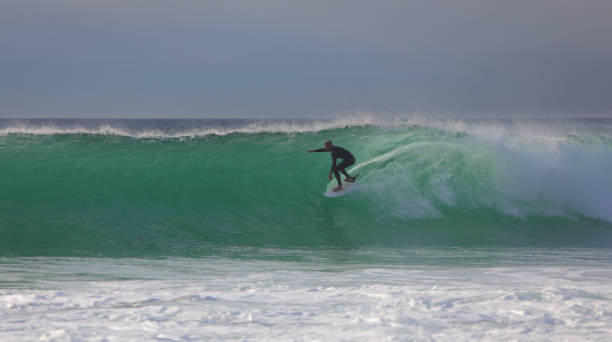
The secret to J-Bay is not in the size of the swell or the direction of the wind, though both matter plenty. The secret is in the bottom. The reef at Jeffreys Bay is a long, gradual ramp of sandstone that runs parallel to the beach for nearly a mile. It is not a sudden bombora or a jagged ledge like you find at Pipeline or Teahupo’o. It is smooth, sculpted by eons of current, and it creates a wave that peels at a consistent speed down the line. This consistency is what makes the Supertubes so special. The wave does not throw you into a violent closeout. It offers you a hallway, a perfectly shaping wall that changes just subtly enough to keep you guessing. From the takeoff at the peak, through the famous sections like Boneyards and the Impossibly Perfect Barrel of the main Supertubes section, the reef dictates the tempo. You are not fighting the ocean out here. You are dancing with it.
That dance is a cultural conversation that has been going on for decades. The local surfers of Jeffreys Bay have a deep, almost spiritual connection to this wave. They know that the reef is alive. They know that the current running along the inside of the bay can sweep you into the rocks if you disrespect the rhythm. The Boneyards section, for instance, is not called that because it is a peaceful place. It is a shallow, rocky shelf where the wave throws you into a dry reef if you miss the connection. But the local crew, the guys who have been surfing J-Bay since they were grommets, they have memorized that section like a drummer knows the crash cymbal. They know that if your speed is off by half a heartbeat, you are getting eaten. That respect for the bottom, that understanding that the wave has a pulse you must match, is the core of the Jeffreys Bay experience.
This rhythm affects every part of the trip. A surfer traveling to J-Bay does not just chase a swell chart. They chase a window. The best conditions are often clean offshore winds that groom the face into a glassy racetrack, but the swell direction is the real key. A true southwest groundswell, generated by storms deep in the Southern Ocean, wraps into the bay with a long period that creates those dreamy, hollow walls. When the power is there and the wind is light, the entire lineup at Supertubes exhales. The tension drops. The locals and the traveling crew alike settle into a groove. Paddling out becomes a meditation. You sit on your board in the channel, watching the sets pulse in, and you time your breathing with the lulls. You wait for the right wave, not the biggest one. You wait for the one that holds the rhythm perfectly, the one that will let you dance through the sections all the way to the inside point at Magna Tubes.
There is a reason this spot is legendary. The Endless Summer crew, Bruce Brown, Shaun Tomson, the pioneers of the modern power carve, they all found their rhythm here. It is a wave that demands flow over force. A surfer who tries to out-muscle J-Bay will end up pearling into the reef or getting pitched over the falls. But a surfer who listens, who feels the bottom shift under their feet through the board, who understands that the wave is a living thing moving through an ancient channel of stone, that surfer will find something rare. They will find perfect tube rides that last for what feels like an eternity. They will feel the pulse of the Southern Ocean travel through their spine.
So next time you paddle out at J-Bay, forget about the cameras, forget about the competitive hype. Feel the reef. Listen to the wave. Let it set the tempo. Dance with it, not against it. That is where the real stoke lives, right there in the rhythm of the Supertubes.