You paddle out, heart thumping, spot a clean set wave jacking up on the reef, and you take the drop. That pure moment of weightlessness, the wall standing up in front of you—it’s the reason we all paddle out. But then what? If you’re like most surfers who hit surf camps to improve, you’ve probably spent serious energy trying to learn airs, snap a lip, or glide through a cutback. And hey, those moves are sick. But the truth is, none of them mean a thing without a solid bottom turn. The bottom turn is the foundation, the one move that connects the drop to everything else you do on the wave. At a good surf camp, the best instructors don’t let you chase the flashy stuff until you own this one. It’s not the most glamorous move, but it’s the one that separates surfers who just ride a wave from those who truly surf it.
When you take off on a wave, you’re basically falling down a hill of water. The bottom turn is what redirects all that speed and gravity into the power source of the wave—the open face. Without it, you stall, you slide out, or you get pitched over the falls. It’s the steering wheel and the gas pedal combined. At a camp setting, coaches drill this because it’s where you build projection, that explosive drive that lets you come up with momentum to do a turn on the lip. A weak bottom turn means everything that follows is weak, too. You’re trying to rebuild a house on a cracked foundation.
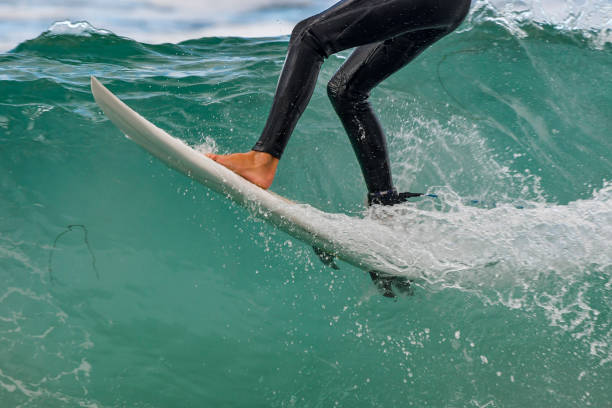
Now, the key phrase you hear at camps is, “Look where you want to go.” Sounds simple, but it’s where most people mess up. When you drop in, your instinct is to look straight down the beach or at the crashing whitewater. Wrong move. Your body and board follow your head. If you look at the trough, you’ll skate straight into the flats and lose all that energy. A proper bottom turn starts with your eyes locked on the peak, or even higher up the wall. You compress, drop your back shoulder, and drive the rail into the water. You push through the fins, feeling the water pressure against them. That pressure is your friend—it’s the board loading up like a spring, ready to release you up the face.
The best part about a surf camp environment is you get to see this in slow motion. Coaches will walk you through it on the sand before you paddle out. You learn to use your front hand to point, not to grab the rail. You learn to start your turn from your back foot, driving the tail around. And then you take that muscle memory into the water, where a coach can paddle beside you and yell, “Compress! Now drive!” They see what you don’t feel: that you’re standing up too straight, or you’re turning too early, or you’re not pushing through the whole arc. It seems minor, but those micro-adjustments turn a flimsy slide into a powerful carve.
There’s also the mental side. A bottom turn is a commitment. You have to trust the physics, trust your fins, and trust that if you lean hard, the board will hold. That trust doesn’t come from watching YouTube clips. It comes from paddling out at a camp, wave after wave, with a coach who pushes you to lean a little more each time. Maybe you’ll spin out once or twice, but that’s how you learn. You find that fine edge between losing it and holding the line. Once you find it, that feeling is addictive. Suddenly, you’re not just taking off and riding straight anymore. You’re setting up for a turn. You’re surfing the wave, not just riding it.
A surf camp that focuses on this foundation will change your whole game. You stop judging a wave by how late you drop in and start judging it by how well you connect your bottom turn to the pocket. You learn that every wave has a green zone, a golden section in the face where you can unload all that compressed energy. And that bottom turn is your chance to hit that zone with maximum power. The cutback becomes tighter. The floater becomes more controlled. The snap becomes explosive. All because you sorted out the root move.
So if you’re checking out camps to level up your surfing, don’t just ask if they take you to good waves. Ask how much time they spend on the bottom turn. Because a camp that chases airs over the foundation is selling you a quick thrill. A camp that drills you on a solid, powerful bottom turn is giving you the keys to a lifetime of better surfing. The wave doesn’t give you speed for free. You earn it. And you earn it with a bottom turn.