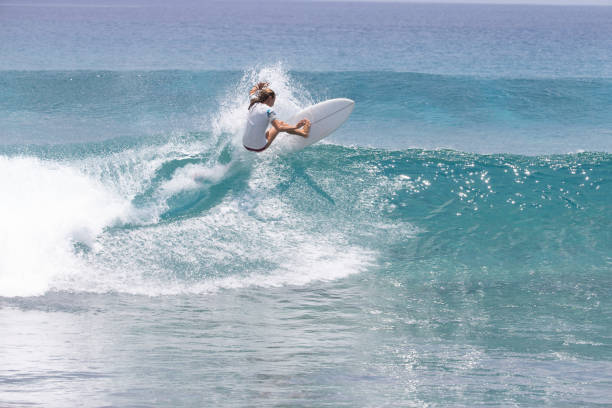
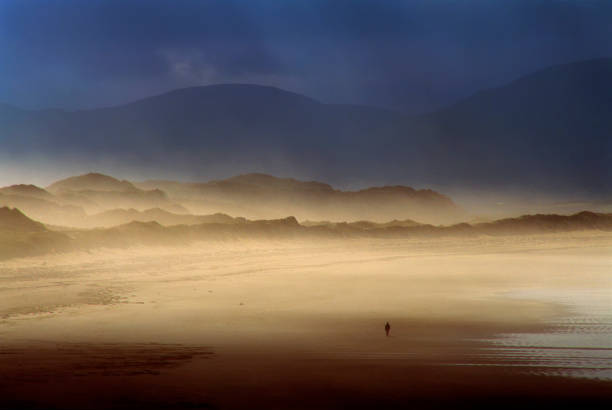
There’s a moment that hits every solo surfer, usually right after you’ve parked your rental van on a dusty coastal road somewhere unfamiliar. The boards are strapped down, the sun is setting over a stretch of coast you’ve never surfed before, and a quiet hum of nerves settles into your chest. You look out at the swell lines marching in and realize that there is no one here to tell you where to paddle out, no buddy to trade waves with, no familiar face to take a photo of your first drop. It’s just you, the ocean, and an empty stretch of sand that feels both terrifying and electric. That feeling, right there, is the whole reason to go solo. It’s not about being lonely. It’s about finding out who you are when the chatter drops away and only the rhythm of the ocean remains.
Solo surf travel forces you to strip things down to the essentials. You learn real quick that a perfect wave is not a given, it’s a gift earned through patience, respect, and a willingness to sit through some long flat spells. When you paddle out alone at a new break, nobody cares about your resume of waves ridden back home. The lineup has its own language, and you earn your place by reading the current, by not dropping in, by sitting wide until you understand the peak. There is a certain humbleness that comes with being the new grom in the water. You take the scraps at first. You get worked on sets you should have seen coming. And slowly, over a session or two, the local crew might nod your way or give you a wave on the outside. That nod is worth more than any perfect barrel you’ve ever caught, because it means you paid your dues without leaning on anyone else.
The beauty of solo trips is the way they open you up to the unexpected. Without a crew to anchor you to a schedule, you can chase a wind shift at dawn or decide to drive three hours south because a buddy you met at a taco stand mentioned an offshore secret. You learn to trust your gut. You develop a sixth sense for reading weather charts, for knowing when a swell is going to fill in, for sniffing out the cleanest shoulder. The gear you pack has to be versatile. A quiver of two boards usually covers it, a step-up for the bigger days and a groveler for the mushy afternoon slop. You become a master of the quick fin change, the hasty wax job, the repair ding that holds just long enough to get you through the session.
But the real stoke of solo surf travel is the connection you make with the people you meet along the way. There is a brotherhood and sisterhood among those who ride waves alone. You end up sharing a campfire with a Japanese longboarder and a Brazilian goofyfooter, swapping stories in broken English and universal hand gestures. You learn that the best surf towns are not the ones with the flashiest resorts, but the ones where the coffee is strong, the locals are salty, and the wave is just a short walk from where you crash. You become a sponge for local knowledge, learning the tides and the reef hazards and the secret spots that don’t show up on any map.
The biggest lesson of solo travel is that the stoke lives inside you. It’s not something a group can manufacture. When you paddle out alone at sunrise, with the fog burning off and the first set feathering on the outside, there is a quiet joy that fills your chest. You take off on a wave and for a few seconds the world disappears. There’s no one to cheer, no one to perform for. Just you, the face of the wave, and the spray in your face. That moment is pure. It stays with you long after the trip ends, a small ember of stoke that lights the path to your next adventure.
So if you’re sitting on the fence about paddling out alone, just do it. Load the boards, point the car toward the coast, and let the road tell you where to stop. The waves will be there. The fear will fade. And you’ll come home with more than just a tan and a few good rides. You’ll come home with a deeper understanding of the ocean, and a little bit more of yourself.