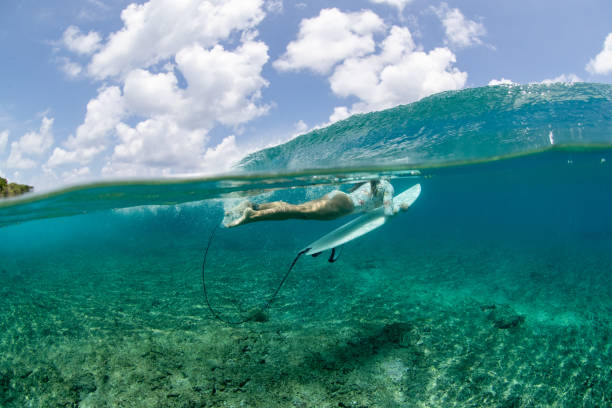
When you paddle out at a wave you’ve never surfed before, the water feels different. The reef below casts shadows you don’t recognize, the sets seem to pulse with a rhythm you haven’t yet learned, and the locals—they’re watching. Not in a hostile way, usually, but with a quiet expectation that you’ll honor the code. Traveling to surf is one of the purest forms of adventure, but it comes with a serious responsibility. The soul of the sport depends on how we treat the places and people we visit. Learning the local surf culture is just as important as reading the swell charts. If you show up without respect, you’ll burn a bridge that other surfers depend on for years to come.
Every break around the world has its own unwritten rulebook. Some places are hyper-competitive, with a strict pecking order based on who’s been in the water the longest. Others are mellow, almost zen-like, where the priority system is a shared vibe rather than a snarling contest. Either way, the golden rule is observation. Pull up to the beach, park your rental van, and watch the lineup during a couple of sets before you even think about waxing your board. See how the locals interact. Who drops in? Who sits deeper? How do they communicate? You’ll spot the old-timer in the corner who everyone defers to, the groms paddling around the inside, the visiting pro who gets respect because he’s earned it elsewhere. Take mental notes. Then, when you paddle out, start on the shoulder. Don’t snake anybody. Don’t burn. Smile. Give a shaka. If you catch a wave and it’s a closeout, don’t toss your board or yell. Laugh it off. In many places, a positive attitude is your ticket to a warm reception. If you act like a kook who thinks he owns the ocean, you’ll get a cold shoulder at best, or a reef soaked in bad karma.
Beyond the lineup, responsible surf tourism means understanding the culture beyond the wave. That village behind the beach is somebody’s home. That temple above the cliff is sacred. The people who sell you coconuts and cold beer are not just scenery—they have lives, families, and a deep connection to the land. Walk through their town with the same respect you’d want in your own. Ask before you take photos of kids playing soccer. Learn a few words of the local language, even if it’s just “thank you” and “hello.” And when you buy from local artisans or eat at family-run warungs, you’re putting stoke back into the community. Too often, surf travel turns into a monoculture of hostels and burger joints run by expats, with local residents pushed to the margins. That’s not the endless summer dream. That’s colonization with a wax job. Real surf adventure means immersing yourself, even if it feels uncomfortable at first.
Environmental respect is another layer of the responsibility board. Surfers are the ultimate ocean ambassadors. We see the plastic trash floating past between sets. We feel the reef bleaching under our feet. When you travel, carry a reusable water bottle, a metal straw, and a bag for picking up rubbish you see on the beach. Most surf destinations lack the infrastructure to handle the waste that tourists generate. Your single-use plastic bottle from the corner shop might end up in the same lineup you surf tomorrow. Think about that. Also, be aware of your carbon footprint. Flight emissions are real. If you can offset them through a reputable program, do it. If you can extend your trip to travel overland rather than hopping between islands on planes, do that. The goal is to leave a place better than you found it, or at least no worse. The ocean gives us so much stoke—it’s only fair we give back.
Another overlooked aspect is supporting the local surf economy in a way that doesn’t exploit it. Pay fair prices for board rentals, boat trips, and lessons. Don’t haggle aggressively with someone whose family relies on that cash to get by. If a local shaper offers to repair your broken board, pay him well. He might have shaped the very wave you’re surfing with his hands. In many destinations, surf tourism has driven up land prices and forced locals away from the coastline. Be mindful of where you stay. Choose eco-friendly lodges or homestays run by local families over big resorts that siphon money out of the area. And don’t be that person who posts a video of a secret break with geotags. That kind of move drowns a remote spot in crowds and wrecks the very magic you went to find. Keep the spot somewhere between your memory and the wave itself.
Ultimately, responsible surf tourism isn’t about rules. It’s about love. You travel because you love the ocean, love the feeling of gliding across a wall of blue energy, love the way a sunset looks from a lineup in a foreign sea. That love demands care. It asks you to be humble, to learn, to give back. The waves don’t belong to anyone, but the community that grows around them deserves protection. If we all paddle with a little more aloha, the stoke will stay alive for generations. So next time you pack your boards for a trip to some faraway swell, pack your manners too. The ocean will know the difference.