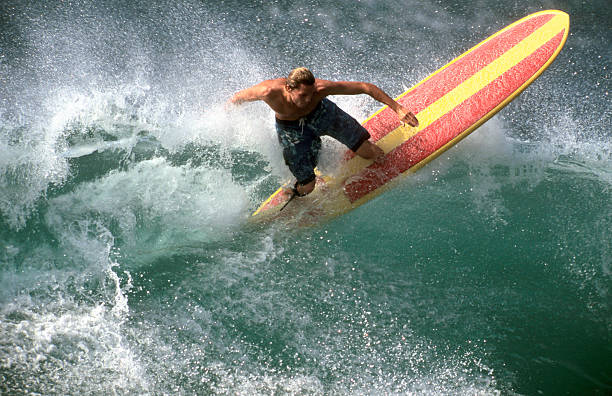
There is a certain magic that happens when you roll into a foreign beach town, van packed with boards and wax, and the only plan you’ve got is chasing a swell that’s been building across the Pacific. Solo surf travel isn’t just about catching waves. It’s about plugging into the raw pulse of the ocean without a buddy to bounce off or a local to hold your hand. When you paddle out alone, the lineup becomes your classroom, your proving ground, and your church all at once. The trick isn’t just surviving it, but learning to read the ocean like the book it wants you to understand.
The first thing you gotta dial in is patience. Without a crew to hoot you into sets or point out the shifting peak, you have to spend serious time just sitting there, watching. You can’t just pop up on the first bump that looks rideable. You need to feel the rhythm of the swell, understand how the reef or sandbar is breaking across the tide cycle. A solo surfer learns to read the horizon for dark water patches, the telltale sign of a deeper channel that might bring the bigger sets. You watch where the birds are diving, where the baitfish are scattering. In the absence of a friend yelling from the beach, the ocean whispers its secrets, and you just have to shut up and listen.
Another big part of the solo game is learning to manage your energy. When you’re on a surf trip alone, there’s no one to split the paddle with when the current is ripping you sideways. You have to be your own lifeguard. That means knowing your own limits and respecting the swell forecast even when instinct says go. A solo surfer doesn’t charge a double-overhead slab on a shallow reef without a rock-solid exit strategy, because if you blow a paddle-out and eat it down the face, there’s no one feeding you a leash stringer. You’ve gotta keep a cool head in the spin cycle, stay calm when you’re drowning in whitewash, and paddle back out with a clear mind. The biggest wave you ever catch might be the one you decide to sit out.
Then there’s the social dance of the solo surfer, which is a whole different stoke. When you roll up alone, locals might give you a side-eye at first. That’s just the pecking order. The trick is to earn your spot by respecting the etiquette, not dropping in, and taking your lumps with a smile. I’ve found that the best way to get a wave solo is to hang back, let the pack fight for the inside sets, and pick off the shoulder crumbs until someone nods your way. You’ll make fast friends in the water when you’re humble and ready to share. A simple, genuine smile and a thumbs up after a close call can open up a whole lineup to you. Before you know it, you might be splitting a six pack with a local shaper on the beach.
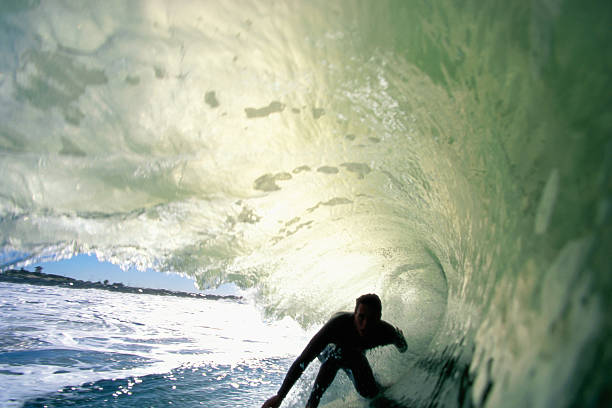
But the real payoff of solo surf travel is the raw connection to the elements. Without a buddy yapping about the wave they just got, you’re left alone with the deep blue and the sound of your own breath. You notice the way the wind textures the face of a wave, the cool spots on the water where the tide is pulling, the way a set wave rears up before it throws. It’s just you, the board, and the swell. Every paddle-out is a boundary negotiation between your fear and your desire. And when you finally drop into a perfect solo tube, deep and dry, there’s no one to share it with but the horizon. That’s the kind of stoke that sticks with you long after the salt dries on your skin.