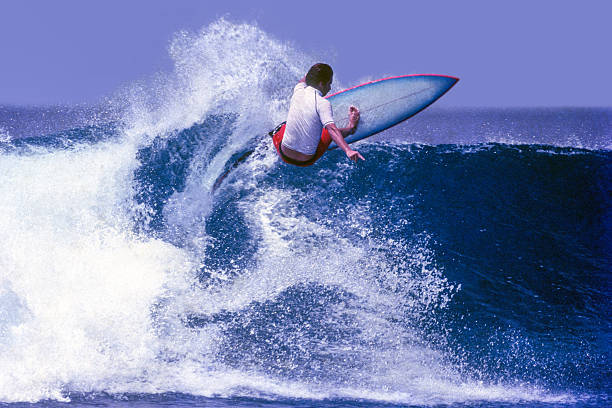
You paddle out at dawn and the ocean lies before you like a freshly poured glass of clean, green glass. The sets are rolling in with a certain kind of precision. The faces are steep, smooth, and they stand up with a hollow crack as they pitch. That is the magic of offshore wind. It is the unsung hero of every perfect session, the invisible hand that grooms the swell into something worth paddling halfway around the world for. On the other hand, you know the feeling of paddling out and taking a face full of spray before you even get past the shore break. The waves look fat, mushy, and they fold over without any real punch. That is onshore wind, the buzzkill that turns a promising swell into a washing machine.
Offshore wind is the good stuff. It blows from the land out toward the ocean. When that wind runs into a rising swell, it pushes back against the face of the wave. Think of it like a sculptor, holding the water up just a little longer, keeping it steeper and cleaner as it breaks. The wave stands tall, the lip throws out over the trough, and that is how you get the barrel. Whether it is a two-foot peel at your local beach break or a ten-foot bomb at a reef pass, offshore wind is what separates a fun day from a sacred one. The takeoff feels smooth. The face stays glassy. You can see your own reflection in the wave right before you drop in. That is the stoke we chase.
Onshore wind is the opposite. It blows from the ocean toward the land. It hits the back of the wave and shoves it forward, causing the face to crumble and spill prematurely. The surface gets choppy and textured. The wave loses its shape and becomes a lumpy, bumpy mess. If you try to get barreled in onshore conditions, you are more likely to get a lungful of foam and a head full of turbulence. It makes paddling harder because the wind pushes you back, and it makes surfing feel like a fight against the elements rather than a dance with them. Onshore wind is the reason you call a session early and go for tacos instead.
The feeling of offshore wind is tactile. It hits your back as you sit on your board. It lifts the back of your hair. It dries your face between waves. The sound is different too. There is a quietness to the ocean when the wind is off the land, a stillness that lets the wave speak for itself. You find yourself breathing slower, waiting for the right one, knowing that the wave will hold its shape for you. When you take off on a wave in offshore conditions, you feel a lightness, a freedom. The wave seems to give you time. You can set your rail, look down the line, and feel the wind holding the wave open like a door.
Onshore wind tests your patience and your love for the sport. There are days when the swell is pumping but the wind is howling from the wrong direction and you paddle out anyway because you are a surfer and that is what surfers do. You get pounded, you get tossed around, and you come in after an hour feeling like you went ten rounds with the ocean. But those days build character. They teach you to read the ocean better. They remind you that surfing is not always about perfect waves. Sometimes it is about being out there when it is ugly.
The magic of offshore wind is also tied to time of day. Offshore conditions often come in the morning, when the land is still cool and the air sinks toward the water. That is why dawn patrol is sacred. You wake up early, you check the wind sock, you see it blowing straight out to sea, and you know you are in for a treat. Onshore wind usually picks up in the afternoon as the land heats up and the air rises, pulling the ocean breeze inland. That is why the afternoon session is a gamble. Some of the best barrels of your life will happen in the early morning light with offshore wind grooming every set. The endless summer vibe is all about chasing that window, the golden hour when the swell lines up with the wind and the sun is at your back.
There is a deeper layer to lingo like this. When a surfer says the wind is offshore, they are not just talking about meteorology. They are talking about potential. They are talking about the kind of day that makes you call in sick to work, the kind of day you tell your grandkids about. When a surfer complains about onshore wind, they are usually bumming about the conditions but still grateful to be in the water. The wind shapes the wave, and the wave shapes the ride. Knowing the difference between offshore and onshore is like knowing the difference between a clean takeoff and a closeout. It is the difference between a barrel and a beatdown.
So next time you paddle out, look toward the land. Feel the direction of the breeze on your face. If it is hitting you in the chest, you are in for a battle. If it is hitting you in the back, get ready to charge. The wind is the unsung poet of the surf world, and offshore is its finest verse.