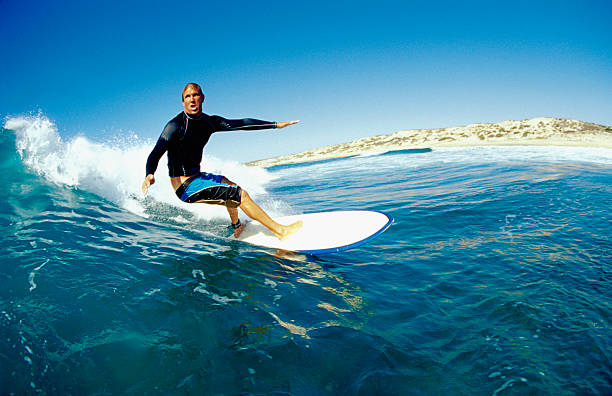
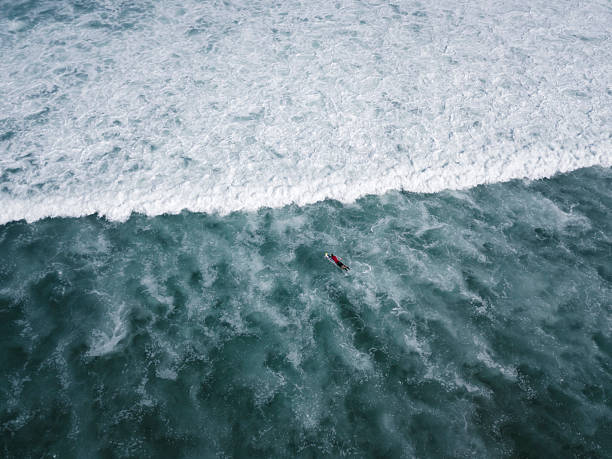
Let’s cut straight to the chase. You can pop up smooth, you’ve got your bottom turn dialed, and you look the part. But until you can read and adapt to whatever the ocean throws at you, you’re just a tourist in the lineup. True surfing isn’t about forcing one style on every wave; it’s about becoming a chameleon, shifting your approach to match the mood of the sea. This is the deep end of surf technique.
Think of it like this: you wouldn’t drive a monster truck the same way you handle a sports car. Different machines for different terrains. Your surfing is the machine, and the wave type is the terrain. Mastering this is what separates the everyday surfer from the one who scores, no matter the spot on the map.
Start with the basics—the beach break. This is the school of hard knocks, the unpredictable playground. One wave is a fast, pitching A-frame, the next a mushy, rolling closeout. The key here is reaction and adaptation. You need a quick, explosive pop-up and an immediate commitment. On those wedging peaks, it’s all about speed generation from the first drop, a solid bottom turn to beat the closing section, and maybe a snap off the lip if you’re lucky. On the softer ones, you’re shifting your weight to the front foot, driving down the line to milk it for all it’s worth. The beach break teaches you to make decisions fast and live with the consequences. It’s raw, it’s honest, and it’ll make you a better surfer everywhere.
Then you have the point break. This is the rhythm section, the wave of flow and repetition. A long, predictable wall gives you the gift of time. Here, technique is about patience and precision, not panic. The take-off is often more relaxed, but the focus shifts to setting a high line, maintaining speed through subtle weight shifts, and setting up for critical sections down the line. It’s about reading the wall, spotting the sections that are about to bowl or slow down, and positioning yourself perfectly. On a point, you can practice your carves with intention—deep, drawn-out bottom turns, powerful top turns, and maybe even a cutback or two to get back to the power source. It’s the place to refine your style and link maneuvers.
Don’t forget the reef break, the arena of consequence. Waves here are often more powerful, shaped by a fixed underwater contour. They can offer everything from perfect, mechanical barrels to heaving, ledging drops. Technique here is underpinned by knowledge—of the tide, the swell direction, and that particular reef’s personality. The take-off is often steeper, demanding commitment and a later drop. The bottom turn needs to be explosive and precise, often aimed straight for the pocket or, if you’re going for the green room, setting your line immediately. Tube riding technique is its own whole world—the crouch, the stall, the grab rail, the vision. At a reef, your technique needs to be sharp, because the margin for error is thinner.
So how do you get this mastery? There’s no secret. It’s time in the water, in different waters. Chase all kinds of waves. Feel how a mushy wave needs you to generate speed, while a hollow wave asks you to control the speed you’re given. Watch the locals who have it dialed. See how they adjust their stance, their timing, their board choice.
In the end, surfing isn’t a single sport. It’s a collection of related arts. The surfer who can glide through a mellow point session one day and then charge a chunky beach break the next is the one truly riding the endless summer. They’re not just riding waves; they’re having a conversation with the ocean, and they speak the language fluently, no matter the dialect. That’s the ultimate goal. Now get out there and practice.