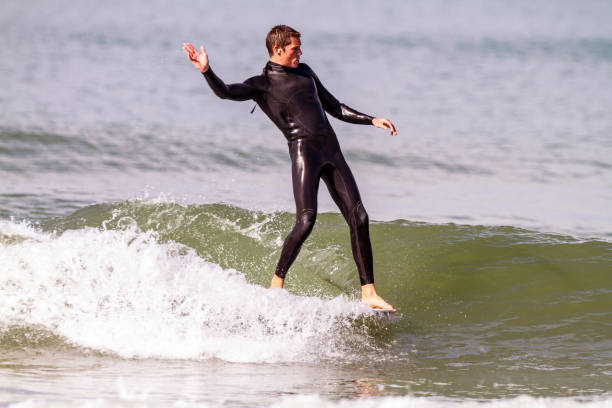
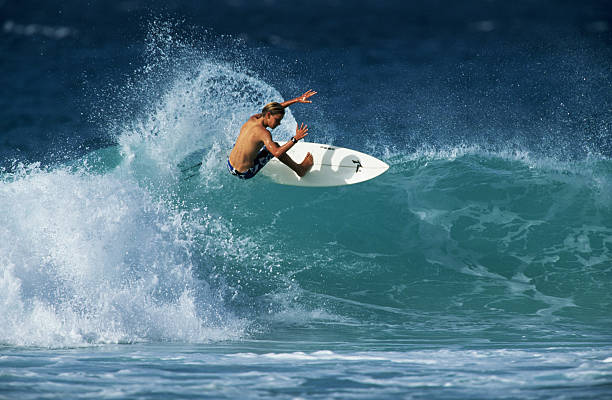
To talk about Malibu is to talk about the soul of California surfing. It’s not the heaviest wave on the planet, not by a long shot. You won’t find the grinding barrels of Pipeline or the raw power of Mavericks here. What you find at First Point, Malibu, is something arguably more important: perfection. It’s the textbook right-hand point break, the wave that taught generations what a long, peeling, workable wall is supposed to look and feel like. This is where style was born, where the culture crystallized, and where the dream of the endless summer first took a tangible, rideable form.
The setup is pure geography porn. A cobblestone point juts out, grabbing any south or southwest swell that comes rolling up the Channel and bending it into a line that can run for hundreds of yards. On a good day, it’s a series of sections, from the fast inside pocket near the rocks to the slower, more critical middle section, all the way to the reform on the inside. It’s a wave for noseriding, for carving, for setting a high line and trimming with one foot on the nose. The takeoff zone, known as the “pit,“ is a crowded, competitive arena where local legends and starry-eyed pilgrims jockey for position. You gotta understand the pecking order. This isn’t a free-for-all; it’s a lineup with deep history and deeper localism. Respect is the currency, and without it, you’re going to get burned.
Malibu’s history is the history of modern surf culture. In the 1950s, guys like Mickey Dora, the original “Da Cat,“ defined a whole attitude here—rebellious, stylish, effortlessly cool. He and others rode those heavy, single-fin balsa and then foam longboards, drawing lines that are still imitated today. The Gidget phenomenon in the late ‘50s put the spot on the map for the masses, for better or worse. The 1960s and 70s saw the shortboard revolution change the approach, but Malibu adapted. It’s always been a proving ground. Whether you’re on a 9’6” log or a 6’0” thruster, the wave demands a certain flow. You don’t fight Malibu; you dance with it.
The vibe in the water is a unique blend. There’s the crew of old-school longboarders who’ve been logging these lines for decades, their cross-stepping as natural as breathing. There are hotshot shortboarders looking to snap the lip in the pocket. And there’s always a crowd of intermediates and kooks, drawn by the legend, trying to figure it all out. It can be a zoo, no doubt. Summer south swells combined with warm water and endless sunshine bring every surfer from Ventura to San Diego to the party. Paddling out can feel like navigating a parking lot. But when you finally snag one, when you drop in, set your rail, and feel that smooth, cobblestone-generated energy push you along, you get it. You understand why this place is sacred.
Surfing Malibu is about more than just the ride. It’s the smell of salt and sunscreen on the pier. It’s the view of the mountains coming right down to the sea. It’s the classic California beach shack aesthetic. It’s a feeling. It’s the classic point break dream, the image that pops into your head when you think of a perfect wave. It’s crowded, it’s competitive, it can be frustrating. But on a golden evening with a fading swell, when the crowd thins and you get a few alone, the magic is still absolutely there. It’s Malibu. It’s the classic. It’s a must-surf, must-see, must-respect chapter in every surfer’s book. You don’t just surf it; you connect with the lineage. You become part of the story.