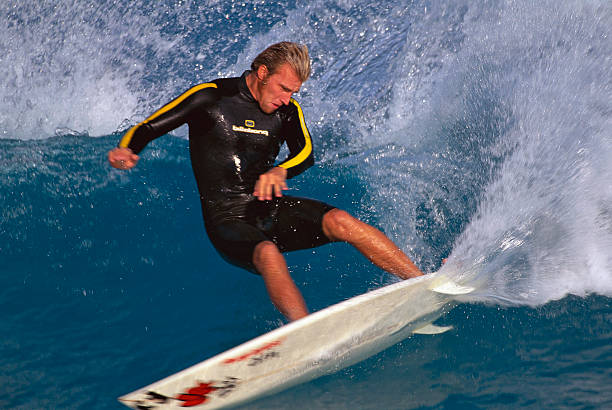
There’s a moment every surfer knows—that quiet panic when your board snaps free and you’re treading water, watching your stick cartwheel toward the rocks or, worse, straight at a friend’s skull. The leash is the only thing standing between you and a long swim, a dinged-up board, or a visit from the lifeguards. But here’s the kicker: that little urethane cord isn’t just a safety net. It’s a performance tool, a vibe setter, and a silent partner in every turn, takeoff, and wipeout. And the length of that leash? That’s where the magic, and the mayhem, really lives.
Most of us don’t think twice about leash length when we grab a board off the rack. We just assume the big yellow one with the thick cuff will do. But if you’ve ever felt like your board is unresponsive, dragging like an anchor, or conversely, whipping around so randomly you’re scared it’ll crack you in the back of the skull, the length might be the culprit. The Goldilocks principle applies hard here: too short, and you’re fighting constant tension, like surfing on a rubber band. Too long, and the leash becomes dead weight, creating drag that slows your paddle and steers your tail like a rudder that doesn’t belong to you.
The old-school rule of thumb is simple: your leash should be roughly the same length as your board. Ride a 6’0” shortboard? Grab a 6’0” leash. Paddle around on a 9’0” longboard? You want a 9’0” or even a 10’0” if you’re in pushy, powerful waves. That rule exists because the leash needs to be long enough to keep the board out of the wave’s “whitewater washing machine” zone while staying short enough to minimize drag and keep the board close after a wipeout. But there’s more nuance than that, especially when you factor in wave size, board volume, and your own style.
In small, mushy, knee-to-chest-high surf, a slightly shorter leash—say, one to two feet shorter than your board—can actually help. Why? Because there’s less slack to tangle around your ankles, less drag when you’re paddling for weak, gutless waves, and the board returns to you quicker after a fall, meaning less time fumbling for the rail. Short leashes also feel snappier on the face, making your pivot and direction changes feel more direct. You’ll notice it on those little inside reform waves where every stroke counts.
When things get overhead and hollow, though, you want to go the other way. A longer leash—often a foot or two longer than your board—gives that board more room to swing clear of the whitewater when you get pitched over the falls. In a barrel, a tight leash can yank your board into your face at the exact wrong moment. A longer leash lets the board slingshot around the fetch and end up somewhere safer, usually behind you, not in front of the lip waiting to coldcock you. Plus, the extra length acts like a shock absorber, reducing that jarring snap when the leash goes taut at the end of a deep wipeout. Your ankles and knees will thank you.
Also, think about leash thickness. That’s tied to length in a weird way. A long, thin leash is a tangle monster waiting to happen. A long, thick leash adds drag. Modern leashes come in diameters from 5mm to 9mm or more. For daily small-wave surfing, a thinner 5mm or 6mm leash is plenty, even on a longer board, because the forces are smaller. But if you’re taking a step-up board out in double-overhead winter bombs, you want a thicker 7mm or 8mm leash, even if it means extra weight in the water. The drag from a thick, extra-long leash is a trade-off you happily accept when you’re being held down for three seconds and the board is still somehow attached.
Don’t forget the swivels. A good leash has two rotating swivels—one at the cuff, one at the rail saver. The length matters less if the swivels are jammed with sand or salt, because your leash will twist into a corkscrew, shortening its effective length by half. So check those swivels before you paddle out. A leash that’s tied up in a sailor’s knot is a leash that’s secretly two feet shorter than you think.
Here’s a random, but totally real, piece of advice: on a soft-top or foamie, go shorter. Surprising? Foam boards have more volume and float, so they sit higher and travel differently when detached. A shorter leash keeps that airborne foamie from bonking you or innocent bystanders. On a performance shortboard with low volume, you can even go a touch longer and you’ll never feel it, because the board is already so light and thin.
At the end of the day, the perfect leash length is a personal thing. Some pros ride their leash two sizes too big just to feel a certain freedom. Some die-hard loggers ride a leash that’s almost invisible. But the key is to experiment. If you feel like you’re towing a sea anchor, go shorter. If you’re getting tangled constantly in rough water, go longer. The leash is your connection to your board, and that connection should feel as natural as your own arm. Once you dial in the right length, you’ll forget it’s even there—and that’s exactly the point. You’re not thinking about the leash. You’re just surfing, and the board keeps coming back to you like a loyal dog that knows the name of the game.