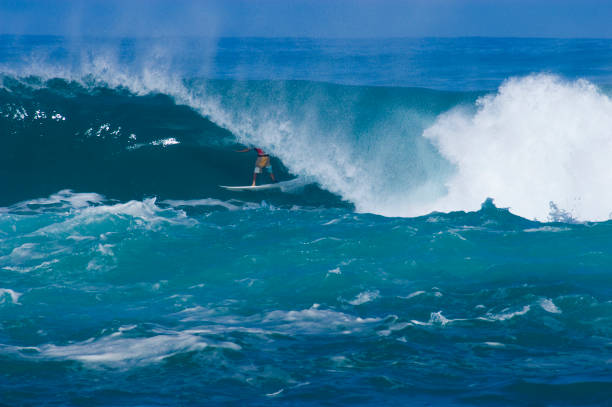
It’s a dawn patrol kind of morning. The wind is glassy, the tide is dropping, and there’s a clean three-foot peak rifling down the sandbar. You paddle out, swing your legs over a board that feels like an extension of your own spine, and drop in. That feeling of glide, that instant connection between your foot and the face of the wave, doesn’t happen by accident. It comes from a shaper who understands the ocean and a builder who understands materials. Lately, that intersection of soul and science has been ruled by one name on the racks and in the van: Firewire.
Firewire isn’t just a brand. It’s a whole different way of thinking about how a surfboard is born. For decades, the board-building world was dominated by the hand-shaped polyurethane blank, a timeless craft that produced magic in the hands of legends. But Firewire surfboards came along and flipped the script, introducing materials and construction methods that changed what a board could do, how long it would last, and how it felt under your feet. They bridged the gap between the traditional shaper’s vision and the high-performance demands of the everyday surfer.
The core of what makes a Firewire stand out is the construction itself. Instead of pouring liquid foam into a closed mold, they use an EPS (expanded polystyrene) core that is then wrapped in layers of epoxy resin and a range of high-tech fabrics. This creates a board that is lighter, more buoyant, and significantly stronger than the old-school polyester and polyurethane combos. You can feel it the moment you pick one up. It’s light as a feather, tough as old boots, and it paddles like it wants to get you into the wave before anyone else.
But it’s not just about being light. It’s about the flex. The real genius behind Firewire’s design philosophy, especially in their Helium construction, is how they tune the board’s response. With traditional shaping, the flex is mostly determined by the stringer and the foam’s density. With Firewire’s process, they can layer carbon fiber, bamboo, or other materials in specific patterns to control exactly how much the board springs back after a turn. That little snap, that rebound out of a bottom turn, is what lets you throw your fins out and land a carve that feels like you’re riding with more power than you actually have.
Of course, no talk about Firewire is complete without tipping the hat to their connection with the shapers. They don’t just mass-produce generic shapes. They work with the best minds in the industry. Guys like Dan Thomson, Tomo, and Rob Machado have put their hearts into these models. The Dominator, for instance, is a staple for anyone who wants one board that works from two-foot grovel to six-foot overhead. The Tomo Vader is a whole different beast, a short, wide, and surprisingly fast board that makes weak waves feel like pumping point breaks. Each model carries the DNA of its designer, refined by the factory’s ability to replicate that exact shape every single time. No more cutting an outline and hoping it flies. That consistency is a game-changer for the travelling surfer who can’t swing by the local glassing shop.
Another huge part of the Firewire stoke is their push toward sustainability. Surfing has always been about enjoying the natural world, but the surf industry has a dirty secret: a lot of the foam and resin used in traditional boards is nasty stuff for the planet. Firewire surfboards tackled that head-on with projects like the TimberTek construction, which uses a plantation-grown paulownia wood stringer. They also developed their own recycled EPS cores and low-VOC resins. They are walking the walk, trying to make a board that doesn’t just ride good but also leaves a smaller footprint for the next generation of groms to paddle out into.
Choosing a board builder is personal. It’s like picking your favorite fin, your favorite wax, your favorite spot when the swell is straight south. But if you are looking for something that combines high-performance surfing with modern material science and a deep respect for the ocean, you can’t go wrong with a Firewire. It’s a board that allows you to surf better, to push that bottom turn harder, to catch that late drop, and to do it all with a grin. Whether you are chasing a peeling point break on a tropical island or battling sloppy beach break closeouts back home, a Firewire has your back. It’s not just a piece of foam and glass. It’s a ticket to a better session. And in the endless summer of the soul, that is about the best thing a surfer can ask for.