There is a certain kind of wave that only rolls in once in a generation. It’s a groundswell born in a distant storm, a pulse of pure energy that rearranges the ocean floor and rattles the souls of those lucky—or stubborn—enough to paddle out. In the world of surf film, that wave is Big Wednesday. This isn’t a surf movie about riding perfect little peelers and getting the girl. This is a heavy, atmospheric, almost elegiac ode to brotherhood, the passage of time, and the sacred act of chasing a swel that has no mercy. It is the quintessential “guys’ film” that surfers have been claiming as their own since 1978, and for good reason.
Set in the halcyon days of the late 1960s and early 1970s at the mythical pointbreak of “Malibu” (really a stand-in for every soulful point on the California coast), the film follows three surfers: Matt, Jack, and Leroy. They are the archetypes we all know. There’s the artist, the firecracker, and the eternal kook who somehow becomes the heart of the lineup. The film is slow, deliberate, and deeply textured, much like sitting on a calm morning waiting for a glassy set. It doesn’t rush. It lets you feel the hangover, the sand, the cheap beer, and the weight of friendship that gets tested when life’s responsibilities—the draft, the war, the mortgage—start crashing in like a closeout set on a low-tide reef.
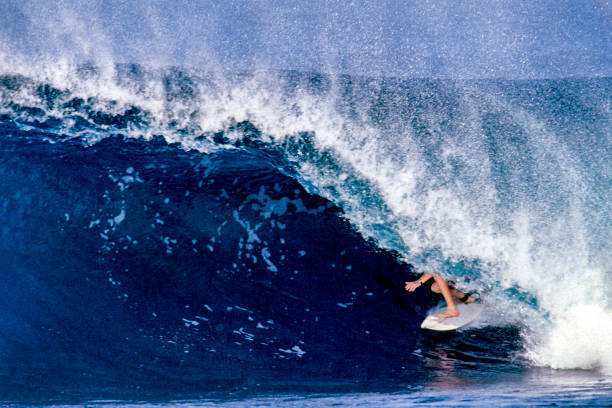
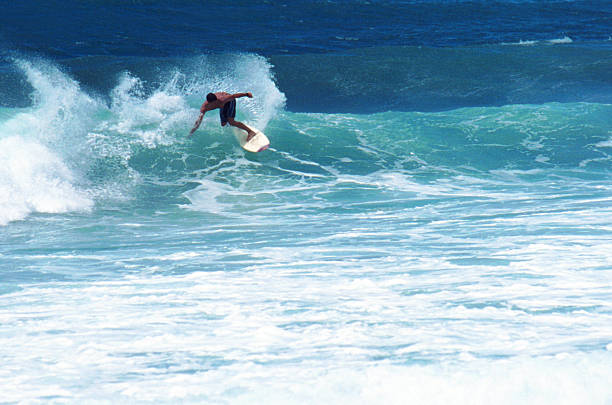
The real magic of Big Wednesday is its relationship with the ocean. The wave itself is a character. It is a looming presence, a deadline, a promise. The climax of the film, which every surfer remembers to their core, is when that long-predicted gigantic swell finally arrives. It’s not a competition. There are no jersey numbers, no scores, no announcers hyping up a tube ride. It’s three middle-aged men paddling out into a maelstrom that looks more like a battlefield than a break. The scene is raw, tragic, and ultimately redemptive. The heavy-handed wipeouts, the broken boards, the shallow reef—it’s the kind of surf that separates the men from the boys, and it is filmed with a gritty, sun-bleached honesty that modern drone shots and CGI just can’t touch.
What makes this film a classic, a staple of the “Cinematic Waves” canon, is how it captures the end of an era. The late 70s were a weird time for surfing. The shortboard revolution had landed, the soulful, longboard, hippie vibe of the 60s was fading, and surfing was getting serious, competitive, and corporate. Big Wednesday is a deliberate, beautiful eulogy for that lost, simpler time. It’s about running away from the police after a session, getting drunk on the beach, and having nothing more important in the world than the next tide change. It is the story of men who never really grow up, because they’re still waiting for that one big Wednesday to come again.
From a technical and cultural standpoint, the film is a masterpiece of storytelling through wave-riding. The soundtrack, a mix of classic rock and poignant orchestral scores, aligns perfectly with the swell charts. The dialogue is authentic, full of the slang and lingo of the era, but it never feels forced. When Matt says, “Don’t worry, it’s just a wave,” you believe him, even as you see the 30-foot mountain of water standing up on the horizon. It is a film that treats surfing not as a sport, but as a spiritual necessity. It respects the power of the ocean while acknowledging the sheer, utter joy of gliding across its surface.
For any surfer looking to understand the soul of the sport, this is required viewing. It’s the long, slow, mellow wave that you ride after a decade of chasing fast, hollow barrels. It reminds you that the best waves are the ones you share with your brothers, and that the deepest part of the ocean is the space between two friends who haven’t talked in years. Big Wednesday doesn’t teach you how to surf. It teaches you why you started in the first place. It is the ultimate cinematic wave, a heavy, soulful beast that still peels perfectly after all these years. Catch it if you can.