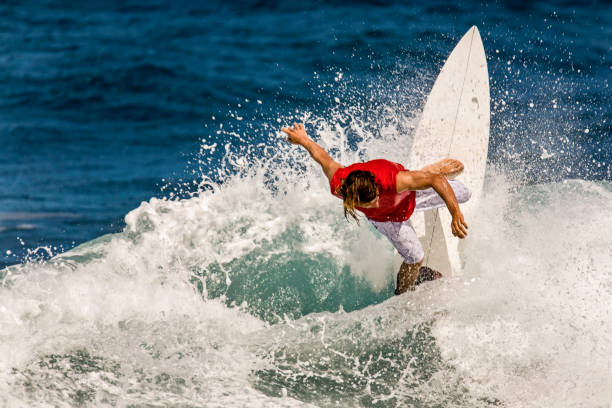
There’s a moment every surfer knows deep in their bones. You’re sitting in the lineup, the ocean breathing slow and easy, when a pulse of energy rolls under you. You feel it before you see it—a lift in the water, a darkening swell on the horizon. Your heartbeat kicks up a notch. Then you paddle, arms digging, board chattering, and suddenly you’re dropping down a wall of liquid green. Time stretches. Your fins release, your rail bites, and for a few heartbeats the whole world gets rearranged. When you kick out and paddle back, laughing to yourself, that warmth in your chest isn’t just excitement. That’s stoke. And here’s the beautiful thing: stoke ain’t a solo act. It’s a chain reaction.
Coming from the old surfer slang of the sixties, stoke started as pure inner fire—that gnarly buzz from riding a wave. But any grom on the beach will tell you that stoke gets around. It jumps from surfer to surfer like a clean barrel throwing spray. You see a brother or sister get shacked on a head-high peel, and even if you’re sitting shoulder high and desperate for your own set, you can’t help but hoot. That hoot is a transmission. It travels across the lineup, gets picked up by a salty local who normally won’t crack a smile, and pretty soon the whole crew is vibing on a shared frequency. That’s the stoke chain reaction, and it’s the true currency of our culture.
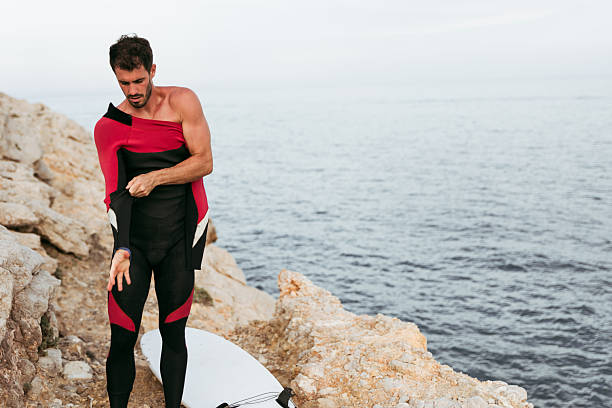
Think about a cold winter morning when the sky spits rain and the wind has the ocean hacked up. Nobody’s surfing, so you sit in the car, thermos in hand, questioning your life choices. Then a fluffed-up wave rolls through, and some idiot with a wetsuit peeling at the seams scratches in. He gets pounded, swallowed, spat out—but on the inside, he pops up with a grin so wide you can see his back teeth. That, right there, spreads warmth to every person watching. Suddenly the water doesn’t look so nasty. Your hands stop shaking. You suit up, and you paddle out ready to eat a few of those on the head. That’s stoke doing its job.
The lingo we use for it tells the story. When someone says “I’m so stoked,” they’re not just saying they’re happy. They’re saying the wave filled something up. When you hear a surfer talk about “stoke levels,” they’re measuring the intangible—how charged, how present, how friggin’ alive everyone feels. And when a seasoned pro paddles over to a trembling grom who just bagged his first unbroken wave and says “That was beautiful,” the stoke hits critical mass. It feeds forward. That grom will ride that feeling for years, pass it on to the next kid in the parking lot, keep the whole loop spinning.
There’s a reason we say stoke is “contagious” rather than “personal.” A solo stoke dies fast. But shared stoke multiplies. It’s the reason lineup shouts like “Yeeeeew!” or “Woo-hoo!” exist in the first place. Those aren’t just noise. They’re offerings. You’re sending your energy into the ocean, hoping someone else catches it. And when a whole lineup catches a morning of glassy, pull-in barrels, the stoke becomes so thick you could bottle it. That’s why we chase the endless summer—not just for the swell, but for the crew that rides it with us.
The best part? Stoke doesn’t require a perfect wave. It doesn’t care about board brand or wetsuit thickness or whether you’re a footloose frother or a granite-faced charger. It finds you when you let it. Sometimes it hits when you paddle under a pelican’s wing in the fog. Sometimes it hits when you watch a friend scratch into a wave and whip a cutback so deep they disappear. And sometimes it hits when a complete stranger offers a nod as you both sit waiting for the next set in the gray afternoon. That nod says “I see you. We’re in this together.” That’s the chain reaction—link by link, wave by wave, stoke by stoke.
So next time you surf, don’t keep it locked in your chest. Let it out. Hoot for the guy who makes the closeout. Smile at the grom who goes over the falls. Give a fist pump to the woman hanging nine past the sandbar. Because stoke is the only wave that keeps building after the ride ends. Pass it on, and the whole lineup gets high.