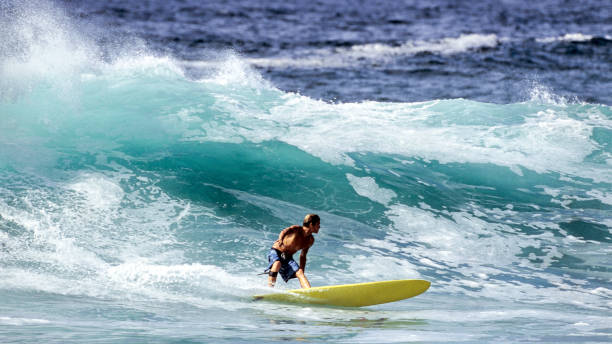
You know that sketchy feeling when your back foot starts sliding toward the rail right as you’re dropping into a steep, hollow wall? It’s the kind of slippage that turns a promising session into a pearl dive or, worse, a fin-to-the-shin disaster. For decades, surfers relied solely on the sticky embrace of surf wax—but wax only gets you so far, especially on the tail of your board where the real magic happens. That’s where traction pads come in. These humble pieces of foam with their aggressive grooves and archy bumps are the unsung heroes of modern surfing, giving you that extra foot hold that lets you push harder, carve deeper, and stay planted through the gnarliest sections.
Traction pads didn’t always exist, though. Back in the day, the longboard era was all about cross-stepping and hanging ten, and wax did the job just fine. But as shortboards evolved and surfers started throwing their tails around with more aggression, the need for a dedicated grip zone became obvious. Legends like Tom Curren were among the early adopters, stickin’ a little pad on the tail just to keep that back foot locked in during powerful turns. Fast forward to today, and you’d be hard-pressed to find a performance shortboard without a tail pad, and most pads also come with a kicker—that raised wedge near the leash plug that gives your heel something to push against when you’re pulling off a snap or a floater.
Now, not all traction pads are created equal. You got your simple flat pads, your pads with a built-in arch bar, and your full-on traction setups that cover from the stringer to the rail with a kicker, a knee pad, and sometimes even toe bumps. The arch bar is especially clutch for surfers who like a more locked-in feel, because it supports the bottom of your foot and gives you a tactile reference point for positioning. The kicker, meanwhile, is key for those high-performance maneuvers—think aerial attempts or tail slides—where you need that extra bit of ramp to boost off the lip. But here’s the thing: more pad isn’t always better. Some small-wave cruisers prefer a thin, subtle pad that doesn’t interfere with their ability to shuffle their feet around. It all comes down to personal style.
Placement is everything. If you stick a tail pad too far forward, you’ll feel like you’re standing on a trampoline, losing that direct connection to the fin cluster. Too far back, and your foot will hang off the edge, creating a whole different kind of instability. The general rule of thumb is to align the top of the kicker with the back third of the board, letting your back foot naturally settle into the sweet spot where the pad meets the stringer. And don’t forget to clean that surface before you peel the adhesive backing—wax, dust, and old resin are the enemies of a solid grip. Once it’s on, press down hard, let it cure for a few hours, and you’re ready to shred.
But traction pads aren’t just about performance. They’ve become a canvas for self-expression, with colors, shapes, and patterns that match your board’s vibe or your wetsuit’s swagger. From subtle black to neon tie-dye to sleek camo, your pad says something about you in the lineup. Plus, they add a little flutter of cushioning that saves your back foot from the sting of standing on raw fiberglass all session long. That’s a game-changer for surfers who put in long hours chasing waves.
In the end, traction pads are like the grip tape on a skateboard—they turn a sketchy platform into an extension of your body. Whether you’re a grom learning your first top turn or an old salt who’s been logging water time since the single-fin days, a properly installed traction pad gives you confidence. It lets you focus on the wave, not on where your foot is slipping. So next time you’re gearing up for a dawn patrol, give your tail pad a little love. Check the adhesion, maybe replace it if the foam’s gone flat, and get ready to dig those rails a little deeper. Because the stickiest thing in your quiver might just be that block of foam you’ve been ignoring.