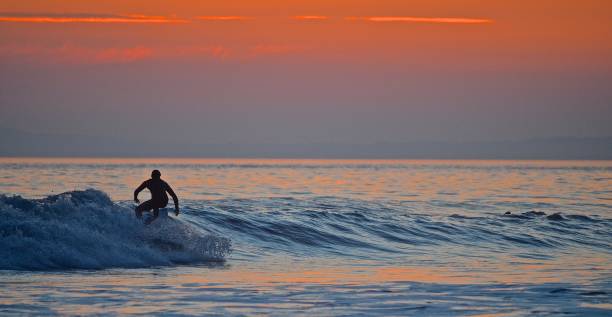
Wipeout. That word might sound harsh to a normie, but to a grom with salt-crusted hair and a dinged-up foamie, it’s just another chapter in the daily stoke. You’re young, you’re hungry, and you’re about to paddle out into a world where the waves talk back. The only problem? Everyone around you is speaking a language that sounds like English but feels like a secret code from the deep blue. No stress, little shredder. Nailing the lingo is half the battle, and once you get it, you’ll slide into the lineup like you own the place.
First thing first: you’re a grom, short for grommet, a term that’s been tossed around since the early days of Aussie and Californian surf culture. It means you’re under eighteen, you’ve got more stoke than sense, and you’re willing to eat sand if it means one more wave. Wear that label with pride. But don’t be a grom who acts like a kook. A kook is the ultimate insult, reserved for the guy who paddles straight into the peak on a crowded day, then claims the wave was his. Kooks are the ones who scream “cowabunga” unironically and leave their wax melting on the dashboard. You don’t want that reputation. Instead, you want to be known as a diamond in the rough, a sponge for knowledge, a little ripper on the rise.
Start with the basics of the ocean itself. The lineup is the zone where surfers sit and wait for waves, usually organized by a mix of hierarchy and respect. When you paddle out, you’ll hear someone shout “outside!“ which means a bigger set is rolling through. That’s your cue to paddle like your life depends on it, because a set wave can go from glassy to gnarly in a heartbeat. And “gnarly” isn’t just a word; it’s a full emotional experience. It can mean a wave is heavy, dangerous, utterly beautiful, or all three at once. A perfect, hollow wave that lets you tuck into a barrel is the gnarliest thing you’ll ever chase. Getting barreled, or “covered,“ is the holy grail, the moment where the lip pitches over you and time slows down. If you emerge from that blue-room intact, you’re not just a grom anymore. You’re a legend in the making.
But you’ve got to learn to walk before you can charge. So, let’s talk about positioning. The “peak” is the most critical part of the wave, where it first breaks. Your job, as a grom, is to find the “shoulder,“ the unbroken section next to the peak that gives you a clean, open face to carve on. When you catch a wave, you’ll hear the hoots and hollers from the beach. That’s the stoke. “Stoke” is pure, unadulterated joy, the kind that makes you grin so hard your cheeks hurt. It’s contagious, and if you’re vibing right, everyone around you shares it. If you blow a turn and eat foam, don’t sulk. You just got “worked,“ and that’s okay. Getting worked is the tuition you pay for surf education. The ocean is the toughest teacher, but she never grades on curves.
Now, the etiquette side of slang. When you’re out there, you’ve got to respect the “priority.“ That’s the unwritten rule that the surfer closest to the peak on a breaking wave gets to go first. If you paddle in front of them and take off, you’ve just committed the cardinal sin of “dropping in.“ That’s how you make enemies faster than a shark rumor spreads. If you accidentally snag a wave from someone, paddle over, smile, and say “my bad.“ Most surfers will forgive a grom who owns up to it. But if you do it twice, expect the stink-eye, the famous “death stare” from behind the dark sunglasses. Nobody wants that energy.
Then there’s the colorful vocabulary you’ll hear in the parking lot or the lineup. “Ripping” means surfing exceptionally well, like when a pro shredder turns a mushy wave into a canvas of spray. “Boosting” is getting huge air, and “slashing” is carving sharp, aggressive turns. If someone says you “surfed like a madman,“ take it as the highest compliment. On the flip side, “clowning” is being foolish, and “turtling” is flipping your board over to duck under a wave, which every grom learns the hard way during their first paddle-out. “Warbling” or “goofy foot”? That’s about your stance. Goofy foot means your right foot is forward, and regular means left. Knowing which one you are is essential, but pointing it out to others is just surf chatter.
Don’t forget the gear talk. Your board is your trusty steed, whether it’s a foamie, a fish, a shortboard, or a longboard. If it’s got a “single fin,“ you’re riding a retro classic. If it’s got “thrusters,“ that’s three fins for more control. Never call a surfboard a “surfboard” every single time. Throw in some flair: “stick,“ “gun,“ or “log” for longboards. And for goodness’ sake, apply your “wax” properly. A “wax job” isn’t just about traction; it’s a ritual.
As you grow in skill, you’ll start noticing “swells” from distant storms, the pulse of the ocean that turns flat days into pumping sessions. And you’ll learn the difference between “overhead” waves, which are taller than you, and “double overhead” which are basically monster trucks of water. You’ll hear someone yell “backdoor!“ which means a wave is breaking backward, a rare and beautiful treat. And when you finally catch a wave that’s so perfect you don’t want it to end, that’s a “dreamy” wave. Then you paddle back out, breathless, and say to your buddy, “Did you see that? I was fully covered, bro. I’m still shaking.“ That, my young shredder, is the moment you realize you’re no longer just a grom. You’re a surfer. And the language? It’s just the salt in the wind.
So go on, paddle out with confidence, talk to the locals in their tongue, and remember to keep it mellow. Because in the surf world, respect is the biggest wave of all. Stay stoked, little ripper. The ocean’s waiting.