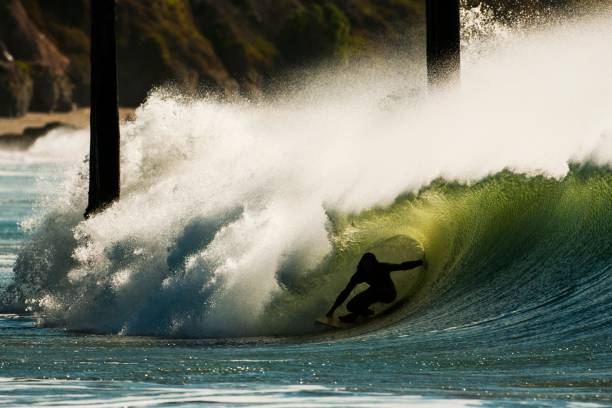
Back in the day, way before fiberglass boards, leashes, or even the concept of a lineup, surfing wasn’t just a sport. It was a deep, spiritual practice woven into the very fabric of Hawaiian life, and at its heart beat the pulse of Aloha. You hear that word tossed around a lot now, slapped on t-shirts and sung in cheesy luau songs, but to truly get the Spirit of Aloha, you gotta paddle back to the source. That’s where the real stoke lives, and it’s still the wave we should all be trying to catch today.
Ancient Hawaiians called surfing heʻe nalu, which means “wave sliding.“ But it wasn’t some casual beach pastime. It was sacred. The boards themselves were born from the forest with prayer and ceremony. You didn’t just chop down a koa tree and shape a plank. No way. The kahuna, or priest, would offer chants and offerings, asking the gods for permission to take the tree’s life for the rider’s joy. Each board, or papa heʻe nalu, was treated like a living being. It had a name. It was passed down through families, often from chief to chief. And riding those waves wasn’t just about showing off—though, let’s be real, there was plenty of that. It was a way to connect with the ocean, to honor the power of nature, and to prove one’s worth in a deeply cultural sense.
Now, here’s where the Spirit of Aloha gets real. In ancient Hawaii, surfing was a communal and royal affair. The chiefs, or aliʻi, would ride the biggest waves on the best boards, but they didn’t do it to dominate. They did it to channel mana, or spiritual energy, for the good of their people. When a chief rode a wave with grace and power, it wasn’t just personal glory. It was a blessing for the entire community. The ocean gave, and the rider received, and then that stoke radiated outward to everyone on the shore. That’s Aloha in its purest form: a recognition that we’re all connected, that the wave beneath your feet is the same wave that kisses the sand for everyone else.
And the way ancient Hawaiians shared the ocean? That’s the foundation of surf etiquette, bruh. There were rules, but not written down like a legal document. They were rooted in respect. You didn’t snake a chief’s wave, because that wasn’t just rude—it was a spiritual offense. But more than that, the ocean was viewed as a source of life that belonged to all. The reef gave fish, the waves gave joy, and no one was supposed to hoard that. Even the best riders would wait their turn, watch the set, and let others in. Sound familiar? That’s the genesis of the modern “drop-in” taboo. The Spirit of Aloha is essentially saying: “Bro, there’s enough waves for everyone. Respect the lineup, respect the locals, respect the ocean, and you’ll get your share of glory.”
What really blows my mind is how kapu rules changed with the times. There were periods when surfing was restricted based on social class, sure. But the deeper truth is that the Spirit of Aloha always emphasized harmony over hierarchy. The word Aloha itself is often broken down as alo (presence, face) and ha (breath of life). So when you greet someone with Aloha, you’re literally acknowledging the shared breath, the life force that connects all of us. In the water, that translates to paddle-outs before funerals, sharing a peak with a stranger, and giving a friendly nod when someone paddles past you on a longboard. It’s not a rule you enforce. It’s a vibe you carry.
Fast forward to today. The world has gotten crowded. Lineups are packed with everyone chasing the same swell, and sometimes tempers flare, boards get thrown, and words get heated. But the Spirit of Aloha is still there, waiting for you to tap in. It’s in that moment when you’re sitting on your board, bobbing in the lineup, and you see a kid hooting for their first wave. Or when a local surfer points you into a shoulder instead of snaking you. That’s ancient Hawaii still whispering across centuries. That’s the koa tree groaning in your board, the prayers of the old ones riding with you.
For me, Aloha in surfing isn’t about being soft or fake-nice. It’s about remembering that we’re all just temporary visitors on these eternal waves. The ocean was here before us, and it’ll be here after we’re gone. The best we can do is treat it—and each other—with respect. So next time you paddle out, take a breath. Feel the salt on your skin. Look at the horizon and the sunrise and the other soul riders bobbing beside you. That’s the Spirit of Aloha. It’s not something you buy or memorize. It’s something you live, every single wave, every single day. And if you really want to be an ultimate surfer, you don’t just chase the endless summer. You carry Aloha in your heart, from shore break to deep water, from dawn patrol to golden hour. That’s the real legacy. That’s the ride that never ends.