You paddle out on a flat, overcast morning, the ocean looking like a wrinkled sheet of gray glass. The swell forecast was weak, but you came anyway because the lineup is empty and the soul needs salt. As you sit on your board, you see a lump rise on the horizon, fat and shapely, no steep face, no pitching lip. It rolls in with all the urgency of a Monday morning. Another surfer might groan and call it a day. But you know better. You’re looking at a mushy wave, and mushy waves have a lot to teach if you’re willing to listen.
First off, let’s get the lingo straight. In the surf lexicon, “mushy” describes a wave that lacks power, steepness, and a defined pocket. It doesn’t jack up and barrel. Instead, it crumbles, rolls, and spills with a gentle, almost lazy demeanor. The face is soft, the lip is nonexistent, and the foam is your constant companion. To the uninitiated, this is a disappointment. To the soulful surfer, it’s an invitation.
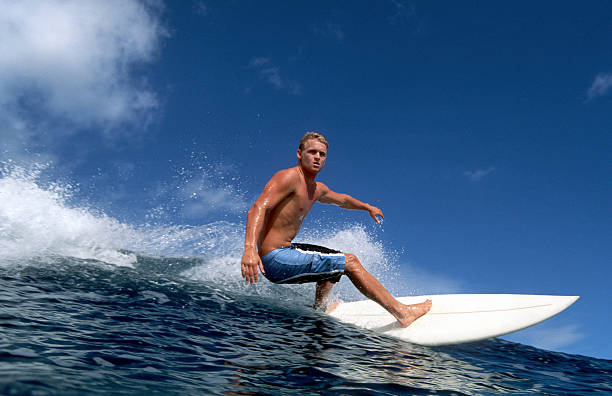
The thing about mushy waves is they force you to slow down. You can’t just drop in, pump down the line, and huck a giant cutty. There’s no juice for that kind of adrenaline. Instead, you have to find the glide. You have to read the lump, feel the subtle shift of water as it builds, and paddle with intention. Your pop-up has to be smooth, not explosive. Your stance has to be wide and low, your weight centered, because any sudden move will stall you out. It’s pure flow state, like riding a longboard on a lake with a small breeze. There’s no room for ego, only patience.
I remember a session at a beachbreak in San Diego called Stairs. It was waist-high and mushy as pancake batter. The locals were nowhere to be seen. But on that glassy morning, with the sun breaking through the marine layer, I caught wave after wave that went on for a quarter mile. Each wave was a slow, continuous trim, weaving up and down the soft face, doing little cross-steps and hanging five. No barrels, no spray. Just pure, unbroken connection with the ocean. That’s the magic of mushy—it gives you time. Time to think, to breathe, to feel the board under your feet.
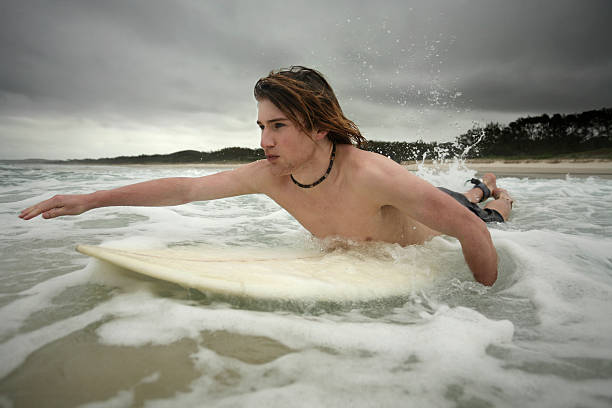
Mushy waves are also the perfect classroom for newer surfers. Because they’re forgiving. The drop is gentle, the foam is soft, and the consequences of a misstep are small. You can learn to read a wave’s energy without the fear of getting drilled. You can practice your bottom turn, your top turn, your cutback, all on a wave that doesn’t rush you. Seasoned surfers who only chase hollow pits miss out on that fundamental refining of technique. The greats, like Rob Machado or Joel Tudor, can make any wave look good because they’ve mastered the soft, slow stuff. They know that grace on a mushy wave translates to stronger confidence on a steep one.
Culturally, surfers have a weird relationship with mushy waves. There’s a stigma attached to them. You’ll hear guys say “that’s a mushy piece of crap” or “I’m not paddling out for that slop.” But the true soul surfer understands that every wave has its own aloha. The Endless Summer wasn’t about only chasing perfect barrels. It was about chasing the sun and finding joy wherever the ocean gave it. Mushy waves are part of that journey. They’re the slow, meditative sessions that recharge your spirit, the ones you remember not for the adrenaline but for the peace.
So next time you see a mushy wave rolling in, don’t turn your back. Paddle in, get to your feet, and just let it carry you. Float down the line like a leaf on a stream. Make little turns, find the smallest sections of face that still hold shape, and smile at the foam. Because the best surfers are the ones who can find stoke in any wavelength, from thunderous Pipeline to the gentlest of mush.
Ride the mush. Embrace the slop. That’s where real surfing begins.