The lineup is a funny place. It looks like a bunch of people just bobbing around, waiting for the same swell, but if you paddle out with that mindset, you’re gonna get chewed up and spit out before you even catch your first wave. There’s a whole silent conversation happening out past the break, a language that has nothing to do with words and everything to do with eye contact, body position, and knowing when to pull back. It ain’t written down anywhere, but everyone who surfs knows it. It’s the unspoken code of priority, and learning to read the peak is the difference between getting invited back to the party and getting your leash cut by a salty local who’s had enough of your antics.
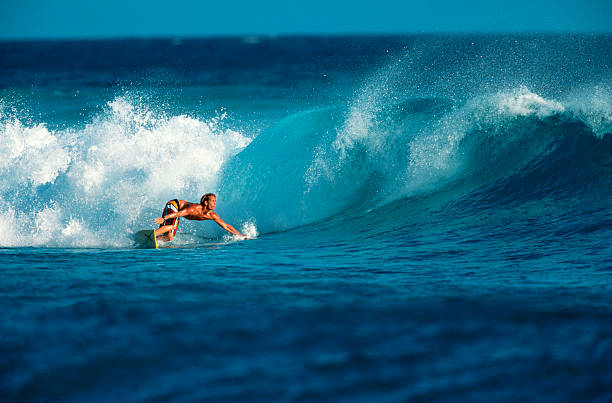
At its heart, the code is simple: the surfer deepest in the zone, the one who is closest to the peak where the wave first pitches and throws its lip, owns that wave. This is the most golden rule of surf etiquette, and it’s where most beginners lose their stoke. You see a great, clean face peeling left. You paddle for it. But deep inside, a guy with a beat-up, wax-caked board has already committed. He’s not even looking at you, but his shoulders are set, his head is down the line. That wave is his. If you drop in on him, you’re not just being rude, you’re creating a hazard. He could carve, you could collide, boards snap, teeth get knocked out. Respecting that priority is respecting the fact that surfing is a dance, not a race.
But reading the peak is more than just knowing who is deepest. It is about understanding the dance of the lineup itself. You watch the sets rolling through. A handful of surfers are sitting further out, beyond the main pack. They are the gatekeepers. When a big set comes, they have first crack. If they don’t go, the middle pack gets their shot. And if the wave closes out or goes flat, it filters down to the inside surfers. This hierarchy isn’t mean or aggressive, it’s just efficient. It keeps the chaos down. If you paddle out and immediately try to sit on the shoulder of a known charger, you’re going to get a sharp look or a word or two. You haven’t earned that spot. You haven’t paid your dues, which sometimes simply means sitting through a few drifts and watching how the peak breaks. You have to feel the rhythm.
One of the biggest vibe killers in the lineup is what we call the snake. That’s when a surfer paddles around you at the last second to get the inside position on a wave you were clearly looking at. It’s a cheap move. Worse than dropping in, because it shows a lack of patience. The etiquette says you paddle for your place, or you wait your turn. If someone is sitting deeper than you, you let them go. You don’t fight for a wave you can’t own. The best surfers in the water are also the most patient. They don’t need to thrash for every ripple. They sit, they watch, they let the wave show them where it wants to be ridden. That patience reads as confidence. People in the lineup feel that. They give you space.
And then there’s the paddling out part. That’s where the real test starts. You can spot a seasoned surfer by how they paddle out. They don’t just blow through the whitewater like a bull in a china shop. They watch the set. They time the lull. They slide around the pack, taking the wide route to the shoulder. If a surfer is on a wave, you don’t paddle directly into their path. You pivot, you let them ride. You might even get a little hoot of appreciation if you read the situation right. Those small courtesies build a good reputation. They mean that when you finally drop into a set wave, nobody is gonna try to burn you, because you showed respect first. The lineup has a long memory. It remembers the guy who always snakes, and it remembers the guy who sat outside and let everyone else have a few before he took his.
So the code isn’t written in stone, but it’s etched into the salt. It’s about understanding that the ocean is not yours. It belongs to everyone. Respecting the lineup means respecting the hierarchy, the rhythm, and the right of way. It means learning to read the water, to see who is deepest, to know when to paddle and when to pull back. When you get that right, the whole session changes. The waves open up. The crowd doesn’t feel like a crowd anymore. It feels like a tribe, all moving to the same silent beat. And that, man, that is the best feeling in the world.