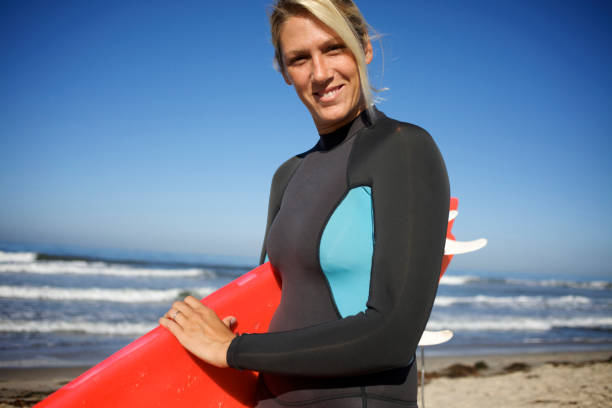
Back in the day, when surfboards were logs and the only question was how much resin dripped on your foot, you picked a board by how far it stood past your nose. If you were six foot two, you rode a nine-six. If you were a shrimp, you choked down a cream puff shaped like a door. That was it. Simple as a morning glass-off. But the surf world has changed, and so has the way we size our sticks. The old yardstick of height and weight has been drug out to sea by the volume revolution. These days, the real magic number isn’t how long the board is under your chest. It’s how much foam is lurking underneath that fiberglass. And that shift, my friend, has turned the entire game of picking a surfboard on its head.
The evolution of the surfboard has always been a fight between glide and maneuverability. The old longboards gave you paddle power and a forgiving rail, but they didn’t exactly spin on a dime. Then thruster shortboards came and made everything snappy, but they demanded that you paddle like a possessed otter just to get into a waist-high ripple. For decades, the solution was simple: your size determined your length. Big dude gets a big board, little dude gets a little stick. But that logic left a whole lot of surfers out in the cold, flailing on boards that either sank like an anchor or bobbed like a cork. Then someone, somewhere, had a lightbulb moment wrapped in Parafilm and carbon fiber. They realized that it wasn’t just the length that mattered. It was the volume, measured in liters, that truly made the difference between a board that paddles like a dream and one that feels like a pool noodle with rails.
Here’s the deal. Volume is the total amount of space inside the board, the sum of all that foam that keeps you afloat. It dictates how much flotation you get, how early you can catch waves, and how forgiving the board is when you’re making mistakes. Two boards can be the exact same length and width, but if one has a thicker deck, more foil in the nose, or a beefier tail block, it’ll have way more liters. That extra foam changes everything. It lets you paddle into waves with less effort, gives you a more stable platform when you’re sitting in the lineup, and helps you glide through dead sections that a lower-volume board would just stall on. So instead of asking “what length should I ride?” the modern surfer asks “what volume fits my flesh vessel and my wave count?” That’s a liberating question, because it opens up a whole world of shape options that you might have ignored based on height alone.
Take the classic example. You’re a 170-pounder with a decent fitness level and a weekend habit. Under the old rules, you’d be looking at a 6’4” shortboard. But a 6’4” that’s designed like a potato chip at 24 liters will have you swimming more than surfing. Swap that same length for a squash-tailed groveler with a thick rail and you’re looking at 32 liters. Suddenly, you’re catching waves earlier, popping up smoother, and feeling way more stoke because your board actually floats you instead of burying you. That’s the volume shuffle. It lets you keep the length you’re comfortable with—or even drop down a few inches—so long as the foam keeps up. The glorious result of all this is that surfboards have evolved into a spectrum of hybrid shapes, from fishy twinnies to funky mid-lengths, all designed around liter counts rather than old-school foot measurements.
The key to finding your true size is to ditch the idea that your weight alone dictates a number. Instead, look at your volume-to-weight ratio. A rough place to start for a beginner or an older surfer is to divide your weight in pounds by 2.2 to get kilos, then multiply that by 0.45 to get a friendly floaty liter target. But that’s just math on a beach towel. The real test is how the board feels under the sun. If you’re sinking at a standstill, you need more foam. If you’re bobbing like a buoy, you’ve got too much. The beauty of the modern surfboard evolution is that you can fine-tune your ride with rails that are softer, tails that are wider, and rockers that are friendlier. All of that works in concert with volume to give you the feel you want—whether that’s a slow, noseriding log or a snappy, beach-break killer.
So next time you’re leaning on the roof rack trying to decide what to wax up, don’t get obsessed with how the board looks under your chin. Pay attention to the liters. Ask your local shaper or shop rat about the volume profile. Because the size you ride isn’t about your ego or your inseam. It’s about finding that sweet spot where float and speed meet, where paddle stamina meets wave count, and where every session feels like you’re surfing with an old friend rather than wrestling a stranger. The evolution has taught us that a board is only as good as the stoke it delivers, and the right volume, no matter the length, is the surest path to that endless summer glide.