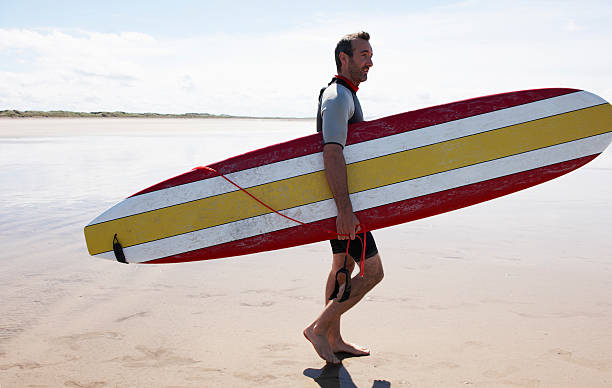
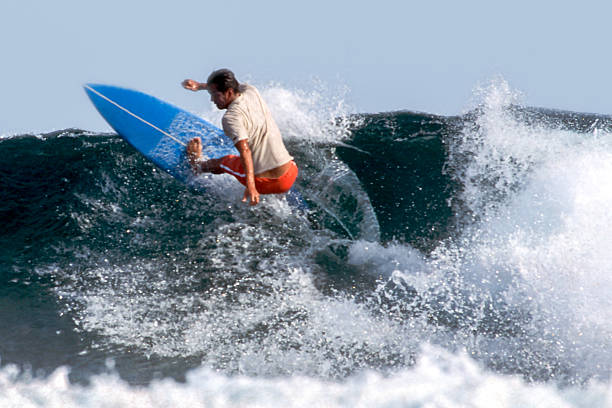
You paddle out at first light, alone, the ocean a smoky mirror before dawn. The only sound is the hiss of foam on the shore. But as the sun cracks over the horizon, you see them—a few dark shapes bobbing in the lineup. No words are exchanged, just a nod, a tip of the chin. That nod is a handshake, a password, a promise. It says: I see you. I respect you. We share this. That right there is the beginning of the surf network, and it’s older than any app or social media feed. It’s the tribe.
Building a surf network isn’t about collecting contacts or following the right accounts. It’s about finding your crew, the people who will shout “Go, go, go!” when a set looms behind you. It’s about the unspoken trust that exists in the lineup, the understanding that you don’t snake your buddy and you always look out for the grom. This network is built on shared stoke, not on likes. It’s the sun-baked, salt-crusted community that forms around a wave, a beach, a point break, or a fire pit under the stars.
Think about the classic connection point: the local surf shop. That dust-caked floor, the smell of paraffin wax and neoprene, the old dog sleeping by the register. That shop is the hub. It’s where you hear the whisper of a secret spot breaking three counties away. It’s where the shaper leans over the counter and tells you exactly what kind of rocker you need for the slop you’ve been riding. That is a sacred transaction. It’s a transfer of raw, valuable knowledge. You don’t get that from a website. You get it from looking a guy in the eye while he tells you the tide is wrong, but the wind is gonna glass off by two. That connection, that human moment, is the core of the network.
Then there’s the road trip. The endless highway. The back of a van reeking of wet suits and cheap gas station food. Nothing builds a network like being stranded in a foreign town with a broken fin and a hungry stomach. You see a board with a flick of paint that looks familiar, or a sticker from your home break on a rusty tailgate. You walk up, and you say, “Hey, saw your sticker. You from Ventura?” That’s it. The door opens. You are no longer a stranger. You might be invited to crash on a couch, or pointed to a left-hander that no map will ever show you. The network is the road, and the road is full of brothers and sisters from other mothers who all speak the same language of sets and swells.
Don’t forget the wave itself as a connector. A perfect A-frame peak brings together people from every corner of the globe. You might be dropping in next to a Japanese bodyboarder, a Brazilian longboarder, and a local woman who’s been surfing that reef since before you were born. For ten seconds on that wave, you are a single unit, moving together, reading the same energy. After the ride, you all hoot. That moment of collective joy is a bond. It’s a thread in the larger weave. Over time, those threads become a rope. You start to recognize the same faces. You learn the etiquette of the zone. You become part of the story of that place.
The true network, the one that matters, isn’t transactional. It’s relational. It’s the guy who hands you a beer after a session. It’s the woman who shows you how to duck-dive that heavy lip without getting scoured. It’s the old salty soul who sits on the bluff and gives you the wave count with a gnarled hand. These people are your tribe. They are the ones who will have your back when the current is ripping you out to sea.
So how do you build it? Just show up. Show up the same time every day. Be humble. Learn the rules. Give a wave away sometimes. Smile. Be the person you’d want to paddle next to. The network grows organically. It’s a tide that lifts all boards. You don’t force it. You just paddle in, join the circle, and let the stoke do the rest. In a world that is increasingly digital, the surf tribe remains gloriously, beautifully analog. It’s handshakes, and hoots, and the sacred quiet between sets. That is the network. That is the family. That is the endless summer.