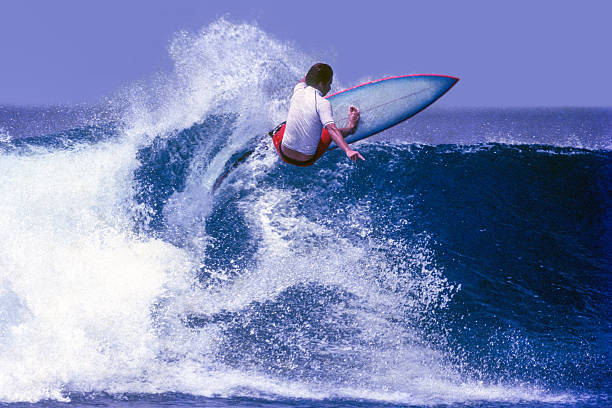
Forget checking the surf report for your local break and calling it a day. If you live for the feeling of saltwater on your skin and the stoke of a perfect ride, your world view needs to be bigger. Much bigger. It’s not just about the next swell; it’s about the next season. That’s where a solid surf event calendar comes in—it’s your global roadmap, the key to chasing perfection from pipeline to point break, all year round.
Think of it like this: while you’re bundled up watching winter rain gutter your local spot, someone is getting shacked at the Billabong Pro Pipeline. When the summer doldrums flatten your home coast, the J-Bay Open is firing down that legendary right-hand wall in South Africa. A true surf event calendar isn’t just a list of contests; it’s a rhythm, a pulse that shows the heartbeat of surfing across the globe. It tells you where the energy is, where the best surfers are pushing limits, and most importantly, where the waves are absolutely cooking.
For the traveling surfer, this is pure gold. Planning a surfari? Aligning your trip with a major event is next-level strategy. Sure, you might deal with crowds at the contest site, but you’re also tapping into a festival. The vibe is electric. You’ll surf lesser-known breaks nearby with everyone’s attention focused on the main stage, catch legends free-surfing in the early morning, and soak in the full culture—the shaping bays, the gear demos, the stories. It’s a total immersion. Imagine scoring empty waves in France after the final horn of the Quiksilver Pro, or feeling the buzz in the water at Lower Trestles during the Surf Ranch Pro window. You’re not just a spectator; you’re in the ecosystem.
But it’s deeper than just travel hacks. Following the Championship Tour calendar is a masterclass in high-performance surfing. Watching how the world’s best adapt—from the heaving, ledging barrels of Teahupo’o to the mechanical perfection of the Surf Ranch—teaches you about wave theory, equipment choice, and pure guts. You see what a step-up gun is really for. You understand why a squash tail works at Supertubos. You hear the commentators break down technique in real time. It’s an education you can’t get anywhere else.
And let’s talk culture. The event calendar marks our history. Dates like the Eddie Aikau at Waimea Bay are circled not just for the potential of 30-foot faces, but for the legacy. These events are pilgrimages. They’re where new slang is born, where board design trends go public, and where the spirit of aloha, asri, and pure stoke is broadcast to the world. From the big-money CT to the grassroots vibes of a local longboard contest, each event adds a thread to the tapestry.
So, don’t just stare at the same horizon. Get dialed into the global rhythm. Bookmark that surf event calendar, follow the swells, and start dreaming. Whether you’re booking flights or just streaming the heat live from your couch, you’re connected to the endless search for the perfect wave. Because the next session is always happening somewhere. Your job is to know where.