There’s a stretch of sand on the Gold Coast that doesn’t just hold waves—it holds the dreams of every surfer who’s ever watched a perfect right-hander peel across a sandbar. We’re talking about the Superbank, a wave that redefined what a point break could be when Mother Nature gets a little help from the civil engineers. Stretching from Snapper Rocks all the way down to Kirra, this wave is the holy grail of the Gold Coast, the pulse of the southern Queensland swell window, and the reason so many of us book flights to Coolangatta the second a cyclone starts brewing in the Coral Sea.
It didn’t used to be this way, not really. The old-timers will tell you that Greenmount, Rainbow Bay, and Kirra were always standout waves on their own, but they were separate, each with their own sandbar personality, each breaking in its own rhythm. Then the Tweed River training walls were extended in the early 2000s, a massive sand-pumping project designed to keep the river mouth open and the beaches from eroding. What nobody predicted was that the sudden influx of sand would link up all those breaks into one long, continuous, mechanical running machine. The Superbank was born, and the Gold Coast surf scene went from world-class to mythic overnight.
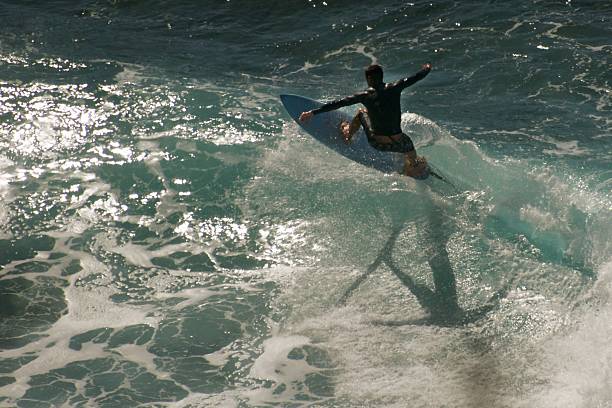
Catching the Superbank at its best is like stepping into a dream you didn’t know you had. The wave is peaky, hollow, and so damn long that you’ll get tired from the ride before the wave gives out. When a solid south swell rolls in with offshore westerlies, the lineup stretches from Snapper all the way down to Kirra Point, with sections like the “Rock Bite” and “Kong’s” offering barrel after barrel. You paddle out at Snapper, take off deep behind the rock, and suddenly you’re flying down the line, looking back into a tube that feels like it’s carved from glass. You make it past the first section, then the second, and before you know it you’re halfway to Kirra, kicking out with a cramp in your calf and a grin that won’t leave your face for hours.
But here’s the thing about paradise—it’s crowded. The Superbank draws more surfers per square meter than almost any other wave on the planet, especially when the swell is pumping and the WSL tour comes to town for the Quiksilver Pro. You’ve got locals who’ve been surfing these sandbars since they were grommets, traveling pros on jet skis testing new boards, and weekend warriors who drove up from Byron Bay. There’s a pecking order, an unspoken code of respect, and if you paddle out without understanding the drop-in rules and the hierarchy of the takeoff zone, you’re going to get a stern talking-to at best, or a fin through your board bag at worst. The vibe can be intense, but if you sit patient, let the locals pick their waves, and show humbleness with your paddle positioning, you’ll earn your place in the rotation.
Beyond the crowds and the perfection, the Superbank represents something deeper: the relationship between humans and the ocean, the way we can accidentally sculpt something beautiful when we’re just trying to fix a problem. The sand pumping continues today, and each year the banks shift, the deep sections change, and the wave evolves. One season it might be a long, grovelly wall that requires a high-performance shortboard and good rail work. The next, a fickle, heavy barrel that only a handful of guys can really get shacked in. That impermanence keeps it alive, keeps it interesting, and keeps the stoke alive for the generation of surfers who grew up idolizing the Gold Coast dream.
For the traveling surfer, the Gold Coast is the ultimate pilgrimage. You stay at a backpacker hostel in Surfers Paradise or a cheap motel in Kirra, you wake before dawn to check the swell forecast, and you paddle out at Snapper with the sun turning the water gold. You put in the time, you earn your waves, and you leave with salt in your hair and a new understanding of what a perfect day of surfing actually feels like. The Superbank isn’t just a wave—it’s a living, breathing monument to the sport, a reminder that the endless summer is real as long as you know where to find it.