When you talk about the Gold Coast of Australia, you’re not just talking about a place—you’re talking about a religion whose holy water is salt and whose cathedral is the lineup at dawn. This stretch of Queensland coastline has earned its title as a surfing mecca many times over, and while the whole coast from Straddie to D-Bah is sacred ground, there’s one wave that stands above the rest, a true freak of nature and engineering: the Superbank. Running from Snapper Rocks all the way down to Kirra, this hallowed sand-bottom point break can dish out over a kilometer of perfectly groomed, peeling right-handers on its best days, making it one of the longest and most gratifying waves on the planet.
The Superbank isn’t just any wave. It’s a living, shifting beast that has been shaped as much by human hands as by ocean swells. Back in the 1960s, the Gold Coast used to be a series of fickle sand points that would come and go with the seasons. But then came the Tweed River sand bypass system, a massive operation that pumps millions of cubic meters of sand from the river mouth and deposits it off Snapper Rocks. That constant nourishment created a permanent sand bank that extends along the seabed, allowing swells from the Pacific to wrap around the point and jack up into long, rippable walls. It’s a bizarre marriage of nature and machinery, and it’s given birth to a wave that surfers once only dreamed of.
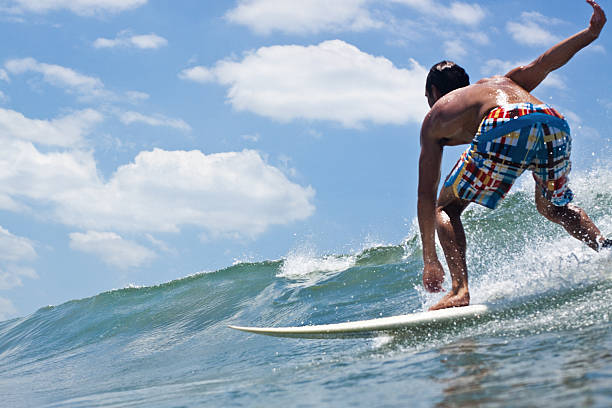
To a frustrated goofy-footer stuck on a mushy shorebreak, the Superbank is pure nirvana. When a solid southeast swell lines up with the bank, the wave reels off with a steep, hollower first section at Snapper, then opens up down the line, throwing out racetrack barrels and allowing carve after carve. You can take off on a six-foot wall, stall in the pocket, watch a sheet of water heave over your head, and then straighten out, pump, and do it all again for what feels like an eternity. There’s a reason why the best surfers in the world—from Kelly Slater to John John Florence—have made pilgrimage here to showcase their deepest tube rides and most radical turns. It’s a wave that rewards both aggression and finesse, and it never gets old.
But with great waves come great crowds, and the Superbank has become as famous for its chaotic lineup as for its endless walls. On a good swell, the takeoff zone at Snapper turns into a swirling free-for-all, with hundreds of heads bobbing like a flotilla of seals, all jockeying for position. The locals—a gnarly crew of seasoned rippers and territorial groms—have their own hierarchy, and the unwritten rules are strict. Drop in on a local’s wave and you’ll earn yourself a throw-down or at least a solid earful. It’s not all chaos though; there are lulls, and the sharing can be generous, especially when the bank is firing and there are more waves than arms to paddle for them. In that sense, the Superbank teaches you patience, humility, and the art of reading a shifting lineup.
The cultural weight of this wave is immense. Every year, the World Surf League kicks off its Championship Tour at Snapper, turning the Gold Coast into the epicenter of the surfing universe. The pros come, the cameras zoom, and the rest of us watch in awe, dreaming of the day we might get a fraction of that perfection. But the Superbank belongs to everyone, from the dawn patrol regulars to the weekend warriors who paddle out with shaking hands. It has spawned countless legends, broken many boards, and forged friendships that outlast the shifting sands of the banks themselves.
In the end, the Superbank is more than just a wave. It’s a symbol of what happens when the ocean and human ingenuity team up to create something transcendent. It’s the reason why the Gold Coast remains the ultimate surf mecca, a place where the sun always seems to shine a little brighter and the waves always seem to hold a little longer. So next time you find yourself in the water at Snapper, peering down the line and feeling the first push of a set wave, take a moment to thank the sand gods—and the pumps—for this endless summer dream.